
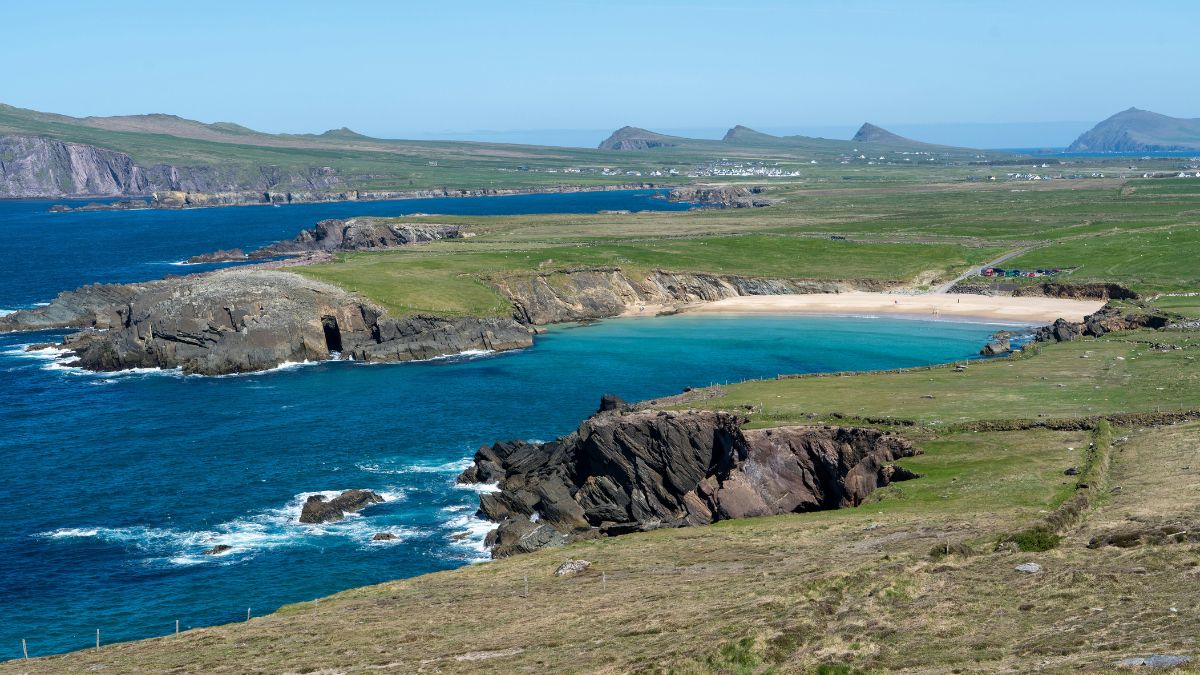
The first time I drove over the Conor Pass, I had to pull onto a gravel patch and just sit there for a minute. Fog was rolling in from one side, sheep were grazing on a ledge that looked too steep for anything with four legs, and somewhere below me the whole town of Dingle was laid out like a toy village. Nobody had warned me this place would feel this personal.
That’s the thing about the Dingle Peninsula. Guidebooks describe it in terms of scenery, and sure, the scenery is extraordinary. But what actually gets you is how lived-in it all feels.
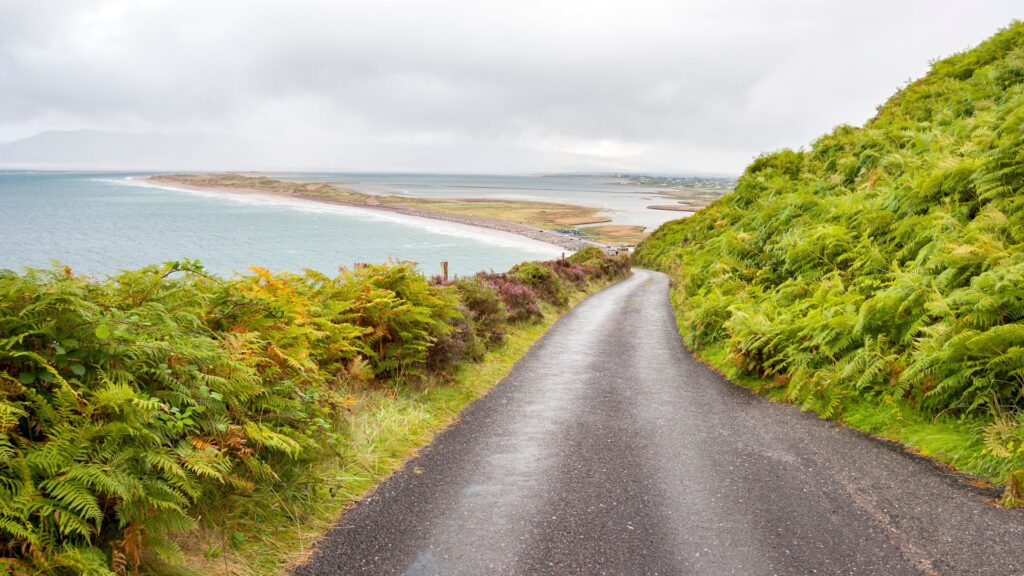
So, what is the Dingle Peninsula, exactly? It’s a narrow finger of land in County Kerry, on Ireland’s southwest coast, reaching out into the Atlantic between Tralee Bay and Dingle Bay. It sits on the Wild Atlantic Way, Ireland’s long coastal driving route, and it packs an almost unreasonable amount of history, music, wildlife, and rugged coastline into about 30 miles. You’ve got working fishing harbours, a genuine Gaeltacht (Irish-speaking) community, Iron Age forts, beehive huts older than some of the pyramids, and beaches that wouldn’t look out of place in the Caribbean, if the water were about 15 degrees warmer.
This guide pulls together what I’ve picked up from a few trips out here: where to base yourself, how to hike it, what to eat, and how the Dingle Peninsula actually compares to its more famous neighbour, the Ring of Kerry.
Main towns and villages of Dingle
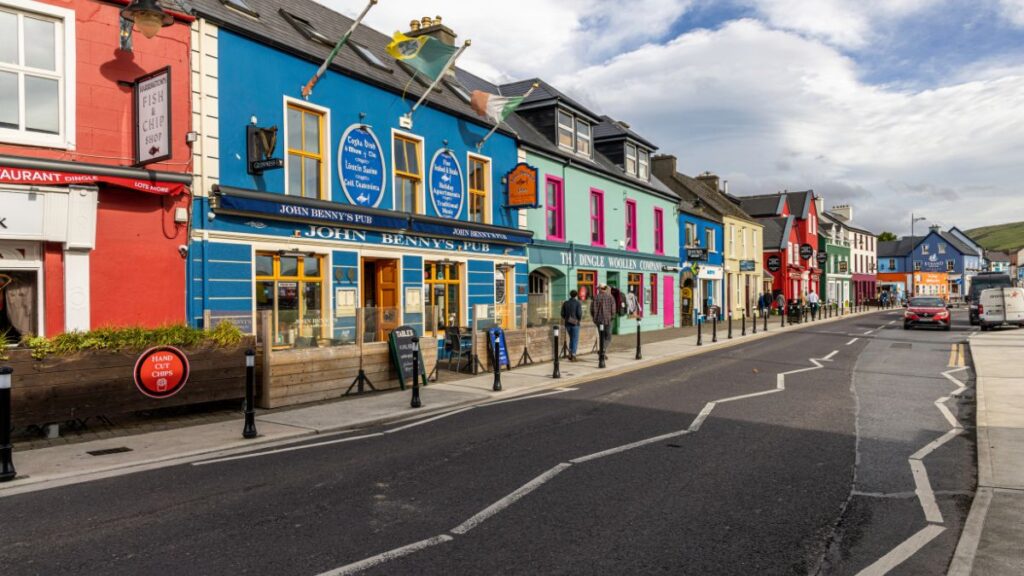
Most people use “Dingle” to mean both the peninsula and the town, which gets confusing fast. Here’s the breakdown.
- Dingle town: The obvious base. A working harbour, colourful shopfronts, more pubs than seems statistically reasonable for a population of around 2,000, and a genuinely good food scene. Almost everyone stays here for at least a night or two.
- Ventry: A few minutes west of Dingle town, with a long curved beach and a much quieter pace. Good for a picnic stop on the Slea Head Drive.
- Dunquin (Dún Chaoin): Tiny, dramatic, and the launching point for boats to the Blasket Islands. The old pottery here has been making mugs and bowls for decades, and it’s worth the stop.
- Ballyferriter (Baile an Fheirtéaraigh): The heart of the Gaeltacht area on this side of the peninsula. Irish is the everyday language here, not a tourist prop. There’s a small museum, a good pub, and it makes a nice quiet alternative to staying in Dingle town itself.
- Annascaul: On the road in from Tralee, famous mostly for one pub: the South Pole Inn, once owned by Antarctic explorer Tom Crean. If you like a bit of history with your pint, it’s worth the detour.
If you’re short on time, base yourself in Dingle town and day-trip out to the rest. If you want something quieter and more rooted in Irish-speaking culture, Ballyferriter is the better call.
This is the question I get asked more than any other, and I get why. Both are scenic loop drives in County Kerry, both are on every “best of Ireland” list, and most travellers only have time for one.
Here’s my honest take, having driven both more than once:
| Dingle Peninsula | Ring of Kerry | |
|---|---|---|
| Length | Around 30 miles, doable in half a day | Around 111 miles, needs a full day |
| Crowds | Busy in summer, but manageable | Can get jammed with tour coaches |
| Scenery | Dramatic, intimate, close-up | Grand, sweeping, big-picture |
| Culture | Strong Gaeltacht presence, live trad music every night | More anglicised, still culturally rich |
| Best for | Slower travellers, music lovers, hikers | First-time visitors wanting the classic postcard route |
My real answer: if you can only pick one, pick Dingle. It’s smaller, so you actually get time to stop, walk around, and talk to people instead of just photographing them through a car window. If you have five or more days in Kerry, do both. They’re different enough that neither one ruins the other.
History and heritage
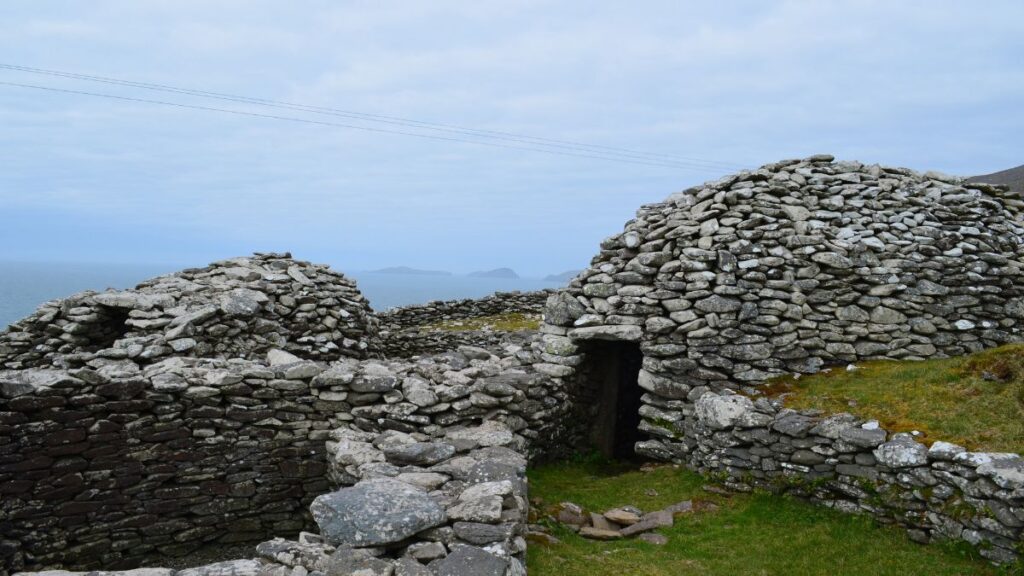
The Dingle Peninsula has one of the highest concentrations of ancient monuments anywhere in Ireland, and most of them just sit quietly in farmers’ fields with no fanfare at all.
A few worth building your day around:
- Gallarus Oratory: A dry-stone chapel shaped like an upturned boat, built somewhere between the 6th and 9th centuries, and still watertight. No mortar, just stones stacked with an engineering instinct that still puzzles people.
- The beehive huts (clochans): Circular stone dwellings scattered along the Slea Head Drive, some dating back over a thousand years. Monks and early farmers lived in these.
- Dunbeg Fort: An Iron Age promontory fort perched right on the cliff edge, part of it long since claimed by the Atlantic.
- Ogham stones: Standing stones carved with Ireland’s earliest known writing system, notches cut along the edges rather than symbols on the face.
On my last trip, I stopped to ask a farmer near Ballyferriter for directions and ended up spending 40 minutes leaning on his gate while he told me his family had been working that same land since before Ireland kept written records of who owned what. He pointed out a ring fort at the edge of his field that wasn’t on any map I’d seen, said his grandfather used to plough around it rather than through it, “out of respect, and because you don’t want the bad luck.” That’s the kind of history you don’t get from a plaque. It’s still being lived, not just preserved.
The peninsula also carries heavier history. The Great Famine hit this area especially hard in the 1840s, and you can still see the outlines of abandoned famine-era cottages along some of the walking trails, roofless and slowly returning to the hillside.
Dingle’s fauna and flora
For years, the peninsula’s most famous resident was Fungie, a wild bottlenose dolphin who lived in Dingle harbour for over three decades and became something of a local celebrity before he disappeared in 2020. He’s still spoken about fondly, and there’s a bronze statue of him on the pier.
Beyond Fungie’s legacy, the wildlife here is genuinely rich:
- Dolphins and porpoises are still regularly spotted in Dingle Bay.
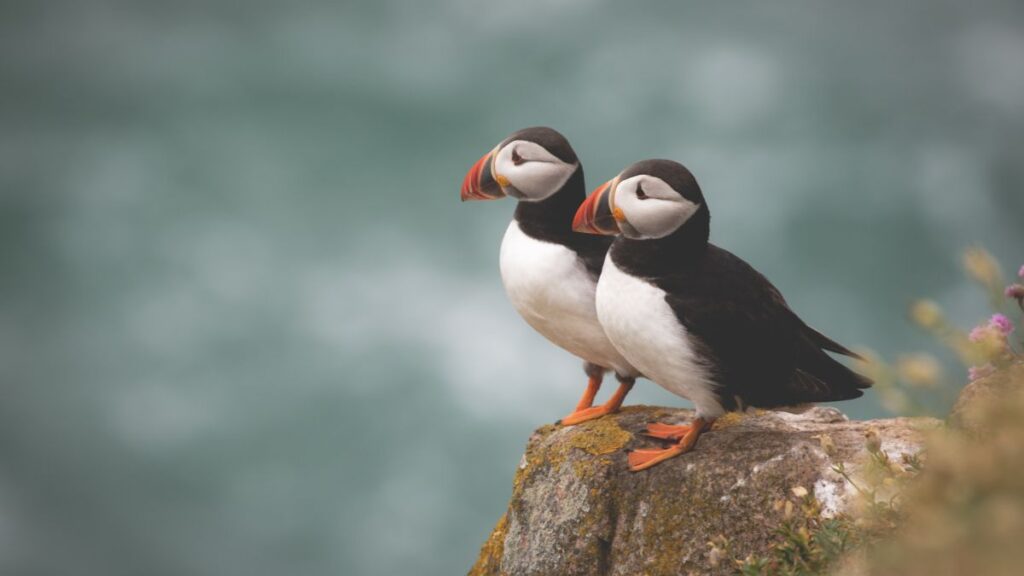
- The Blasket Islands host puffins, gannets, and grey seals, especially between April and August.
- Choughs, a red-billed member of the crow family that’s become rare elsewhere in Europe, nest along the cliffs.
- In late spring, the hedgerows along the Slea Head Drive fill with fuchsia and montbretia, both introduced species that have gone thoroughly native.
- Mount Brandon’s upper slopes support alpine plants you won’t find at lower elevations anywhere else in Kerry.
If wildlife is a priority, a boat trip out to the Blasket Islands is worth building your itinerary around, particularly in early summer when the seabird colonies are at their busiest.
What is the Dingle Way?
The Dingle Way is a 179-kilometre (roughly 111-mile) waymarked walking trail that loops around the entire peninsula, usually broken into 8 or 9 daily stages. It starts and ends in Tralee, tracing the coastline through Camp, Annascaul, Dingle town, Dunquin, Ballyferriter, and back around through the Conor Pass area.
Most walkers take about a week to complete the full loop, staying in B&Bs and small guesthouses along the way, with luggage transfer services widely available so you’re not hauling a full pack the whole time. You don’t need technical hiking experience for most of it, just decent fitness and proper waterproof gear, because the weather here changes its mind more often than most people change their socks.
You don’t have to walk the whole thing. Plenty of visitors just tackle the Slea Head to Dunquin stretch, which is arguably the most scenic single day and takes around 5 to 6 hours.
Hiking in Dingle
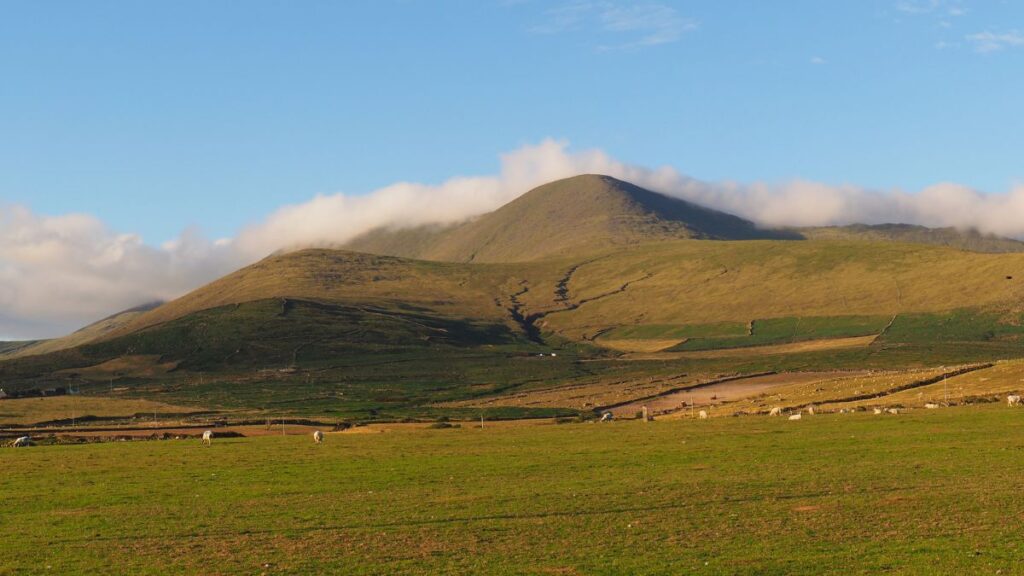
Beyond the Dingle Way itself, there’s a good spread of hikes depending on how much punishment you’re after.
- Mount Brandon: At 952 metres, it’s Ireland’s second-highest peak and the highest point on the peninsula. The Saint’s Road route follows an old pilgrim path. Views on a clear day stretch out over the whole peninsula and beyond.
- Slea Head loop walks: Shorter, gentler routes along the cliffs, ideal if you want scenery without the elevation gain.
- Minard and Inch coastal walks: Flat, easy, good for families or anyone recovering from a big night in a Dingle pub the evening before.
- The Saints Way (Cosán na Naomh): A signposted pilgrim path running from Ventry to the foot of Mount Brandon, passing standing stones and early Christian sites along the way. A gentler, more historic alternative to a full mountain climb.
- Eask Tower hike: A short, sharp climb just outside Dingle town to a stone signal tower built during the famine as relief work. Takes under two hours round trip and gives one of the best panoramic views of Dingle harbour for the effort involved.
A quick word of caution from experience: I attempted Mount Brandon on what looked like a clear morning, and by the time I was two-thirds up, cloud had rolled in so thick I could barely see the person walking three metres ahead of me. We’d checked the forecast, we had the right gear, and it still turned into a genuinely disorienting couple of hours until we dropped back below the cloud line. Mountain weather here can shift in under 20 minutes. Always check the forecast the morning of, not the night before, and tell someone your route before you set off.
Dingle’s beaches and coasts
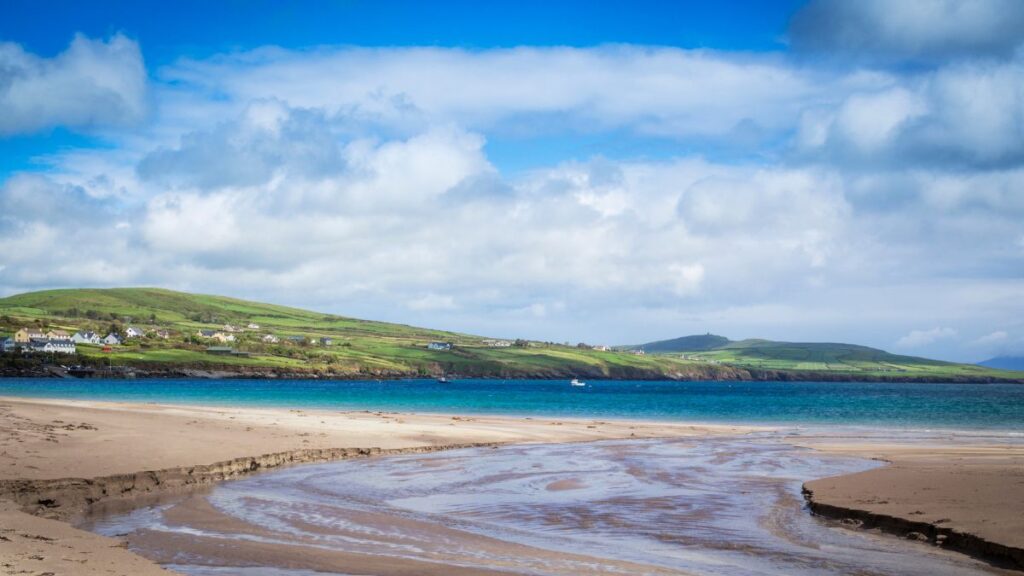
The coastline is arguably the peninsula’s biggest draw, and it earns that reputation.
- Inch Beach: A 5-kilometre stretch of golden sand backed by dunes, made famous in the film Ryan’s Daughter. Good for surfing lessons if you fancy a go.
- Coumeenoole Beach: Small, dramatic, tucked beneath cliffs near Slea Head. Swimming here needs caution due to strong currents, but it’s one of the most photographed spots on the whole peninsula.
- Ventry Beach: Calm, sheltered, family-friendly, and usually far less crowded than Inch.
- Clogher Beach: Wild and rocky rather than sandy, better for a dramatic walk than a swim.
- Wine Strand (Tra Bhan): A small, sheltered cove near Ballydavid, popular with local swimmers and easy to have almost entirely to yourself outside of peak summer weekends.
Water temperatures rarely climb above the high teens Celsius even in August, so “beach day” here often means a bracing dip followed by a flask of tea rather than an afternoon of sunbathing. That’s part of the charm, honestly.
Irish trad music in Dingle
Dingle town has one of the liveliest traditional music scenes in Ireland, and unlike some tourist-heavy towns, the sessions here still feel genuinely local rather than staged for visitors.
Pubs like Foxy John’s (which doubles as a hardware shop; drop that into conversation and watch people’s faces), Dick Mack’s, and O’Sullivan’s Courthouse regularly host informal sessions where musicians just turn up, pull out a fiddle or a bodhrán, and play. There’s rarely a cover charge, and rarely much advance notice either. You just have to be in the right pub on the right night.
Because much of this side of the peninsula sits within the Gaeltacht, the Irish-speaking region, the music here is tied closely to language and local identity rather than being packaged for tourists. If you want to understand how deep that connection runs, it’s worth reading up on the history of traditional Irish music before you go, and pairing your trip with a visit to some of the other Irish-speaking areas to visit in Ireland, since Dingle is only one of several Gaeltacht regions worth exploring.
Things to do in Dingle
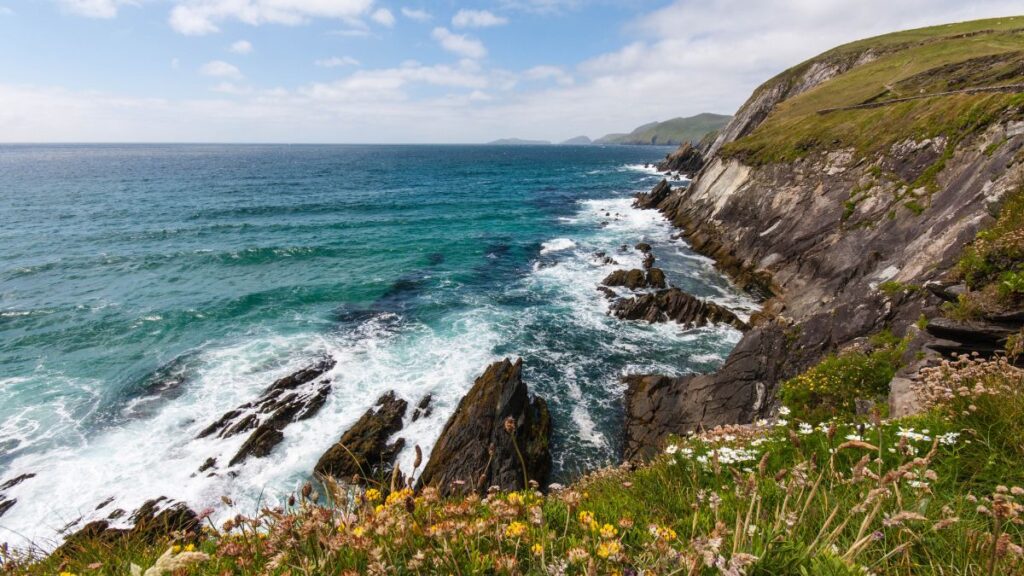
Beyond hiking, beaches, and music, here’s what fills out a good few days on the peninsula:
- Dingle Distillery: Tours and tastings covering their gin, vodka, and whiskey, run out of a converted sawmill.
- The Blasket Centre (Ionad an Bhlascaoid): A museum in Dunquin covering the history of the Blasket Islands, abandoned in 1953 when the last residents were relocated to the mainland.
- Dingle Oceanworld: A solid aquarium option if you’re travelling with kids or the weather’s turned.
- Boat tours: Dolphin-watching trips, Blasket Island crossings, and deep-sea fishing charters all run out of Dingle harbour.
- The Conor Pass drive: Ireland’s highest mountain pass, with pull-offs for photos and a genuinely nerve-testing narrow stretch near the top.
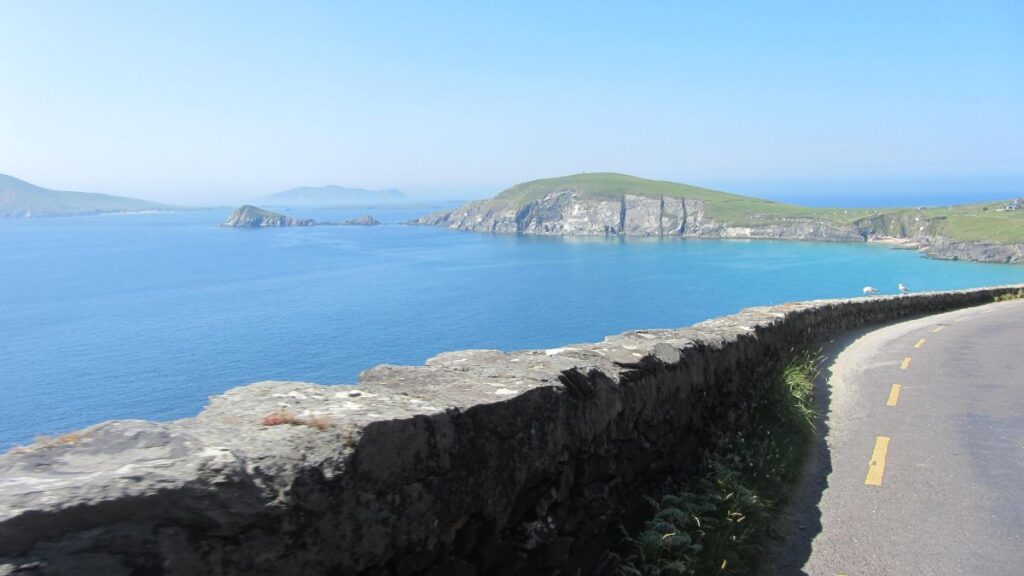
- Slea Head Drive: The signature loop, taking in beehive huts, Dunbeg Fort, and some of the best coastal views in Ireland. Give it a full half-day, not just a drive-through.
- Minard Castle: A ruined 16th-century Fitzgerald stronghold overlooking a wild, boulder-strewn beach near Annascaul. Free to visit, rarely crowded, and one of the best sunset spots on the peninsula.
- Dun Chaoin Pier: A dramatic zigzag road cut into the cliff face, leading down to the pier where boats depart for the Blasket Islands. Worth the trip even if you’re not catching a boat that day.
- Caherconree Scenic Route: A quieter driving route along the peninsula’s spine, passing the remains of an Iron Age hillfort said to be connected to Irish mythology.
- Annascaul Lake: A peaceful glacial lake tucked into the hills near Annascaul village, good for a flat walk and a picnic away from the coastal crowds.
- Glanteenassig Forest Park: A forest and lake area on the northern side of the peninsula, popular for gentle walking trails and mountain views without the exposure of a full hike.
Where to eat in Dingle (and the best pubs)

Dingle punches well above its weight for food, largely thanks to the fishing fleet that still lands catch daily.
For seafood, chowder is practically a local sport. On my most recent visit, I ended up in a small harbourside spot after a soaking-wet afternoon on the Slea Head Drive, ordered a bowl of chowder more or less to warm my hands as much as to eat, and it turned out to be the best version I’ve had anywhere in Ireland, thick, smoky, loaded with mussels and smoked haddock, served with brown bread still warm from the oven. I went back the next two days. That’s not a paid endorsement, just an honest account of how good it was.
A few reliable picks:
- Out of the Blue: Seafood-only, no chips on the menu, closes when they run out of fresh fish for the day.
- The Global Village: A bit more adventurous, blending Irish ingredients with international influences.
- Murphy’s Ice Cream: Made with milk from local Kerry cows, and their brown bread flavour genuinely works.
For pubs, alongside the trad-music spots already mentioned, Dick Mack’s deserves its own note. Part pub, part old leather shop, with the original shoemaking counter still intact. It’s the kind of place where you sit down for one drink and somehow resurface two hours later having learned the entire local football league table.
Conclusion
The Dingle Peninsula isn’t the biggest attraction in Ireland, and it doesn’t try to be. What it does have is density: history stacked on history, coastline that keeps surprising you around every bend, music that’s still played because people want to play it, and a food scene built on what actually comes off the boats that morning. Give it at least two or three days if you can. It rewards slow travel far more than it rewards a rushed drive-through, and it’s the kind of place that tends to pull people back for a second visit, myself included.
Frequently asked questions
1. What is special about the Dingle Peninsula?
It’s the combination that makes it special rather than any single feature: a working Irish-speaking (Gaeltacht) community, an unusually high concentration of ancient monuments, dramatic Atlantic coastline, and a genuinely active traditional music scene, all packed into a peninsula you can drive around in half a day.
2. What movie was filmed in Dingle?
The peninsula has featured in several films, most famously Ryan’s Daughter (1970), much of which was shot around Inch Beach and Dunquin. It also appeared in Far and Away (1992) with Tom Cruise and Nicole Kidman, and more recently provided locations for Star Wars: The Last Jedi and The Rise of Skywalker, with Skellig Michael, visible from parts of the peninsula, standing in for Ahch-To.
3. Can you do Dingle Peninsula in one day?
Yes, technically. You can drive the Slea Head loop and see the main highlights, beehive huts, Dunbeg Fort, and Coumeenoole Beach in around 5 to 6 hours. But a single day only lets you see the place, not experience it. You’ll miss the evening trad sessions, a proper hike, and time to just sit somewhere and take it in.
4. Is Dingle, Ireland worth seeing?
Yes, without much hesitation. It consistently ranks among Ireland’s best coastal drives, and the combination of scenery, food, music, and history gives it more depth than many better-known Irish destinations.
5. How much time do you need at Dingle Peninsula?
Two to three days is the sweet spot for most travellers: enough time for the Slea Head Drive, a hike or two, an evening of trad music, and a proper meal without feeling rushed. Hikers tackling the full Dingle Way should budget closer to a week.