Gaeltacht guide: The best Irish-speaking areas to visit in Ireland
Share this
You’re standing in a pub in Connemara, and the two women beside you are laughing about something, but you can’t understand a word of it. Not because they’re being quiet. Because they’re speaking Irish, and it’s flying past at full native speed. That’s not a scene from a hundred years ago. That’s Tuesday night in a Gaeltacht.
If you’ve been planning a trip to Ireland and keep seeing the word “Gaeltacht” pop up on road signs, in tourism guides, or in someone’s Instagram caption, you’re not alone in wondering what it actually means. So let’s clear that up first, because it matters for how you plan your trip.
A Gaeltacht is an officially recognised Irish-speaking area, a region where Irish (Gaeilge) is still the everyday language of the home, the shop, and the local GAA pitch, not just a subject taught in school. These areas were first designated by the Irish government back in the 1920s, and they still receive specific state support today to help keep the language alive. There isn’t just one Gaeltacht either. There are several, scattered mostly along the west coast, each with its own accent, its own local characters, and its own reasons to visit.
This guide walks you through the main Irish-speaking areas in Ireland, what makes each one worth a detour, and where to actually stay while you’re there.
What “Gaeltacht” really means, beyond the textbook definition
Technically, Gaeltacht is the collective term for districts where Irish is recognised as the predominant vernacular, the language people actually reach for first. But if you only know it as an exam-board word from secondary school Irish class, I get why it might sound a bit dry.
Here’s the more useful way to think about it: a Gaeltacht is a working community that happens to run through Irish. The language isn’t performed for tourists. It’s just how the butcher takes your order and how the match commentary sounds on local radio. That’s a genuinely different experience from anywhere else in Ireland, including Dublin, where Irish is proudly visible on signage but rarely the language you’ll overhear at the next table.
There are seven counties with Gaeltacht status: Donegal, Mayo, Galway, Kerry, Cork, Waterford, and Meath. Some of these areas are huge and rural, others are a single village and its townlands. All of them are worth knowing about if authentic culture, not manufactured culture, is what you’re after.
Why bother visiting a Gaeltacht at all
I hear this question a lot from readers: if I don’t speak Irish, is there any point going out of my way for this?
Honestly, yes. And here’s a small example of why.
A reader of mine, Marianne, wrote to me last year after a trip to Connemara. She’d booked three nights at a small family-run guesthouse near Carraroe purely because the reviews mentioned a good breakfast and a nice view of the bay. She hadn’t clocked it was in the heart of the Gaeltacht until she arrived and heard the owner’s kids doing their homework at the kitchen table, chatting to each other in Irish the whole time, switching to English the second they noticed her in the doorway. She said it was the first time Ireland felt properly foreign to her in the best possible way, not a theme park version of itself. She ended up extending her stay by a night just to sit in on a local music session where half the songs were in Irish and nobody translated a word, and nobody needed to.
That’s the pull of the Gaeltacht. It’s not a museum exhibit. It’s a living, working culture that happens to let you in if you show a bit of curiosity and respect.
The main Irish-speaking areas to visit, region by region
Here’s where you’ll actually find the Gaeltacht, and what each area brings to the table.
1. Connemara and the Galway Gaeltacht
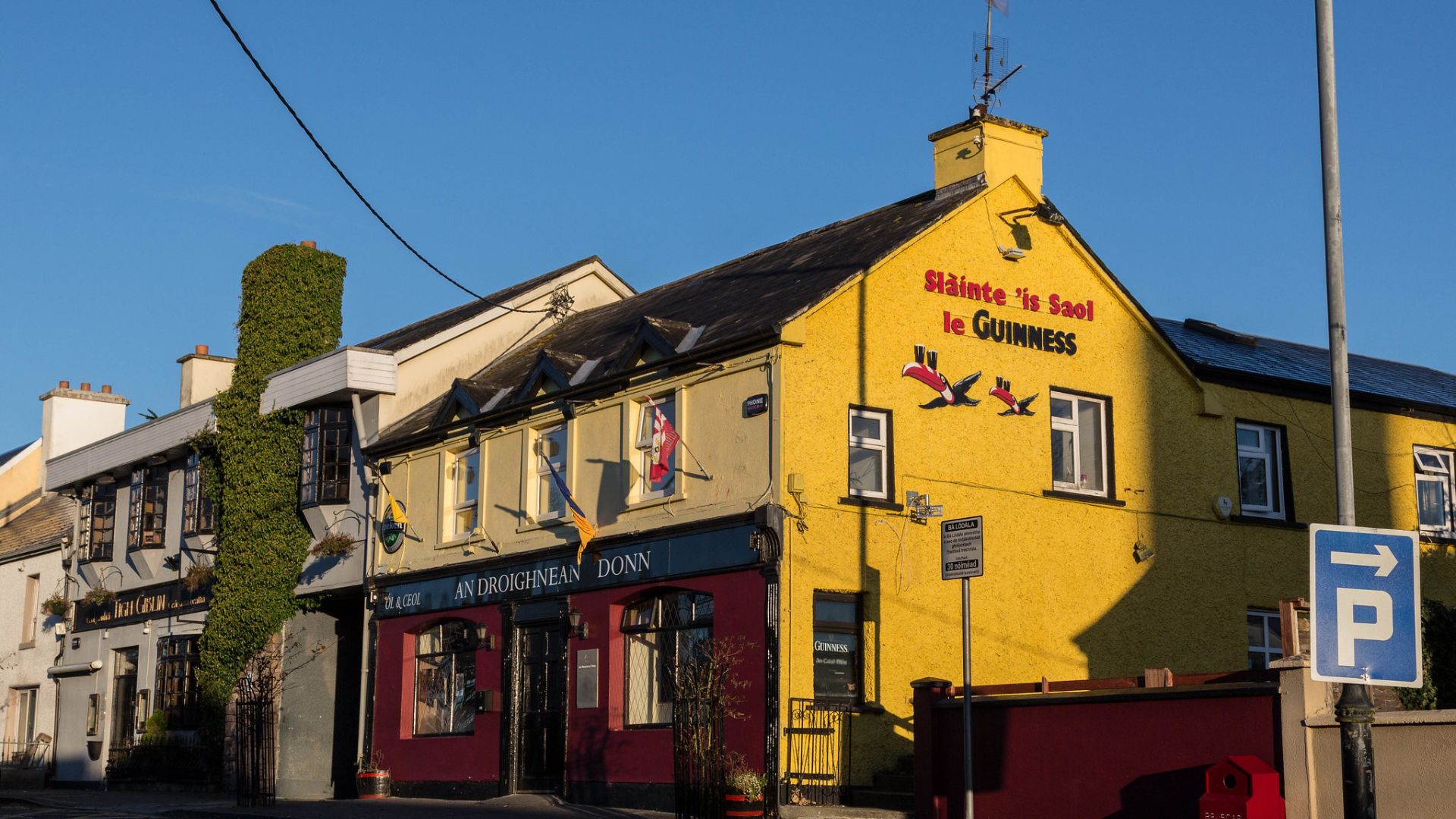
This is the big one. Connemara is Ireland’s largest Gaeltacht by both population and land area, stretching west from Galway city through bogland, mountains, and a coastline that looks like it was designed specifically to slow down your itinerary. Villages like Spiddal, An Cheathrú Rua (Carraroe), and Leitir Móir are proper working Irish-speaking communities, not recreations.
This is also your access point to the Aran Islands, which sit out in Galway Bay and hold onto some of the strongest Irish in the entire country, particularly on Inis Meáin. If you only have time for one Gaeltacht on your trip, Connemara paired with a day on the Arans gives you both the mainland and island version of the experience.
Good bases: Spiddal (close to Galway city, easy day trips), Clifden (a proper little touring hub with restaurants and music), Carraroe (quieter, more immersive, closer to the ferry for the Aran Islands).
2. Donegal Gaeltacht
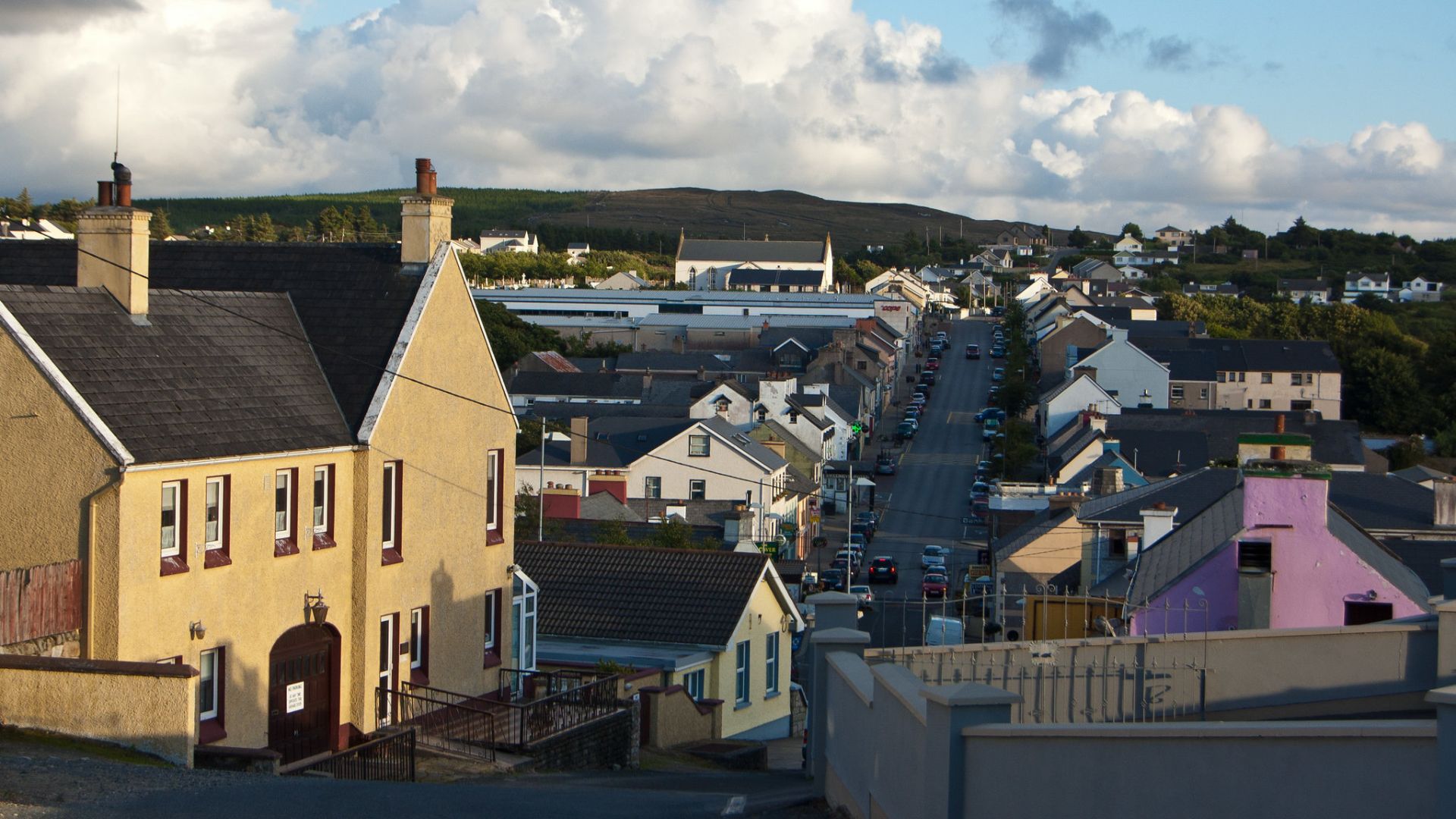
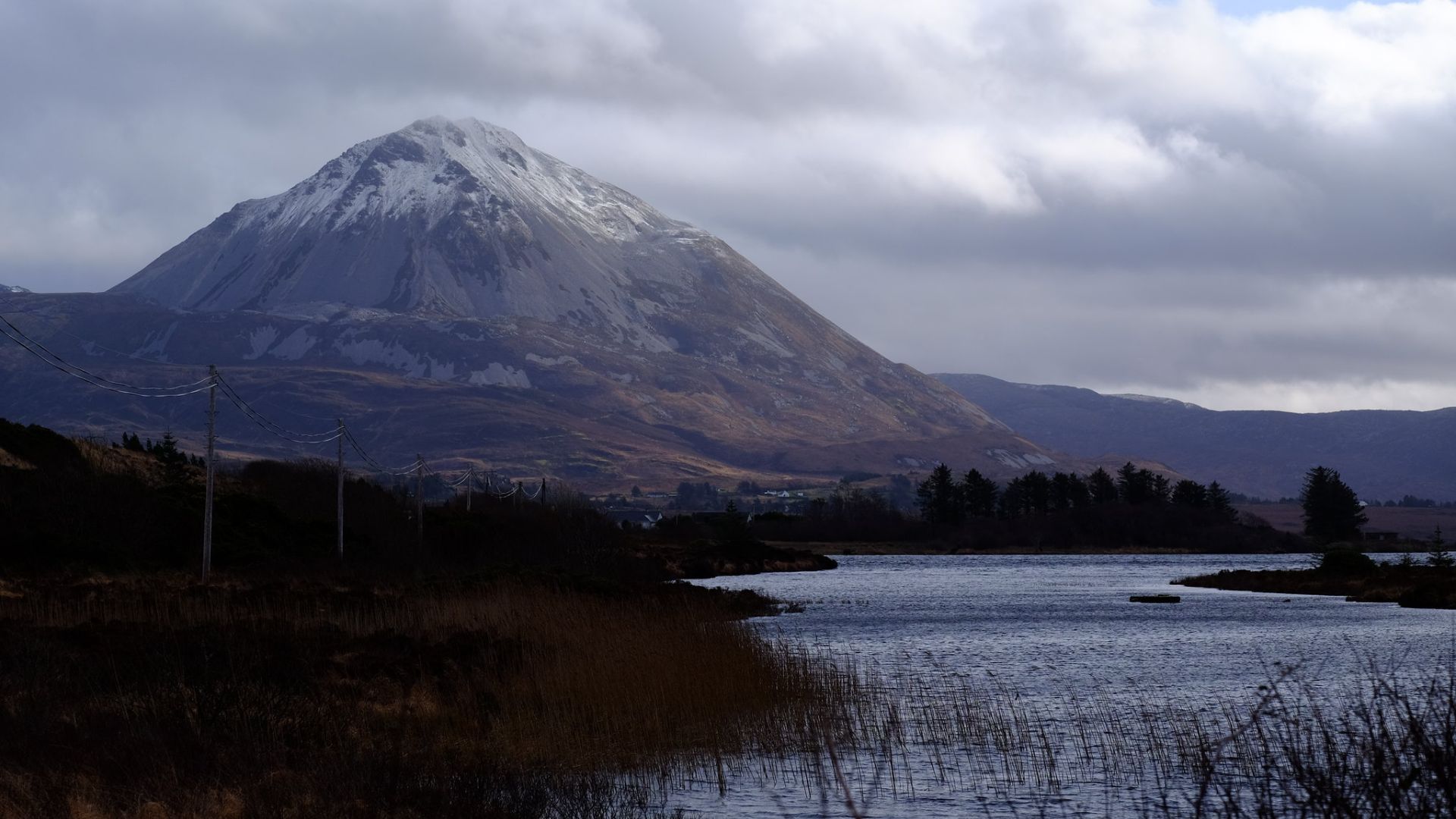
Donegal’s Irish sounds different from anywhere else in the country. It’s Ulster Irish, with a cadence that echoes Scottish Gaelic more than the softer tones you’ll hear further south. Gweedore (Gaoth Dobhair) is the largest Gaeltacht parish in the whole of Ireland and has quietly produced an outsized number of famous musicians, including Enya and the band Clannad. The Rosses and Cloughaneely round out the main population centres, and Tory Island off the coast has its own fiercely proud dialect and community.
This region draws a lot of Irish language students from Northern Ireland every summer, so expect a genuine mix of ages and accents if you visit during term breaks.
Good bases: Gweedore (right in the cultural heart of it), Dunfanaghy (walkable town with good food, near Glenveagh National Park), Glencolmcille (remote, dramatic, ideal if you want real quiet).
3. Kerry Gaeltacht: Dingle and Iveragh
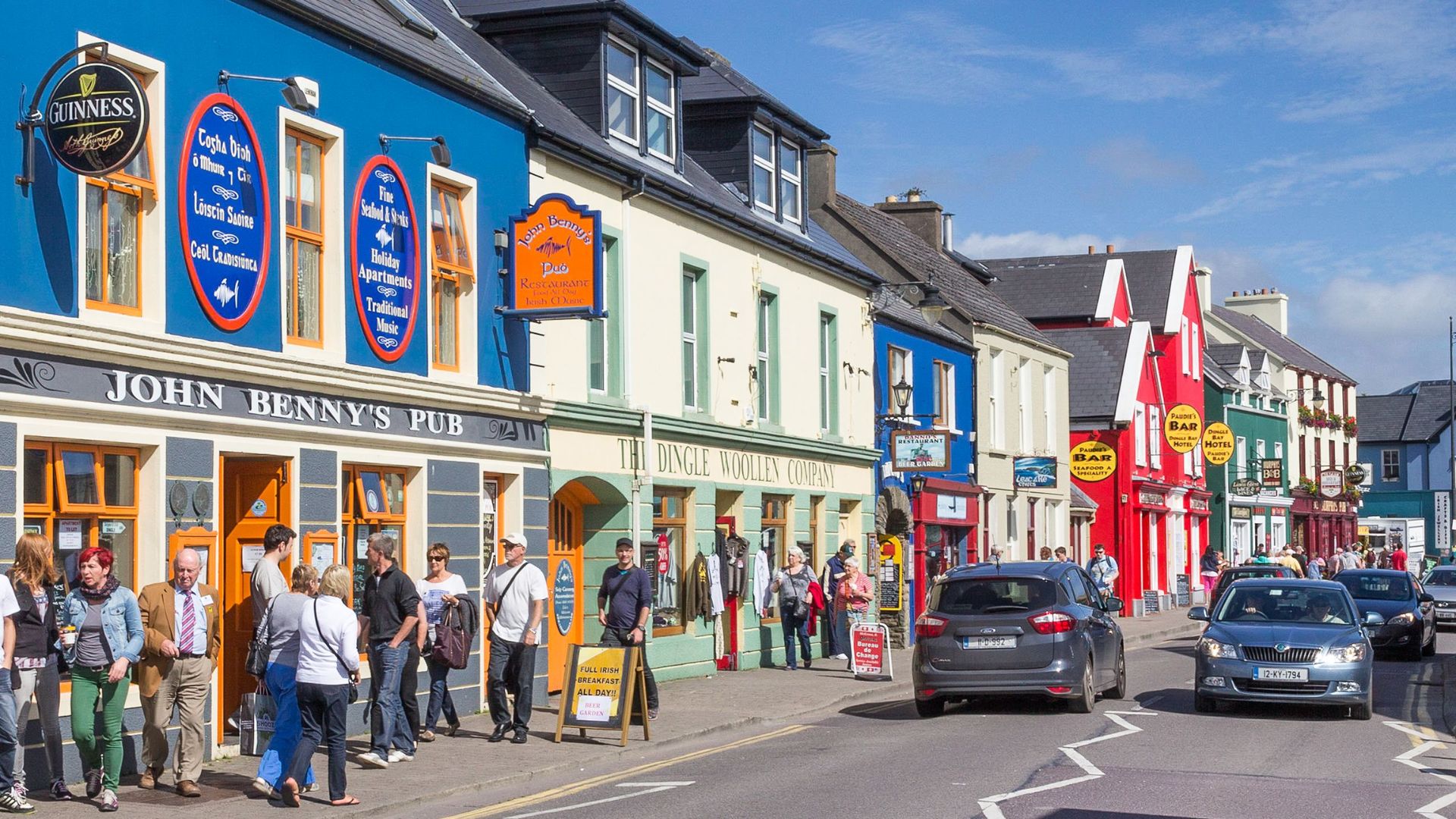
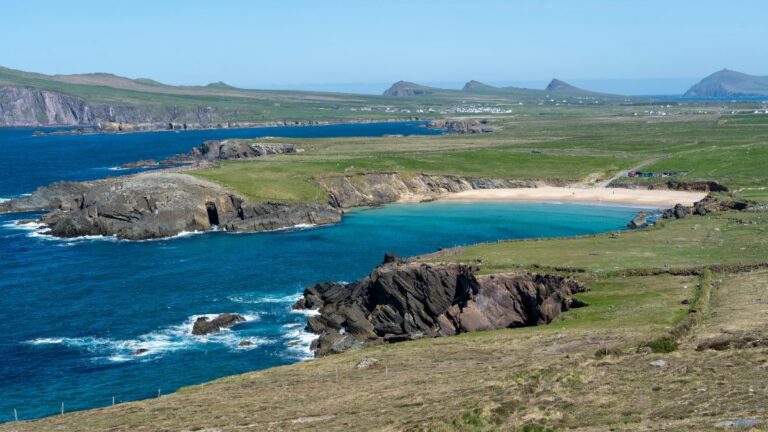
Kerry splits its Gaeltacht status across two peninsulas. Corca Dhuibhne, the Dingle Peninsula, is the better-known of the two, and Dingle town itself blends Irish signage, Irish-speaking locals, and enough pubs and seafood restaurants to make it an easy first Gaeltacht for nervous travellers. The Iveragh Peninsula’s Gaeltacht, around Ballinskelligs (Uíbh Ráthach), sits along the Ring of Kerry route and gets a fraction of the footfall Dingle does, which is part of its charm.
Good bases: Dingle town (best for food, music, and access to Slea Head), Ballinskelligs (small, coastal, ideal for a quiet overnight if you’re already touring the Ring of Kerry).
4. Mayo Gaeltacht
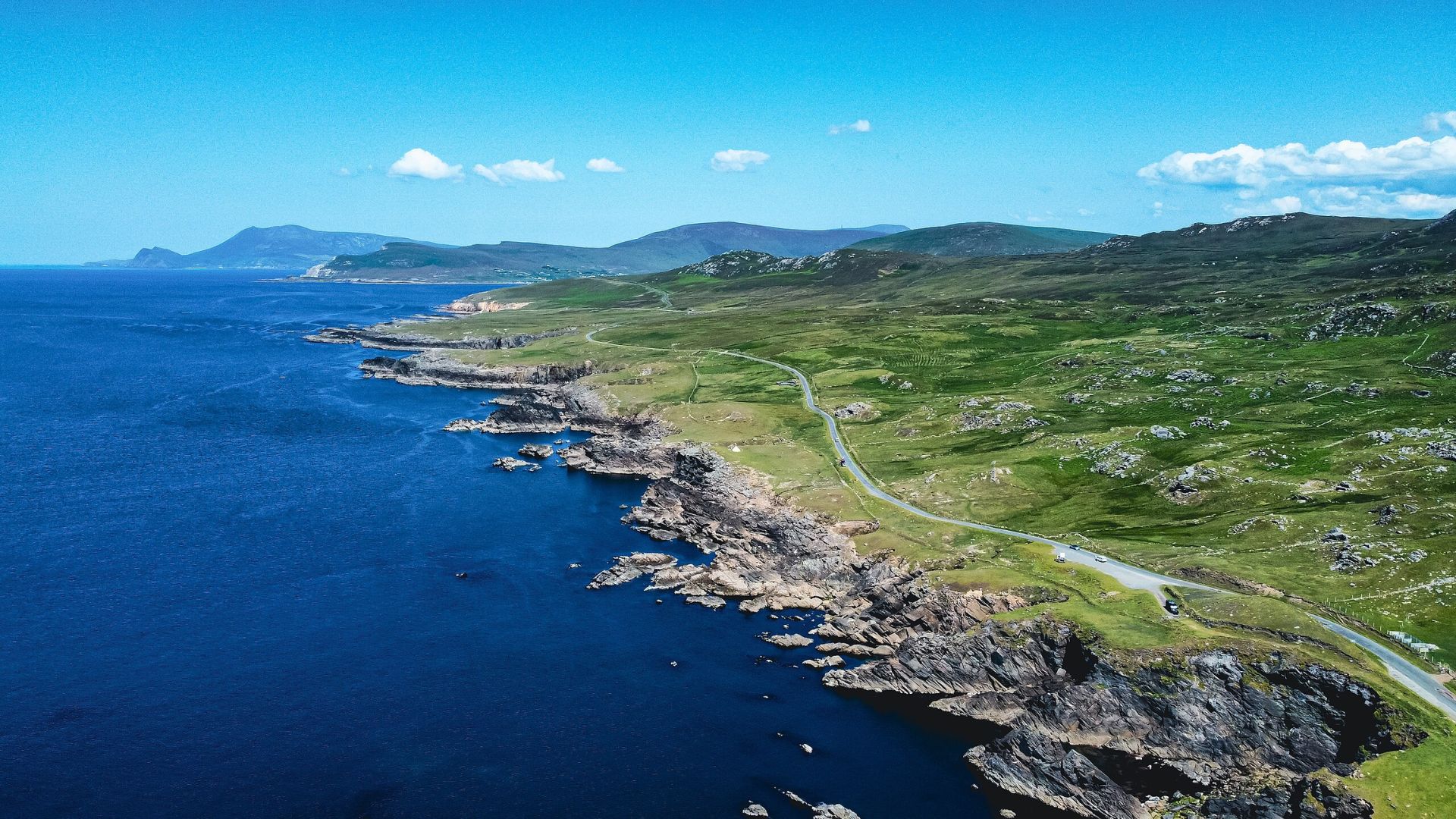
Mayo’s Irish-speaking areas are spread out rather than clustered, covering the Mullet Peninsula, Achill Island, and the village of Tourmakeady on the shores of Lough Mask. Achill in particular has become known to a wider audience through film, but the Irish-speaking community there predates any of that by generations. The landscape here leans wild: bog, cliff, sea stack, repeat.
Good bases: Achill Island (dramatic coastal scenery, good for a few nights), Tourmakeady (small, lakeside, very local).
5. Cork Gaeltacht
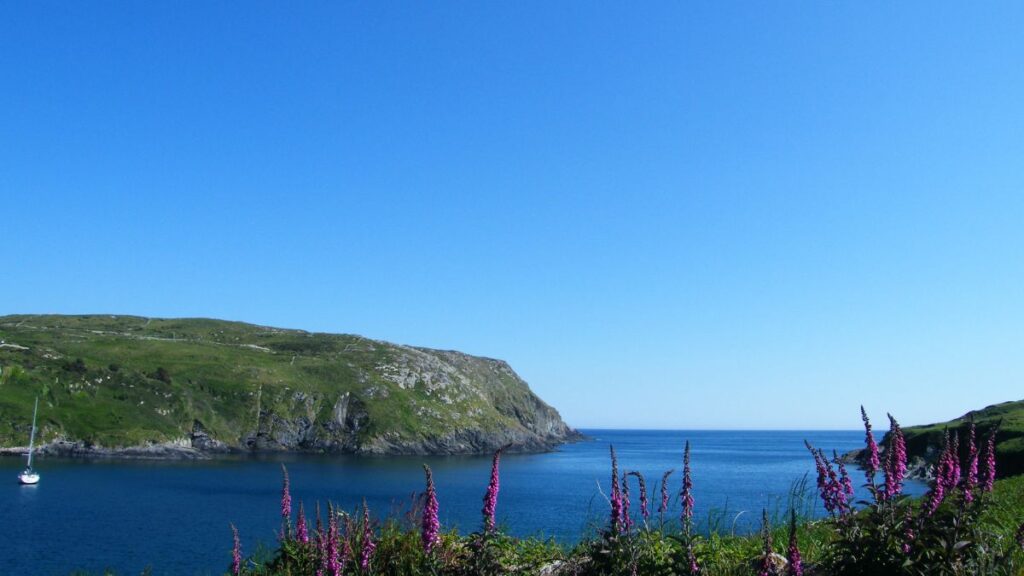
West of Cork city, the Múscraí Gaeltacht sits around Ballingeary and Baile Bhuirne, an area with real historical weight from the War of Independence, and it’s still a stronghold for traditional music and dance. Out in the Atlantic, Cape Clear Island (Oileán Chléire) is Ireland’s most southerly inhabited island and its own small Gaeltacht, reachable by ferry from Baltimore.
Good bases: Ballingeary (inland, good for hiking and Gougane Barra), Cape Clear Island (for a genuinely remote island stay).
6 Waterford Gaeltacht
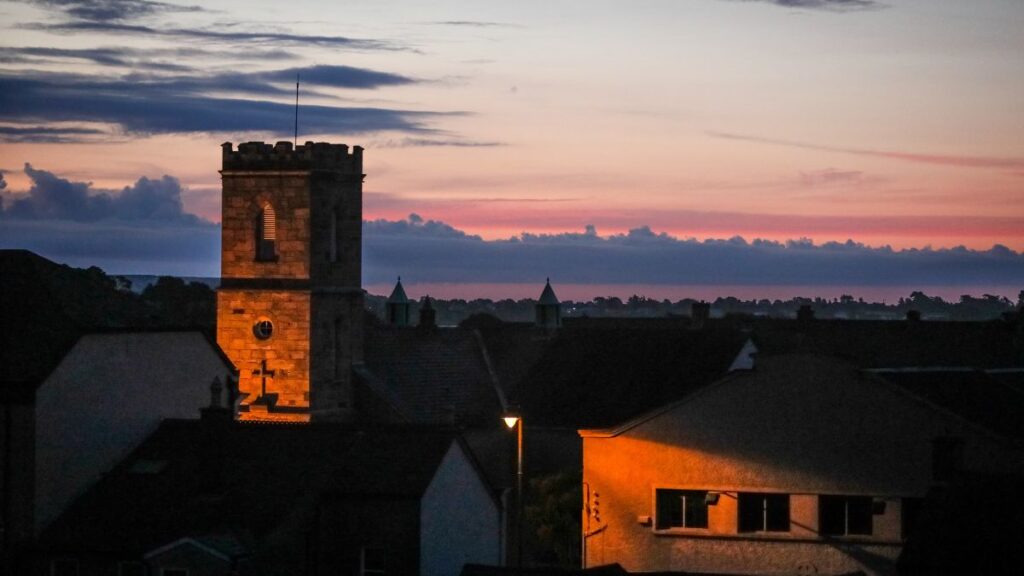
Ring and An Sean Phobal, close to Dungarvan, make up one of the smallest Gaeltacht areas in the country, but it punches well above its size in cultural output, especially in traditional singing. It’s often overlooked simply because it’s not on the usual west coast Gaeltacht trail, which makes it a nice detour if you’re touring the southeast.
Good bases: Dungarvan (comfortable base with good restaurants), Ring village itself if you want to be right in it.
7. Meath Gaeltacht
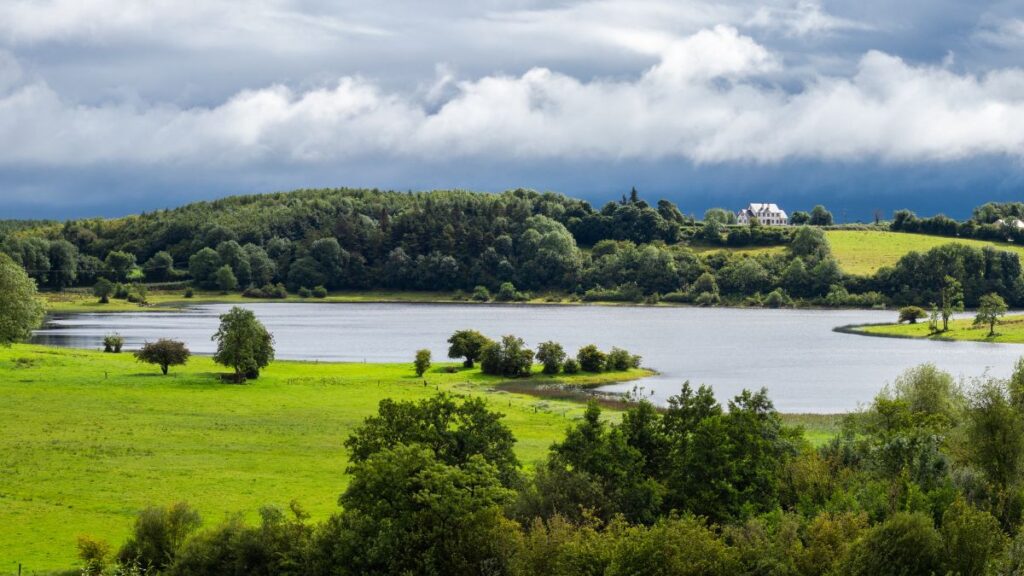
This one surprises people. Ráth Cairn and Baile Ghib, close to Navan, are the only Gaeltacht communities in Leinster and the only ones not on the west coast. They exist because Irish-speaking families from Connemara were resettled here in the 1930s, and the community has held onto the language ever since. It’s a fascinating stop if you’re interested in the social history of the language rather than just scenery.
Good bases: Navan (practical, close to both villages and to Dublin for a day trip).
How to actually visit a Gaeltacht without feeling like an intruder
A few practical things I always tell people before their first Gaeltacht visit.
- Yes, you can speak English. Every single person in the Gaeltacht is bilingual. Nobody expects a tourist to arrive fluent in Irish, and you won’t be met with anything but friendliness if you speak English.
- A few words go a long way. Learning “dia dhuit” (hello) and “go raibh maith agat” (thank you) before you arrive tends to earn a genuine smile, not because it’s expected, but because it’s noticed.
- Book Irish language accommodation where you can. Family-run guesthouses in the Gaeltacht often have Irish as the household language, which gives you a much richer sense of the place than a chain hotel ever could.
- Time your visit around a local event if possible. Summer brings Irish language colleges, GAA matches, and traditional music festivals that give you a real reason to be there beyond sightseeing.
I’ll mention a second example here, because it changed how I think about timing a Gaeltacht visit. A reader named Donal told me about sending his teenage daughter to a three-week Irish college in Gweedore, the kind of summer programme thousands of Irish teenagers attend every year to sharpen their spoken Irish. He visited on collection day and ended up staying two extra nights because the local céilí that week happened to fall during his visit. He said watching a hall full of teenagers, locals, and a handful of curious parents all dancing to the same set of tunes, in a language most of the visitors barely understood, was one of the more moving things he’d seen in Ireland. Nobody was performing culture for an audience. It was just what was happening that Thursday.
Best time to visit a Gaeltacht
Late spring through early autumn is your best window, both for weather and for cultural activity. Summer specifically brings Irish colleges, festivals, and long evenings that suit a music session or a walk along the coast. Winter visits are perfectly doable too, and honestly give you the most authentic slice of daily Gaeltacht life since the tourist traffic drops right off, but do check that your chosen guesthouse or restaurant is open, as many rural Gaeltacht businesses scale back outside peak season.
Conclusion
The Gaeltacht isn’t a single place you tick off a list. It’s a scattered network of communities across seven counties, each holding onto Irish in its own way, with its own accent, its own music, and its own reasons to slow down and stay a night longer than you planned. Whether you end up in Connemara, out on Cape Clear, or in a quiet guesthouse in Ring, the thing to remember is that you’re a guest in someone’s everyday life, not a spectator at a show. Show up curious, learn a phrase or two, and let the place do the rest.
Frequently asked questions
What is the most popular Gaeltacht in Ireland?
Connemara, in County Galway, is the most visited Gaeltacht by far. It’s the largest in both size and population; it’s close to Galway city, and it gives easy access to the Aran Islands, which makes it a natural first stop for most visitors exploring Irish-speaking areas.
Where is the biggest Gaeltacht in Ireland?
The combined Galway Gaeltacht, which includes Connemara and Galway city’s Irish-speaking areas, is the largest by population. By land area, the Donegal Gaeltacht covers the most ground, spread across parishes like Gweedore, the Rosses, and Cloughaneely.
What is a Gaeltacht in Irish?
In Irish, “Gaeltacht” simply refers to a region where Gaeilge, the Irish language, is the community’s everyday spoken language. The word itself comes from “Gael,” meaning an Irish person, so a Gaeltacht is loosely “a place of Gaelic-ness,” an area defined by its living relationship with the language.
Can you speak English in the Gaeltacht?
Yes, absolutely. Every resident of the Gaeltacht is bilingual, and visitors are never expected to speak Irish. You’ll be understood perfectly well in English everywhere from the local shop to the pub. That said, learning a few basic Irish phrases before your visit tends to be warmly received.
What are the 4 dialects of the Irish language?
Irish has three living dialects: Munster, spoken around Kerry, Cork, and Waterford; Connacht, the strongest in terms of speaker numbers and centred on Galway and Mayo; and Ulster, found in Donegal and known for its distinct northern sound. A fourth dialect, Leinster Irish, once existed across the eastern part of the country but died out as a distinct spoken form during the 20th century, though traces of it survive in place names and old records.