10 Lesser-known castles in Ireland
Share this
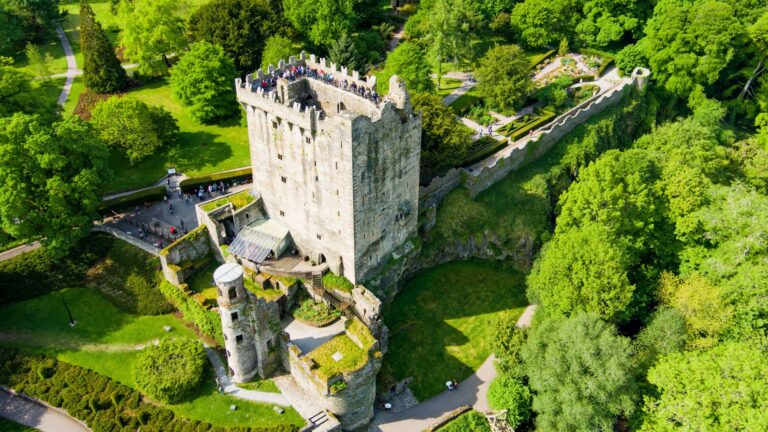
Most people who visit Ireland put Blarney Castle and the Rock of Cashel on their list. And honestly? Both are worth it. But if you’ve done your research, you already know those spots are going to be packed, ticketed, and photographed to death.
Here’s the thing: Ireland has somewhere in the region of 30,000 castles and castle ruins. Yes, you read that right. Thirty thousand. The country is practically drowning in them. So why are we all queuing at the same five?
If you’re looking for lesser-known castles in Ireland that feel genuinely discovered rather than packaged for tourism, this list is for you. These are places where you might be the only person there. Where the grass grows right up to the walls, and the wind does all the talking. No gift shop. No audio guide. Just centuries of history and that particular kind of quiet that only ruins can hold.
1. Roscommon Castle, County Roscommon
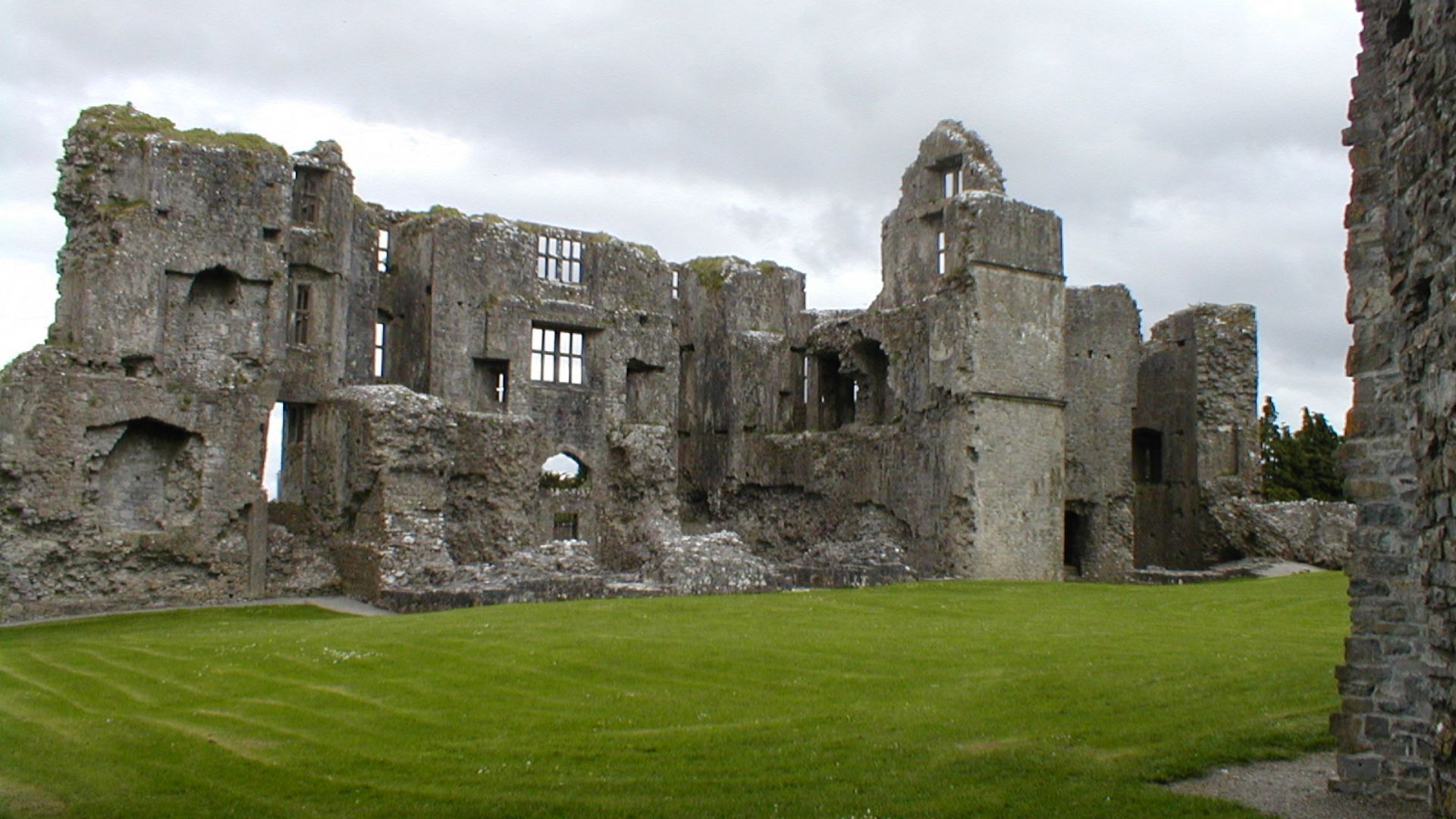
Roscommon town sits in the middle of Ireland and somehow still flies under the radar. The castle here is enormous, frankly. We’re talking a massive Anglo-Norman fortress built in the 1260s, later rebuilt in the 1280s after it was burned down by the Irish, then partially blown up by Cromwellian forces in the 1650s. It has had a rough go of things.
What strikes you when you arrive is how freely you can just walk up to it. There’s a car park nearby, and the castle grounds are open. You can walk right up to the walls and peer through the window gaps and stand inside the central courtyard where grass grows in thick clumps between the stones.
Roscommon is also a great jumping-off point if you’re visiting during spring in Ireland, when the surrounding countryside turns that impossible shade of green that makes you feel like you’re inside a postcard.
Good to know:
- Free to visit and open year-round.
- The town of Roscommon has good cafes and pubs for an after-visit stop.
- Pair it with a visit to Strokestown Park House, about 20 minutes away.
2. Luttrellstown Castle, County Dublin
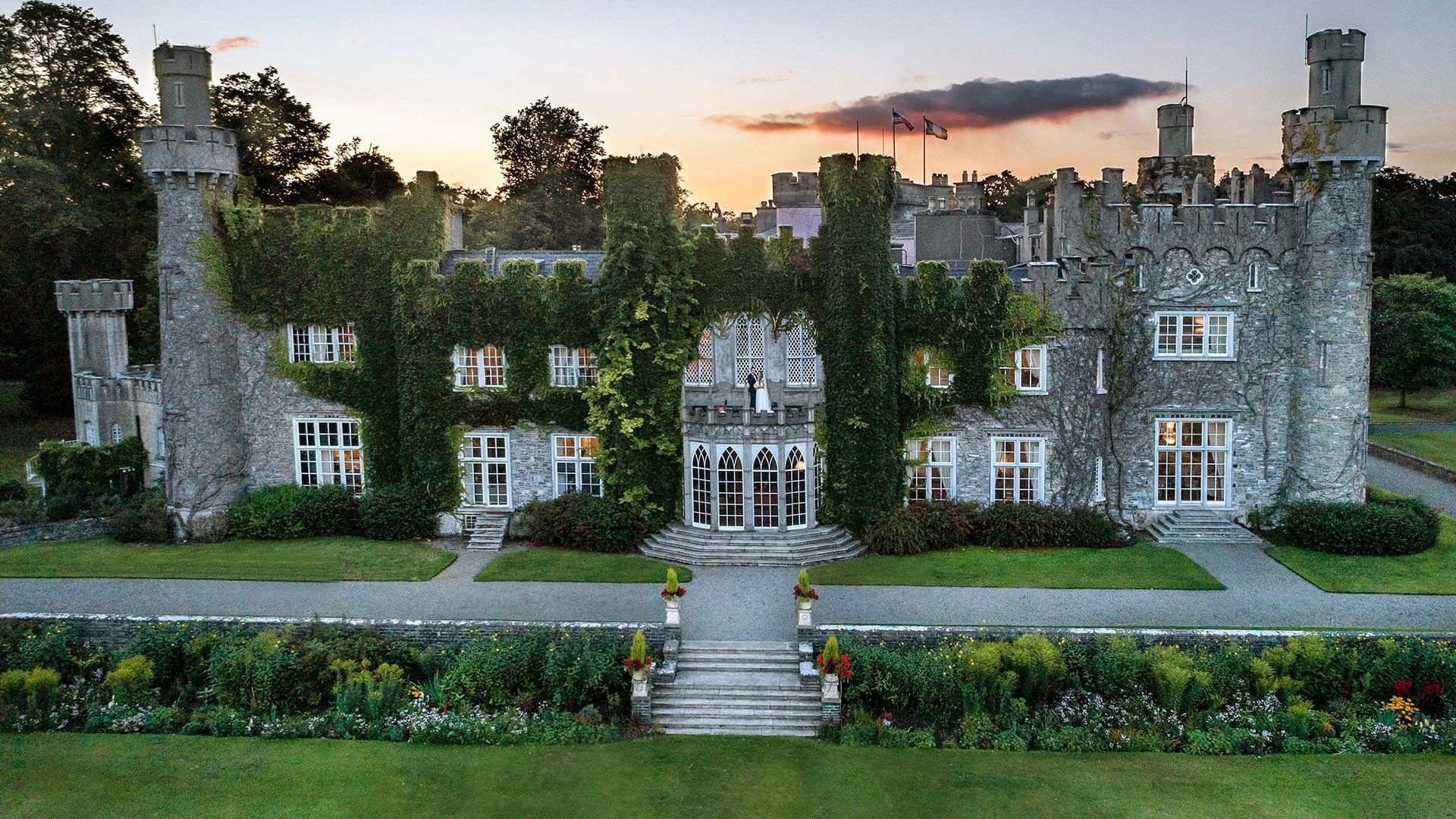
This one is technically hiding in plain sight. Luttrellstown Castle sits just 12 kilometres from Dublin city centre, tucked inside a private estate that most Dubliners have never set foot in.
The castle itself dates back to the 15th century and has been added to and renovated over the centuries. It gained a certain celebrity-adjacent fame when Victoria Beckham’s sister got married here in the late 1990s, but beyond that tabloid footnote, it’s genuinely underappreciated as a piece of Irish heritage.
Access is limited because the estate operates as an exclusive resort and golf club, but you can visit by booking a room, a round of golf, or a dining experience. It’s not a cheap day out, but if you want to sleep in an actual castle without the crowds of more famous options, this one delivers.
The grounds include ancient woodland, a lake, and walled gardens. I spoke to a couple from Cork who spent a weekend here and described it as “completely surreal, like you’ve been dropped into a different century, except the wifi is excellent.”
3. Castlewellan Castle, County Down
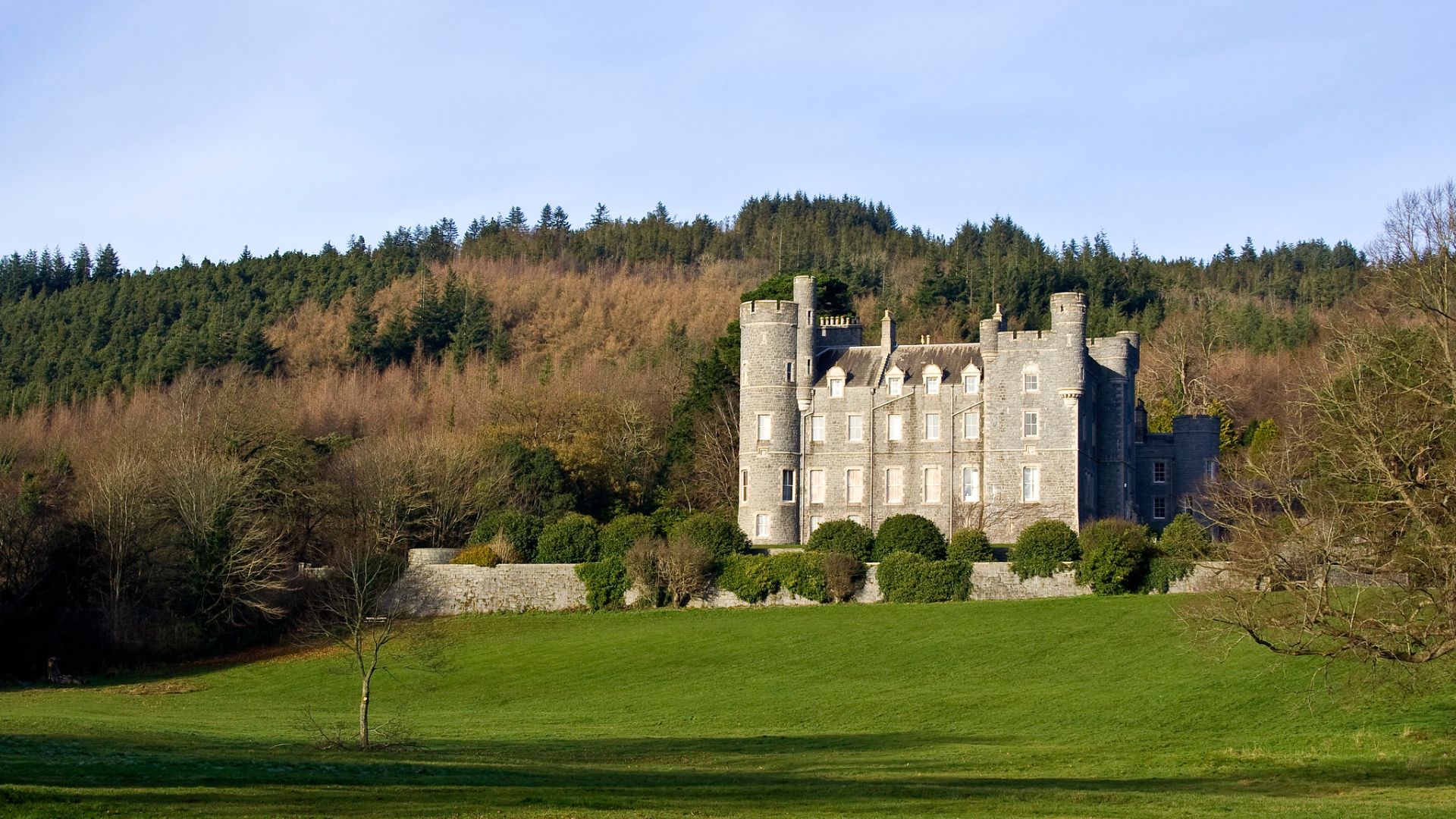
Northern Ireland doesn’t always get its fair share of attention on Ireland travel lists, which is a shame because County Down has some genuinely spectacular spots. Castlewellan Castle is one of them.
Built in the Scottish Baronial style in 1856, this one is technically a 19th-century addition to Ireland’s castle story rather than a medieval ruin. But the setting is what makes it. The castle sits within Castlewellan Forest Park, surrounded by one of the finest arboretums in the British Isles, a lake, and walking trails that wind through trees planted over 150 years ago.
The castle itself is used as a Christian conference centre and isn’t always open for general tours, but the grounds are public and completely free to enter. On a clear day, the views across the lake with the castle reflected in the water are the kind of thing that makes you reach for your phone and then realise no photo is going to do it justice.
Practical details:
- Great option for families, with picnic spots and walking trails for all abilities.
- Castlewellan Forest Park is managed by the Forest Service (Northern Ireland).
- Entry to the park: A small car parking fee applies.
4. Castle Roche, County Louth
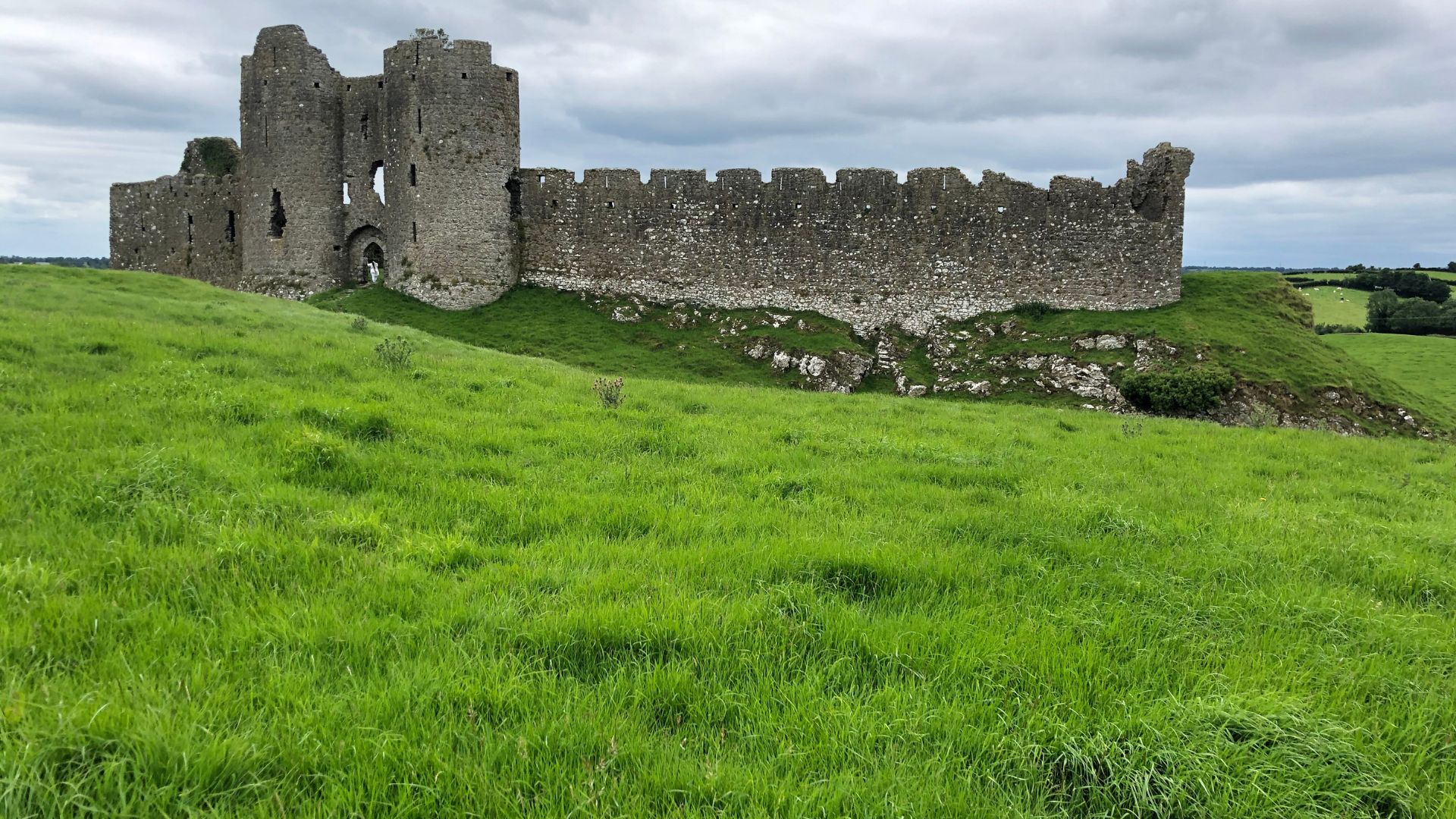
If there’s a castle in Ireland that looks like it was designed specifically for dramatic photography, it’s Castle Roche. Perched on a rocky outcrop in the rolling drumlins of County Louth, this 13th-century fortress has a commanding position that makes it feel genuinely fortress-like, not just a scenic ruin.
The castle was built around 1236 by Lady Rohesia de Verdun, and there’s a brilliant piece of local folklore attached to it. Legend has it that Lady Rohesia promised to marry the architect who designed it. Once the castle was complete and she had no further use for him, she had him thrown from the window. Whether or not you believe the story, it’s the kind of detail that sticks.
Getting here involves a short walk across a field from the road, and the approach is uneven enough to require decent footwear. But the payoff is a hilltop ruin with panoramic views of the surrounding countryside and virtually no other visitors on a typical day.
County Louth is one of Ireland’s smallest counties and is often overlooked on the Dublin-to-Belfast corridor. It deserves far more attention.
5. Clifden Castle, County Galway
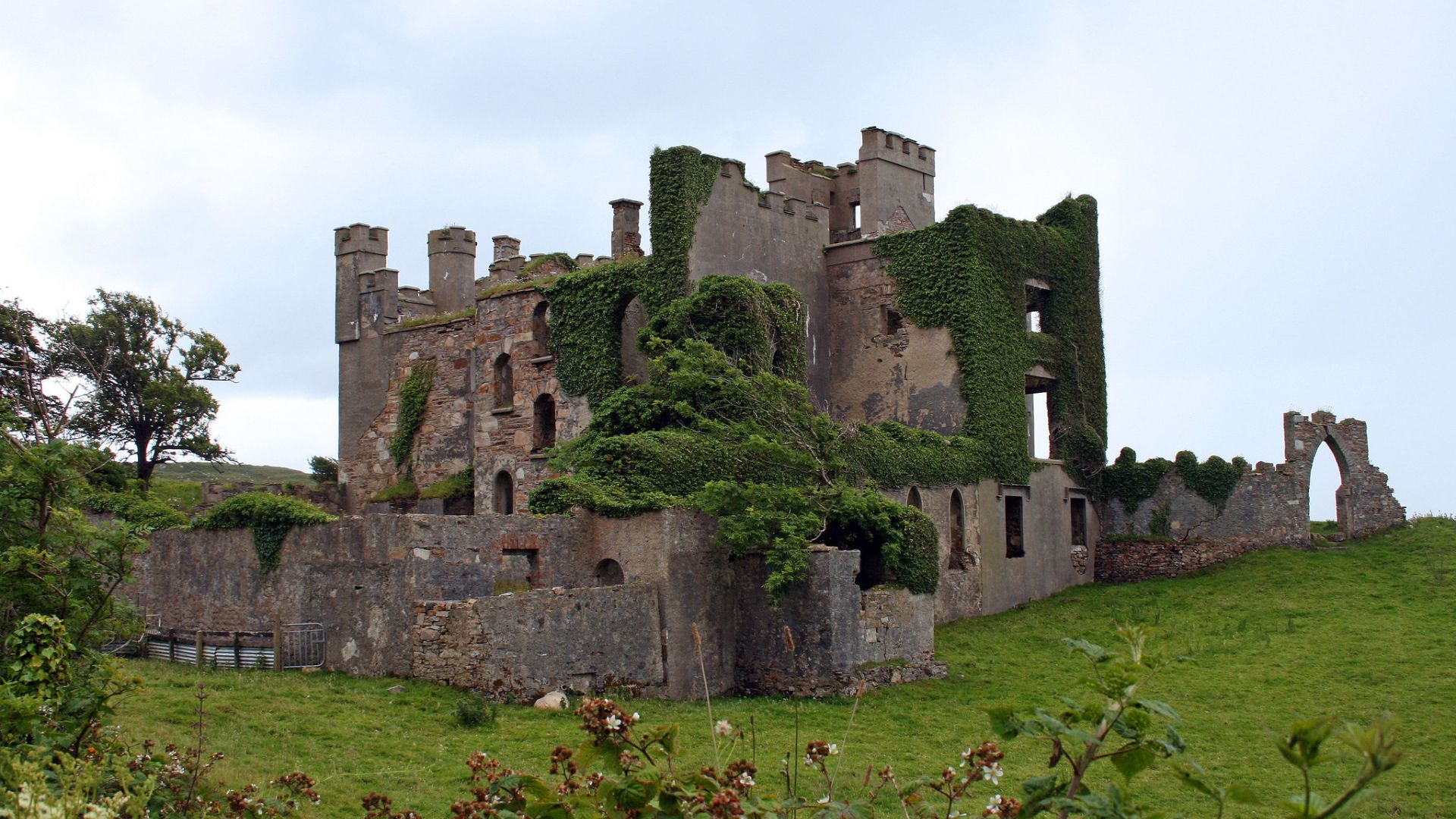
Clifden Castle isn’t actually a medieval castle. It was built in the early 1800s as a Gothic Revival manor house for John D’Arcy, the man who founded the town of Clifden. But call it what you want, it has towers, battlements, and atmosphere in abundance.
It’s now a ruin, reached by a walking trail from Clifden town that loops out along the Sky Road, one of the most scenic drives in Connemara. The castle sits near the coastline on the edge of the Atlantic, and on a moody day with clouds rolling in off the water, it genuinely looks like the setting for a gothic novel.
The trail is marked and takes about an hour return from the town. You pass through farmland and along bog roads before the castle appears ahead of you, open to the elements and absolutely free to explore.
Clifden is worth a longer stay. The town is lively, and the surrounding landscape is some of the most dramatic in Ireland.
6. Grianán of Aileach, County Donegal

Grianán of Aileach is one of those places that makes you recalibrate your sense of Irish history. This isn’t a medieval castle. It’s a stone ring fort, believed to date back as far as 1700 BCE, though the current structure was likely built around the 5th century AD. It was the seat of the O’Neill kings of Ulster for centuries.
The fort sits at the top of Greenan Mountain, about 21 kilometres from Derry/Londonderry, and the views from inside are staggering. On a clear day, you can see Lough Swilly and Lough Foyle stretching out on either side.
What gets me about Grianán is how complete it feels. The circular walls stand up to five metres high. You walk through the entrance passage, step into the central enclosure, and the wind hits you, and the landscape opens up, and it’s difficult to articulate what it does to your sense of time. Difficult but worth trying.
This is technically a different category from a traditional castle, but any list of lesser-known historic sites in Ireland would be incomplete without it.
Visiting:
- A small cafe at the base of the hill operates in the summer months.
- Free and open year-round.
- The road to the top is narrow but drivable.
7. Doe Castle, County Donegal
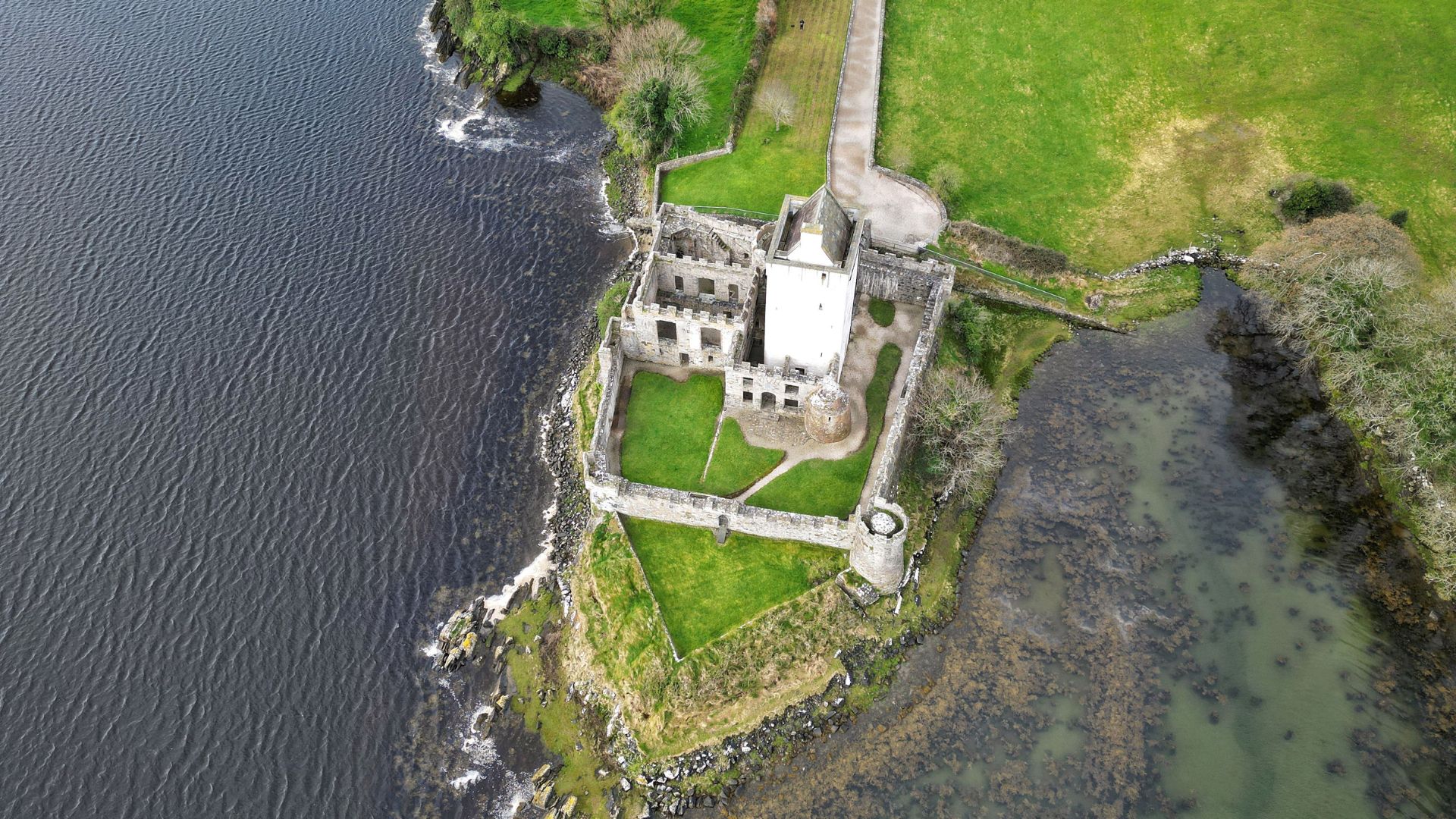
Donegal is Ireland’s hidden county in a lot of ways. The roads are longer, the distances more demanding, and the tourist infrastructure thinner than elsewhere. But that’s precisely why it rewards the travellers who make the effort.
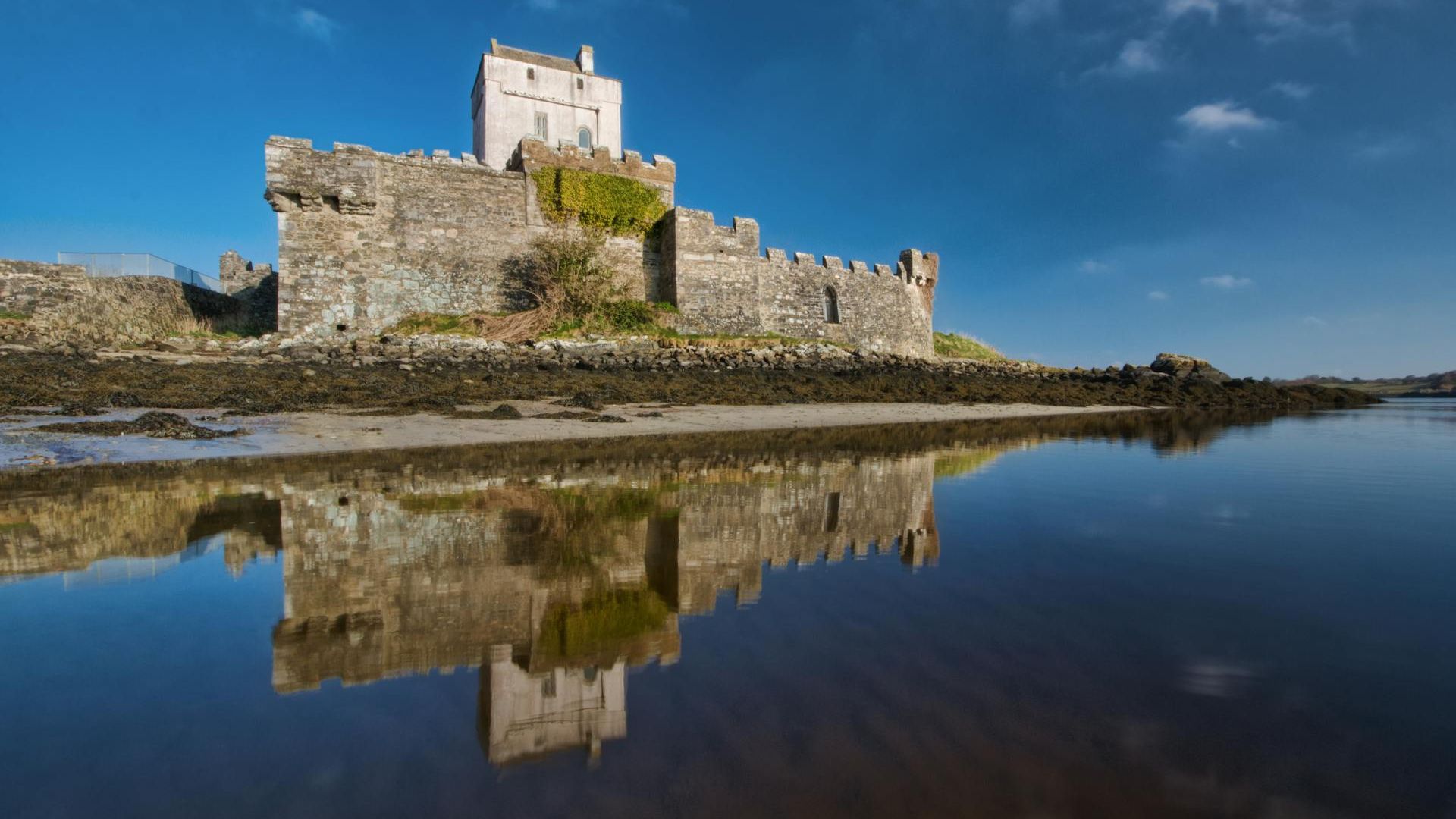
Doe Castle sits on a rocky promontory on Sheephaven Bay, near the village of Creeslough. It was built in the early 16th century and served as the stronghold of the MacSweeney clan, one of the prominent Gaelic families of medieval Ulster. The setting is extraordinary: the castle is protected on three sides by the sea and on the fourth by a rock-cut moat.
On a recent visit, a solo traveller I spoke to said she had spent 45 minutes sitting on the wall looking out at the bay without seeing another person. That’s the Doe Castle experience. It’s a place that gives you space.
The castle is managed by the Office of Public Works, and access is free. The condition of the interior has improved with some restoration work in recent years, so it’s worth going inside to see the tower.
8. Ballycarbery Castle, County Kerry
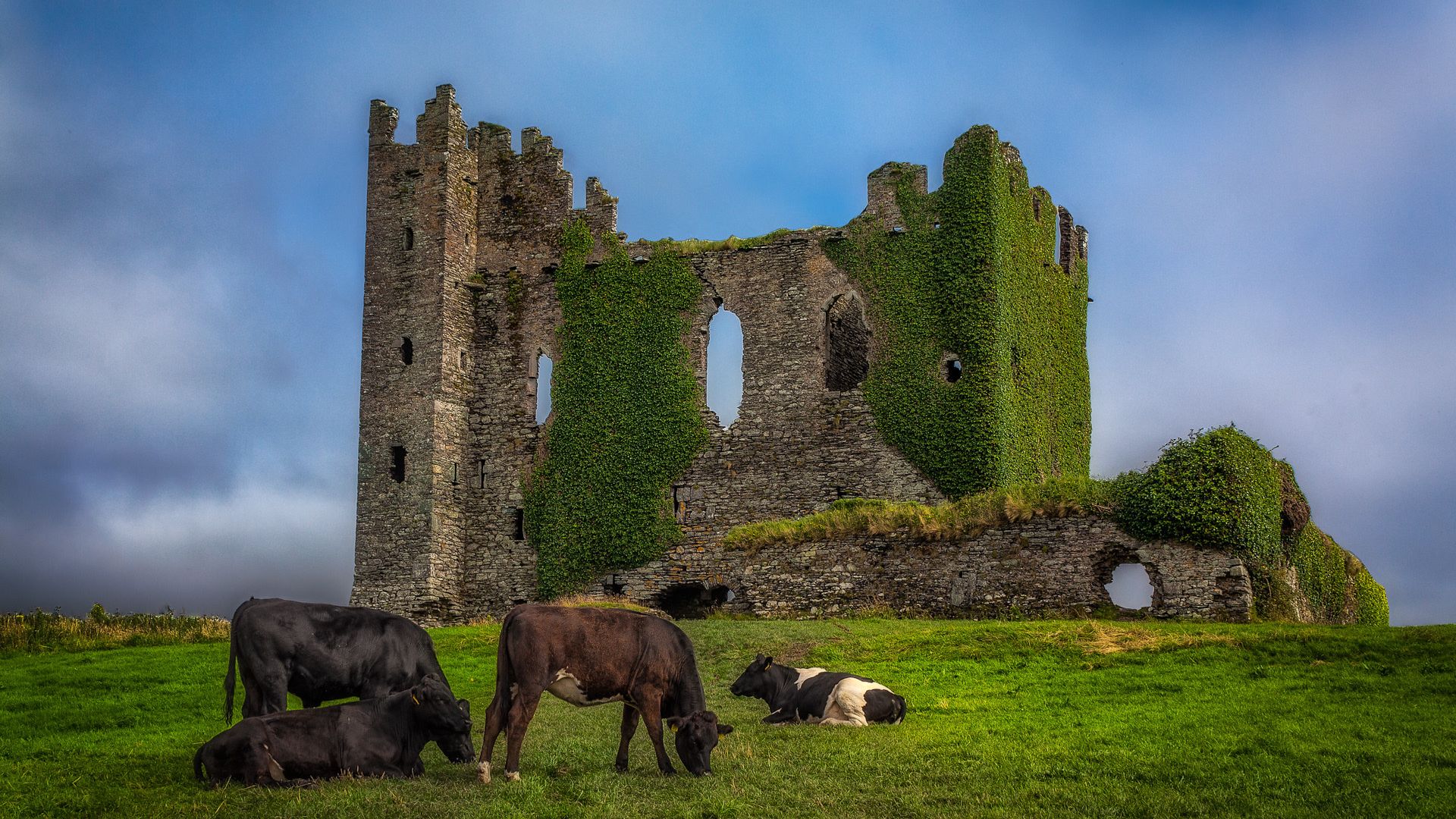
The Ring of Kerry draws enormous numbers of visitors every year, and most of them drive past Ballycarbery Castle without stopping. Their loss.
The castle sits about two kilometres from the village of Cahersiveen, just off the main road across Valentia Bridge. It’s a substantial ruin, a late 15th or early 16th-century tower house that was once the stronghold of the McCarthy Mór clan. The backdrop is the kind of Kerry scenery that almost feels unfair: green hills, the estuary, and the mountains beyond.
Getting there involves a short walk across a farm track (keep to the marked path and respect any livestock), and the site is freely accessible. There are also two stone ring forts nearby, Cahergall and Leacanabuaile, which make a good combined visit.
If you’re looping the Ring of Kerry, build in time here. Most coach tours don’t stop, so the chances of having the place to yourself on a quieter morning are good.
9. Ballinalacken Castle, County Clare
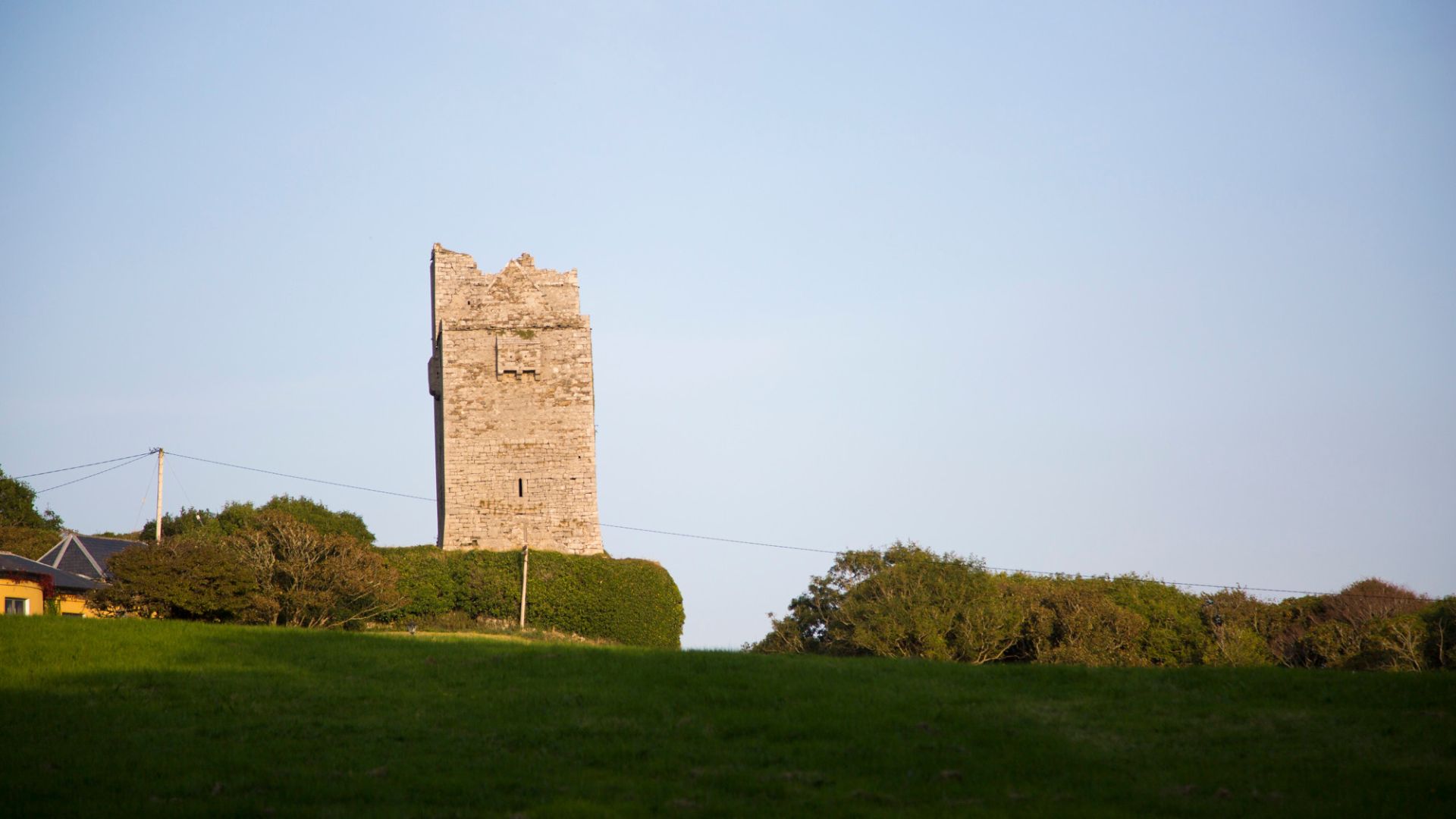
County Clare tends to get credit for the Cliffs of Moher and the Burren, which is fair. But people pass through it fast on their way to Galway or Kerry, and they miss things like Ballinalacken Castle.
The castle is a 15th-century tower house in spectacular condition considering its age. It sits on raised ground near Doolin, with views out over the Aran Islands and the Atlantic. On a clear day, the sunset from this spot is genuinely one of the best in Ireland.
What’s interesting about Ballinalacken is that it sits next to Ballinalacken Castle Hotel, a Victorian country house that has used the tower as its landmark for generations. You can visit the castle ruin independently, and if you’re looking for somewhere atmospheric to stay in the area, the hotel is a good option.
The location near Doolin also makes it easy to combine with a ferry trip to Inis Mór, the largest of the Aran Islands, for a two-day mini-break with serious historic depth.
10. Doonagore Castle, County Clare
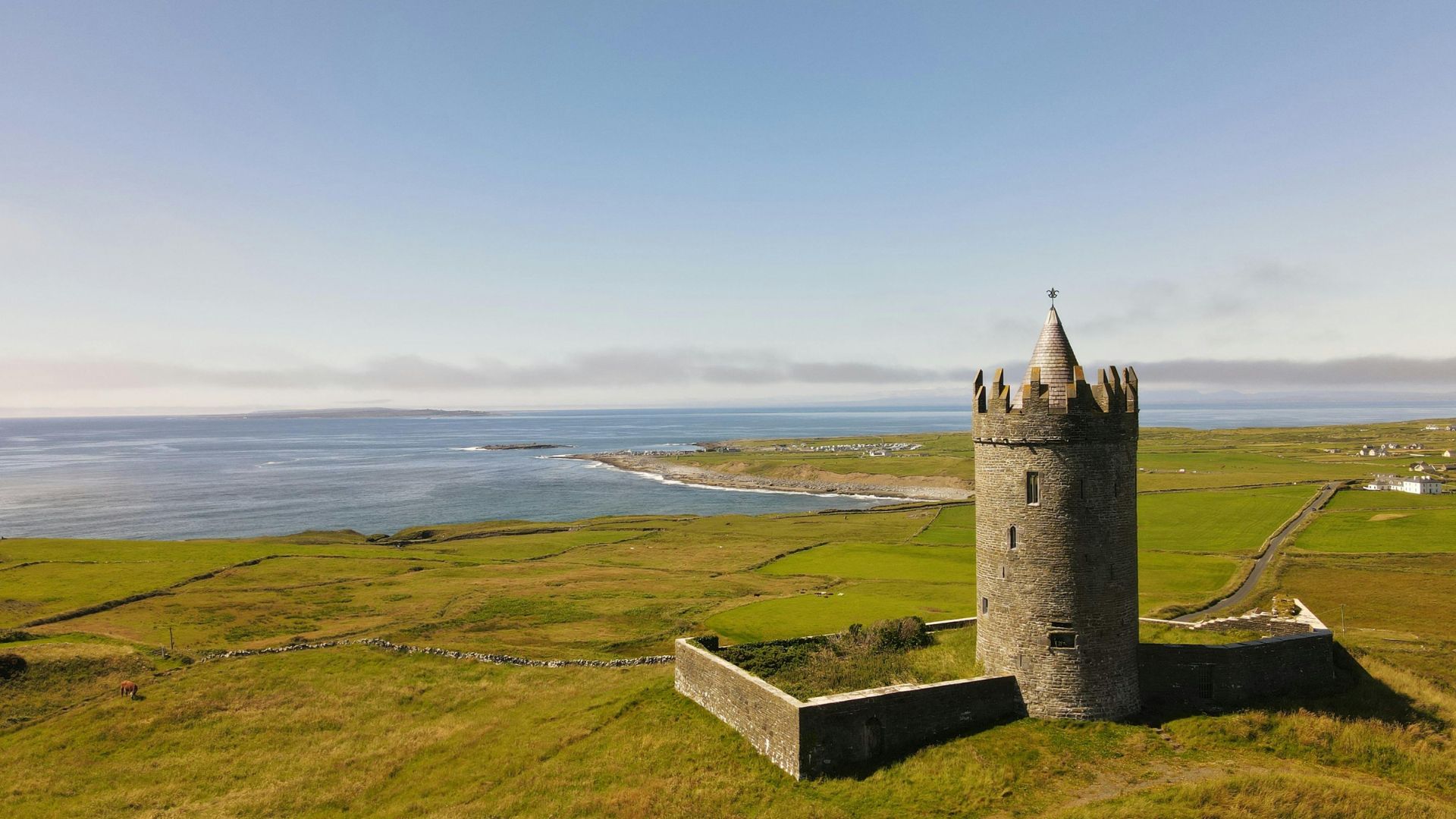
We’re staying in County Clare for the final entry, and for good reason. Doonagore is one of the most photogenic castles in Ireland and somehow still doesn’t make most people’s lists.
It’s a 16th-century circular tower house that sits on a hill above the village of Doolin. The castle is privately owned and not open to the public for tours, but it can be seen clearly from the road and from the nearby cliffs. It features in more Irish photography than most people realise, often appearing in moody evening shots with the Aran Islands visible in the sea behind it.
There’s something satisfying about a castle that doesn’t need to perform for visitors. Doonagore just sits there, doing what it’s been doing for five centuries, looking magnificent.
Doolin village itself is worth an evening. It’s one of the best spots in Ireland for traditional music, with a few pubs that consistently draw strong sessions.
A quick note on visiting Irish castle ruins
A few practical points that will make your trip better:
- Wear proper shoes. Grass-covered ruins can hide uneven stone and sudden drops. This is not the place for flip-flops.
- Check access before you go. Many ruins are on private land. Where there’s a marked trail or a gate open to the public, follow it. Where there isn’t, ask first.
- Bring layers. Castle sites in Ireland are almost always exposed to the wind. Even in summer, a jacket is not optional.
- Go in the morning. Even the castles that do get visitors tend to be quieter before 11 am. You get better light and more time to yourself.
- Respect the sites. These places have no staff and no admission fee. The least we can do is treat them carefully.
Conclusion
Ireland’s 30,000-odd castles and castle ruins are one of the most overlooked aspects of what makes the country such a remarkable place to travel. You don’t need to queue. You don’t need to book months in advance. You just need to be willing to take a road that isn’t on the main itinerary and walk across a field or two.
The ten castles in Ireland on this list range from ancient pre-Christian hilltop forts to windswept Atlantic tower houses to a Victorian baronial estate hiding 12 kilometres from Dublin city centre. What they share is the feeling of genuine discovery that’s increasingly hard to find in popular travel.
Get off the main road. The best stuff in Ireland has always been down a boreen.
Frequently asked questions
Are there any abandoned castles in Ireland?
Yes, hundreds. Ireland has a remarkable number of roofless, unmanaged, and genuinely abandoned castle ruins scattered across the countryside. Many stand on private farmland and can be seen from roads without formal public access. Clifden Castle in Connemara and Castle Roche in County Louth are good examples of atmospheric ruins that are freely accessible. The level of preservation varies wildly, from structurally sound tower houses to barely recognisable piles of stone, but that’s part of the appeal.
What is the must-see castle in Ireland?
If you can only visit one, most people would say the Rock of Cashel in County Tipperary. It’s a complex of medieval buildings perched on a dramatic limestone outcrop, including a 12th-century round tower, a Romanesque chapel, and a Gothic cathedral. It’s busy in summer but genuinely awe-inspiring. For something less visited but equally impressive, Trim Castle in County Meath is the largest Anglo-Norman castle in Ireland and far quieter than its size deserves.
Why are there so few castles in Ireland?
This one surprises people: Ireland actually has far more castles than most European countries, not fewer. The common perception that there are few comes from comparing them to the grand, fully intact medieval fortresses of France or Germany. Irish castles, particularly tower houses, were often smaller defensive structures, and many are now in ruins due to Cromwellian destruction in the 1640s and 1650s, as well as centuries of neglect and stone-robbing for building materials. What Ireland lacks in fully preserved examples, it more than makes up for in sheer number and atmosphere.
What is the most forgotten county in Ireland?
Roscommon and Longford are frequently cited as Ireland’s most overlooked counties, largely bypassed by the main tourist routes that hug the coasts. Donegal, despite its extraordinary beauty, also qualifies in the sense that the distances involved deter many visitors. Leitrim is statistically one of the least visited counties in Ireland and arguably one of the most underrated, with lakes, mountains, and a small but beautiful stretch of Atlantic coastline. All four reward the traveller who makes the detour.
Where is Ireland’s oldest town?
Waterford in the southeast of Ireland holds the distinction of being the country’s oldest city. It was founded by Viking settlers around 914 AD, making it over 1,100 years old. Waterford is home to the Viking Triangle, a cultural quarter with museums and preserved Norse heritage, and it’s genuinely underrated as an Irish travel destination. For visitors interested in history, it pairs beautifully with nearby sites like the medieval Dunbrody Abbey and the Waterford Greenway cycling trail.