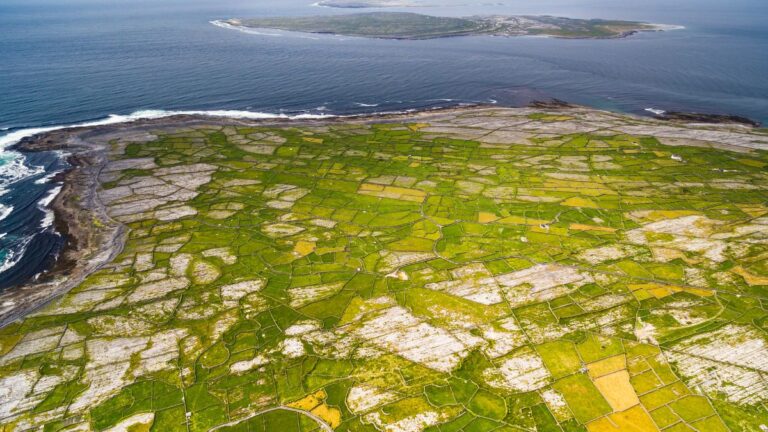
Wild Atlantic Way: The ultimate road trip guide for Ireland’s rugged west coast
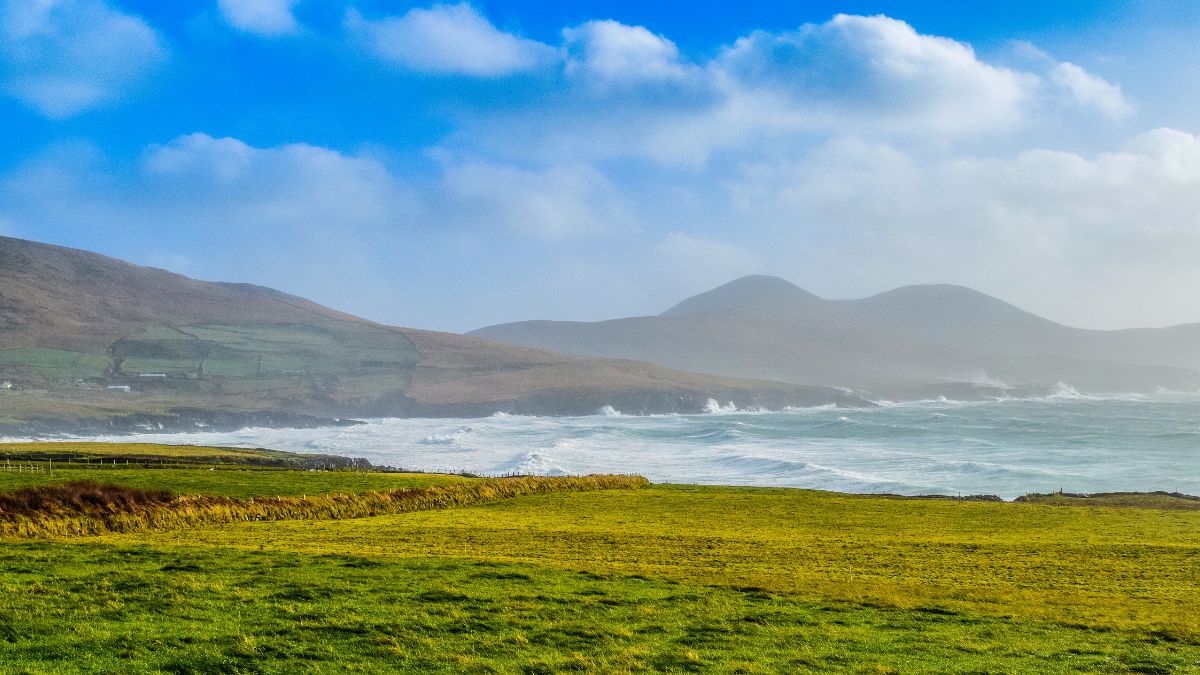
Share this
The world’s longest defined coastal route will test your patience, steal your heart, and leave you planning your return trip before you’ve even made it home.
There’s a moment somewhere between Slieve League and Achill Island when it hits you. You’ve pulled over for what feels like the hundredth time, stepped out of the car into a sideways Atlantic gust, and you’re standing on the edge of Europe staring at a sea that has no interest in being calm. And you think: nothing prepared me for this.
That moment is what the Wild Atlantic Way is all about.
So, what exactly is the Wild Atlantic Way?
The Wild Atlantic Way is a 2,500 km (1,550-mile) signed coastal touring route that stretches along Ireland’s entire western seaboard, from the Inishowen Peninsula in County Donegal in the north all the way down to Kinsale in County Cork in the south. It was officially launched by Fáilte Ireland in 2014 and has since become one of Europe’s most celebrated road trips.
But here’s what the brochures won’t always tell you: it’s not a motorway. It’s a route. A glorious, sometimes frustrating, frequently jaw-dropping patchwork of country roads, cliff paths, fishing villages, bog roads, and viewpoints, each one stitched together by the one constant companion: the Atlantic Ocean.
Whether you have a week or a month, driving even a section of the Wild Atlantic Way ranks among the most rewarding travel experiences in Europe.
Why the Wild Atlantic Way hits differently from other road trips
Most famous road trips give you big skies, wide highways, and a sense of freedom. The Wild Atlantic Way gives you something rawer. The roads are narrow. The weather is unpredictable. The landscape shifts from sandy beaches to black cliffs to purple bog within a single hour.
And the people. Rural Ireland along the west coast has a warmth that doesn’t feel forced. You’ll stop for petrol in a village where the owner asks where you’re headed, draws you a hand-sketched map on a napkin, and tells you to avoid the main road to the Cliffs because “the view from the back lane is the one.”
That’s the thing about this route: it rewards you for going slow.
Planning your Wild Atlantic Way road trip: The honest version
Starting north or south?
Most guides will tell you it doesn’t matter. Honestly, if you’re flying into Dublin, starting in Donegal (north to south) makes logistical sense. If you’re flying into Cork or Shannon, go south to north.
The prevailing wind comes from the southwest, which means driving north to south puts the ocean on your right, your window facing the sea. Some people swear this improves the experience. Others don’t notice. It’s worth knowing.
How much time do you actually need?
You could technically drive the full route in 10 days without stopping, but you’d spend most of your time in the car and miss the entire point. Realistically:
- Full route: 2 to 3 weeks minimum to do it justice.
- Highlight reel: 7 to 10 days, focusing on one or two counties.
- Short break: 3 to 4 days on a single section (Connemara, for example, or the Dingle Peninsula).
We’ll cover this in more detail in the FAQ section below.
When to go
May and June are arguably the best months: long daylight hours, relatively dry, and before the peak summer crowds hit. September is a close second, with softer light, emptier roads, and the heather turning the hillsides purple.
July and August are busy, particularly around the Cliffs of Moher and Dingle. Not unusable, just busier than you’d imagine for somewhere that feels so remote.
Winter (November to February) is for the serious devotee. Wild, moody, dramatic, and largely tourist-free. But some attractions and accommodation options are closed, and the days are short.
The route broken down: Section by section
The Northern Headlands: Donegal and beyond

Donegal is where the Wild Atlantic Way feels most untamed. It’s undervisited relative to how extraordinary it is, and if you’re skipping it to rush down to Galway, you’re making a mistake.
Donegal’s hidden gems deserve a post of their own, but highlights here include:
- Slieve League: These cliffs are three times the height of the Cliffs of Moher, and you can walk along the top. Fewer crowds, more drama.
- Fanad Head Lighthouse: One of the most photographed lighthouses in Ireland, with good reason.
- Malin Head: Ireland’s most northerly point. Windswept and brilliant.
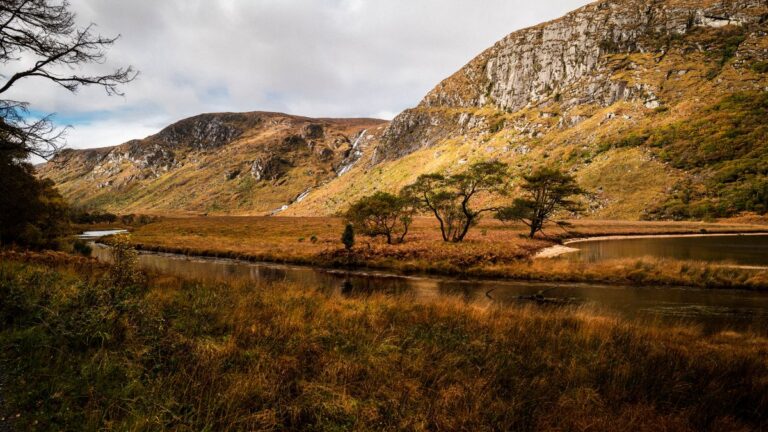
- Glenveagh National Park: Inland, yes, but worth the detour for the castle and the red deer.
A quick note on a firsthand experience here: In 2023, a travel writer named Claire O’Brien spent three days in Donegal as part of a two-week WAA journey and later wrote that the stretch between Ardara and Dungloe was the section she replayed in her mind most clearly six months later. “It was just bog and coast and silence,” she wrote. “I don’t think I saw another car for forty minutes.” That says it all.
The surf coast: Sligo and the northwest

If Donegal is wild and remote, Sligo is wild with a creative edge. This stretch of the Wild Atlantic Way has a personality all its own, shaped as much by its surf culture and literary history as by its coastline.
Strandhill is the heartbeat of Irish surfing. The beach doesn’t suit casual swimmers (the Atlantic here is serious business), but it’s mesmerising to watch surfers work the breaks, and the village itself has quietly become one of the best food destinations on the entire route. Shells Café alone is worth the detour.
Easkey and Enniscrone round out a trio of surf spots that draw wave hunters from across Europe. Outside of summer, you’ll often have these places almost to yourself.
Then there’s Benbulben, the flat-topped mountain that dominates the Sligo landscape like a natural fortress. W.B. Yeats called this part of Ireland home, and it’s not hard to see why it fed his imagination. His grave is in the churchyard at Drumcliffe, with Benbulben rising behind it. The epitaph he wrote for himself, “Cast a cold eye on life, on death. Horseman, pass by,” is carved into the stone. It’s one of those stops that lands harder than you expect.
Rosses Point, just outside Sligo town, is a quieter gem: a long sandy spit with views across to Knocknarea hill, where legend has it Queen Maeve is buried under a cairn of stones at the summit. It’s a 45-minute walk up if you have the energy.
Sligo town itself is worth an overnight stay. It’s small enough to walk everywhere, has a genuine arts scene, and the food has improved enormously in recent years.
The western heartland: Mayo and Connemara
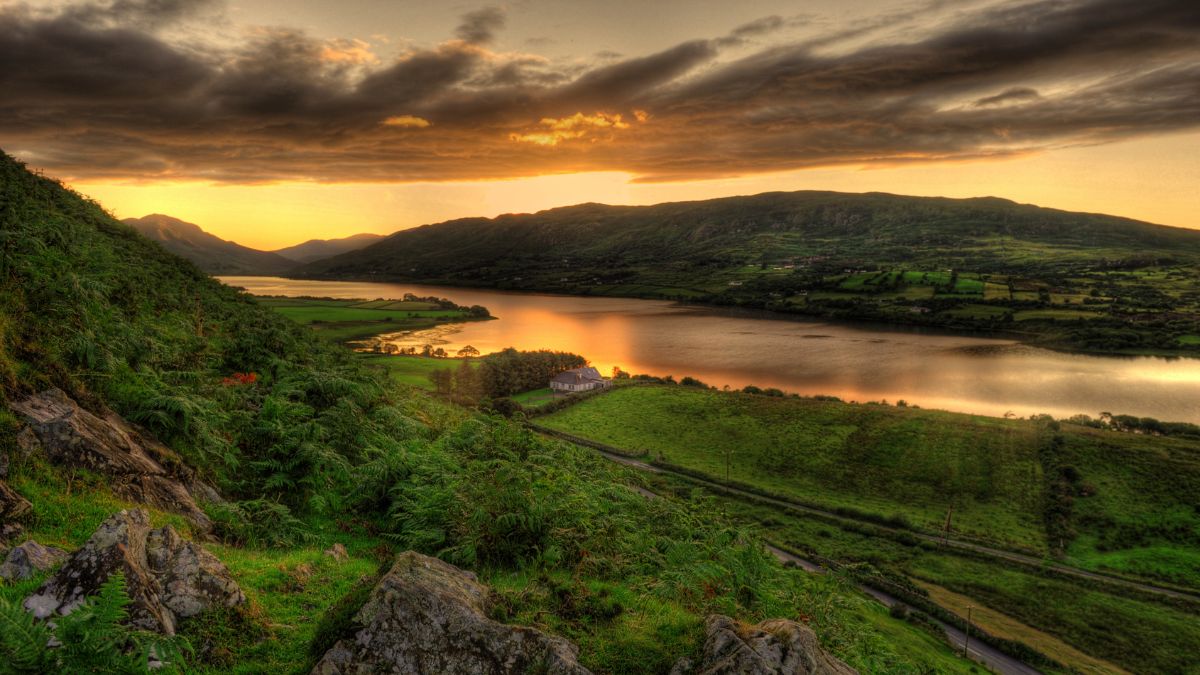
Crossing into Mayo, the landscape opens up. The bog gets bigger. The sky gets wider.
Achill Island is a must. It’s connected to the mainland by a bridge (you don’t need a boat), and it has some of the most extraordinary beach scenery in Ireland, including Keem Bay, a horseshoe of turquoise water that looks like it was stolen from somewhere tropical.
Then there’s Connemara, which is arguably the most visually iconic stretch of the entire route. Twelve Bens mountain range, Kylemore Abbey reflected in its lake, miles of Atlantic-battered coastline. It looks like Ireland was featured in films before they started filming everything in Eastern Europe.
Galway city sits roughly at the midpoint. It’s lively, walkable, and full of good restaurants and traditional music sessions. It’s a good place to rest your legs for a night or two.
The middle stretch: Clare and the Burren

County Clare is home to two of the Wild Atlantic Way’s most famous landmarks.
The Cliffs of Moher need no introduction, but they do need some honest advice: go early in the morning (before 9 am) or in the evening after 5 pm. The midday crowds can make it feel more like a theme park than a natural wonder. The cliffs are still stunning regardless, but the experience changes dramatically depending on when you visit.
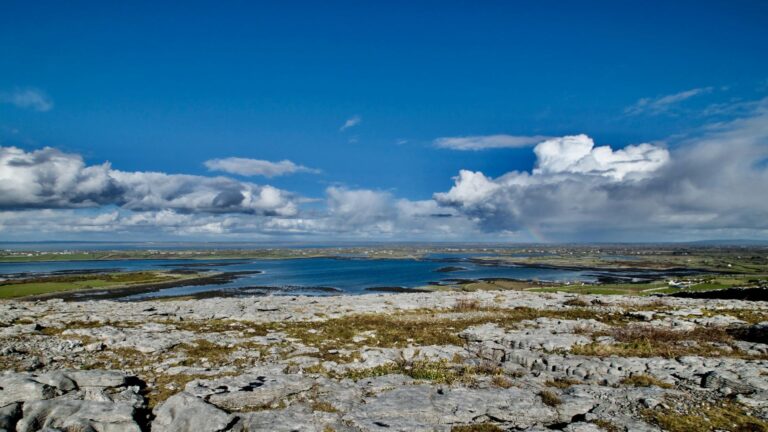
The Burren is something else entirely. A limestone karst landscape that looks like the moon decided to go on holiday in Ireland. Wildflowers grow in the cracks of the rock in spring. Ancient dolmens sit in the middle of fields with no fence around them. You can pull over and walk up to a 5,000-year-old tomb like it’s nothing.
The southwest: Kerry and the Ring

You’ve probably heard of the Ring of Kerry. It’s one of Ireland’s most famous drives and for good reason: Killarney’s lakes, the McGillycuddy Reeks, the Skellig Ring coast, and charming market towns like Kenmare and Sneem.
One honest caveat: the Ring of Kerry road attracts coach tours, which means if you’re heading anti-clockwise (the direction coaches go), you’ll be meeting them head-on on narrow roads. Go clockwise to avoid this.
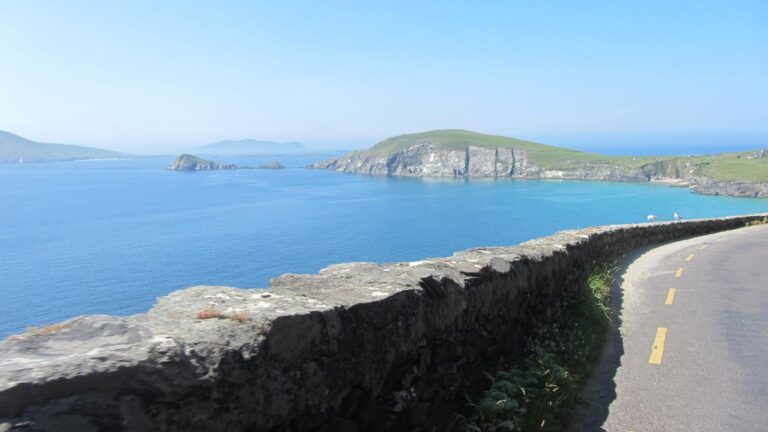
The Dingle Peninsula is a nearby alternative that many experienced WAA travellers actually prefer. It’s slightly more compact, has Slea Head (one of the most dramatic viewpoints on the entire route), and has a genuine bohemian creative scene in Dingle town.
Worth mentioning: the route shares some geography with the Causeway Coastal Route in Northern Ireland, which continues the coastal road trip experience up along the Antrim coast. If you’re doing Ireland north to south, these two routes connect beautifully.
The south: West Cork
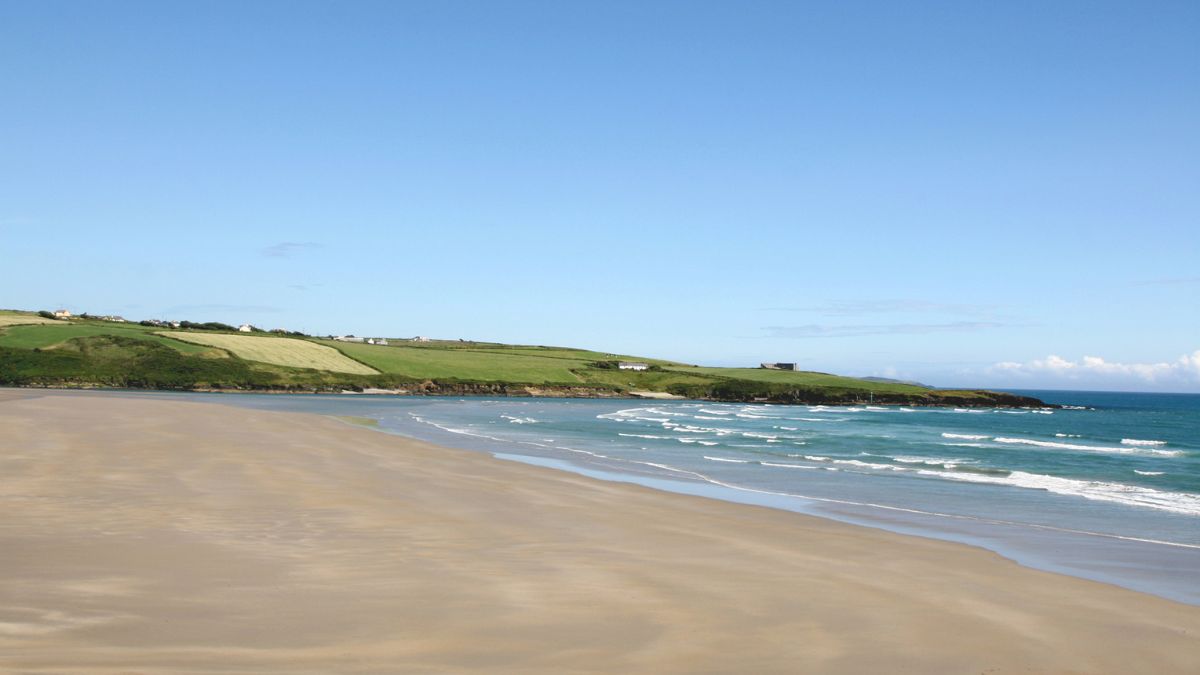
The route officially ends (or begins, depending on your direction) around Kinsale. West Cork is quieter and warmer-feeling than the north, with a strong foodie culture, beautiful harbour towns like Bantry and Skibbereen, and the Mizen Head, Ireland’s most southwesterly point.
If you’re running short on time, West Cork is the section most people skip. That’s probably why it still feels genuinely undiscovered.
Practical things nobody tells you
The roads
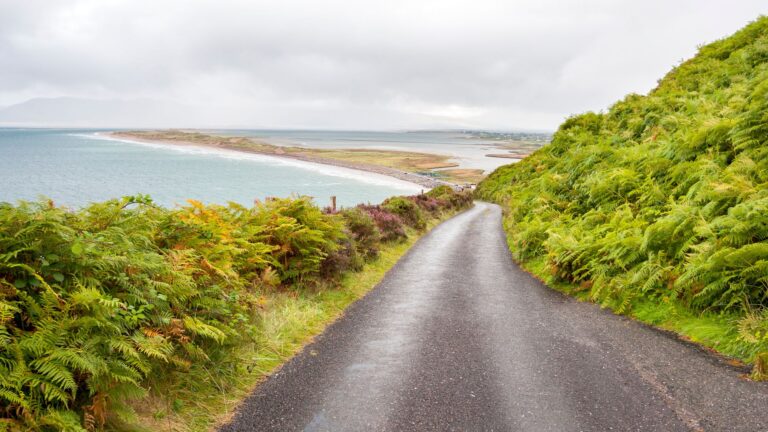
Some sections of the Wild Atlantic Way use national roads. Many do not. Narrow boreens (small country lanes), grass growing up the middle, stone walls inches from your wing mirror: this is part of the experience. If you’re not used to driving on the left, rent a smaller car.
Sat navs and apps can send you on “scenic” routes that are technically a road but shouldn’t be used in anything other than a 4×4. Download Google Maps offline for your route sections, and don’t be afraid to ask a local.
Fuel
Fill up whenever you see a petrol station in smaller towns. There are stretches, particularly in Donegal and Mayo, where you won’t see one for a while.
Accommodation
Book in advance for July and August, especially anywhere along the Dingle Peninsula or around Doolin in Clare. Everywhere else, you can often find something with a day’s notice outside peak season. B&Bs along the route are frequently excellent and often cheaper than hotels.
A realistic story from the road
In summer 2024, a couple from Berlin, Thomas and Anja Meier, drove the Wild Atlantic Way over 12 days as their honeymoon road trip. They’d planned it meticulously: spreadsheet, hourly itinerary, restaurant reservations. By day three in Connemara, they’d abandoned the spreadsheet. A local in a Clifden pub told them to take the Sky Road instead of their planned route. They did. They ended up pulled over for an hour, watching the sun set over Clifden Bay, eating crisps from a petrol station bag. “That hour,” Anja later said, “was the best part of the trip.”
That’s the Wild Atlantic Way in a sentence. The best parts are the unplanned ones.
Conclusion
The Wild Atlantic Way isn’t a tick-box destination. It’s a pace, a mindset, a willingness to pull over when something catches your eye and forget your schedule for an hour. It’s Ireland at its most elemental: wind-stripped and ancient and quietly extraordinary.
Whether you drive the full 2,500 km or spend a week on one section, you’ll come back changed in some small way. More patient, maybe. More willing to sit with discomfort, or beauty, or both at once.
Plan it. But plan it loosely.
FAQ: Wild Atlantic Way questions answered
How long does it take to drive the Wild Atlantic Way?
The full Wild Atlantic Way covers approximately 2,500 km. You could drive it without stopping in around 30 hours, but that’s not the point. Most travellers allow between 10 days and 3 weeks to experience it properly. A week is achievable if you focus on a single region, such as Connemara and Clare, or Kerry and West Cork, rather than trying to cover the entire route.
Which is the best part of the Wild Atlantic Way?
This depends entirely on what you’re after. For dramatic cliffs and raw scenery, Donegal (especially Slieve League) is hard to beat. For the classic postcard Ireland of fishing villages and mountain passes, the Dingle Peninsula and Connemara are the frontrunners. For pure variety – beaches, food culture, history and wildlife – County Clare and the Burren offer something different. Most people who drive the full route name Donegal as the section that surprised them most.
Is the Wild Atlantic Way worth it?
Yes, genuinely. It’s one of the most visually dramatic coastal drives in Europe, and it passes through regions of Ireland that feel largely unchanged and unhurried. The weather is unpredictable (pack layers regardless of the season), the roads can be narrow, and some sections require patience. But the combination of landscape, culture, and the general warmth of the people makes it an experience that travels with you long after you’re home.
Can you do the Wild Atlantic Way in a week?
You can do a meaningful section in a week, yes. A popular week-long approach is to fly into Shannon, pick up a car, and drive from Galway down through Clare, Kerry, and into West Cork, before flying home from Cork. This covers some of the most iconic stretches without being rushed. If you fly into Dublin, driving north to south through Donegal, Mayo, and Galway makes for an excellent week-long trip focused on the northern half.
How many stops are on the Wild Atlantic Way?
The official Wild Atlantic Way route has over 2,500 points of interest and 159 official Discovery Points, which are the signed viewpoints and landmark stops along the route. These range from cliff-top viewpoints to castle ruins to historic beaches. You won’t visit them all in one trip – nor should you try. Think of them as a menu, and build your itinerary around the five or six that genuinely interest you most.