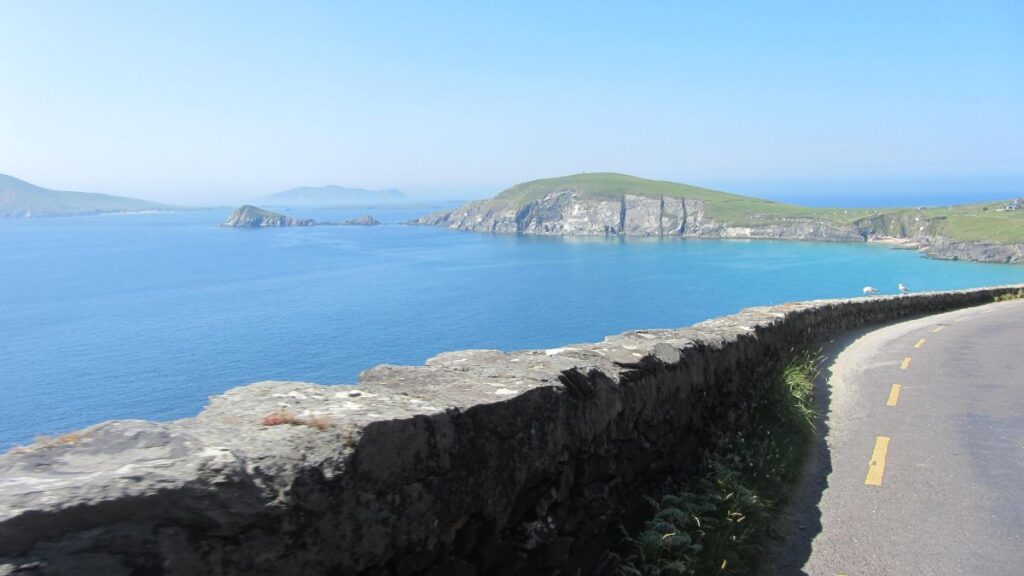


I’ll be honest with you. When I first started researching the Burren in County Clare, I wasn’t entirely sure what I was looking at. Photographs of it look almost alien, a vast grey plateau of cracked limestone that stretches for miles, dotted with wildflowers and ancient tombs. It didn’t look like the rolling green Ireland I’d always imagined. And yet, the more I dug into it, the more I became convinced it might just be one of the most fascinating places on the entire island.
So, what is the Burren? The Burren is a unique karst limestone landscape covering roughly 250 square kilometres in northwest County Clare. It’s one of the largest karst regions in Europe, shaped by millions of years of glacial activity, and it sits right on the edge of the Wild Atlantic Way. The word itself comes from the Irish “Boireann,” meaning “great rock” or “rocky place,” and that name couldn’t be more fitting.
But here’s the thing: the Burren isn’t just a rocky field. It’s an archaeological treasure, a botanical wonder, and one of Ireland’s most underrated destinations. If you’re planning a trip west, this guide covers everything you need to know.
What makes the Burren so special?
Most places in the world have either great scenery or great history. The Burren somehow has both, layered on top of each other in a way that takes a little time to appreciate.
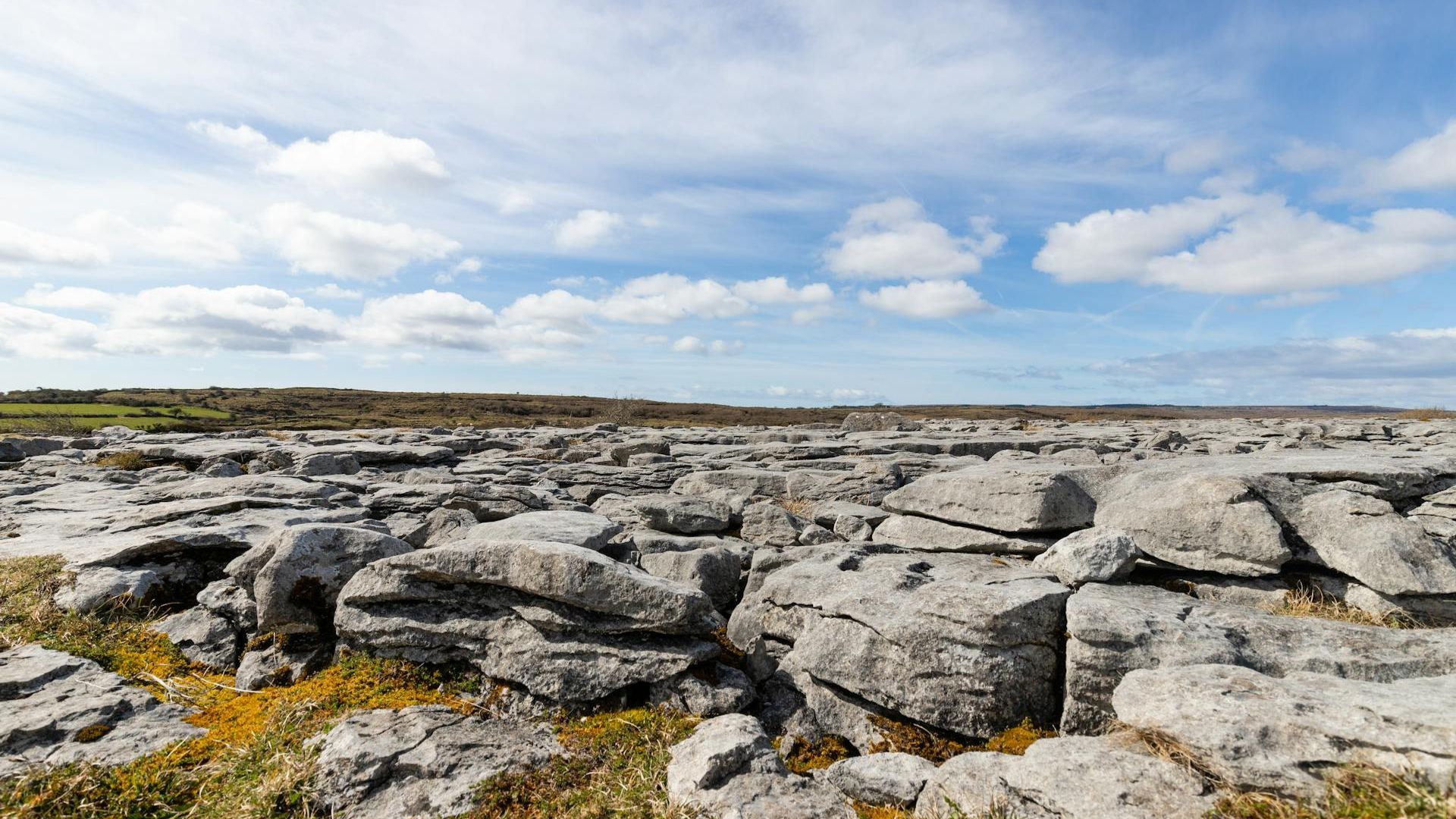
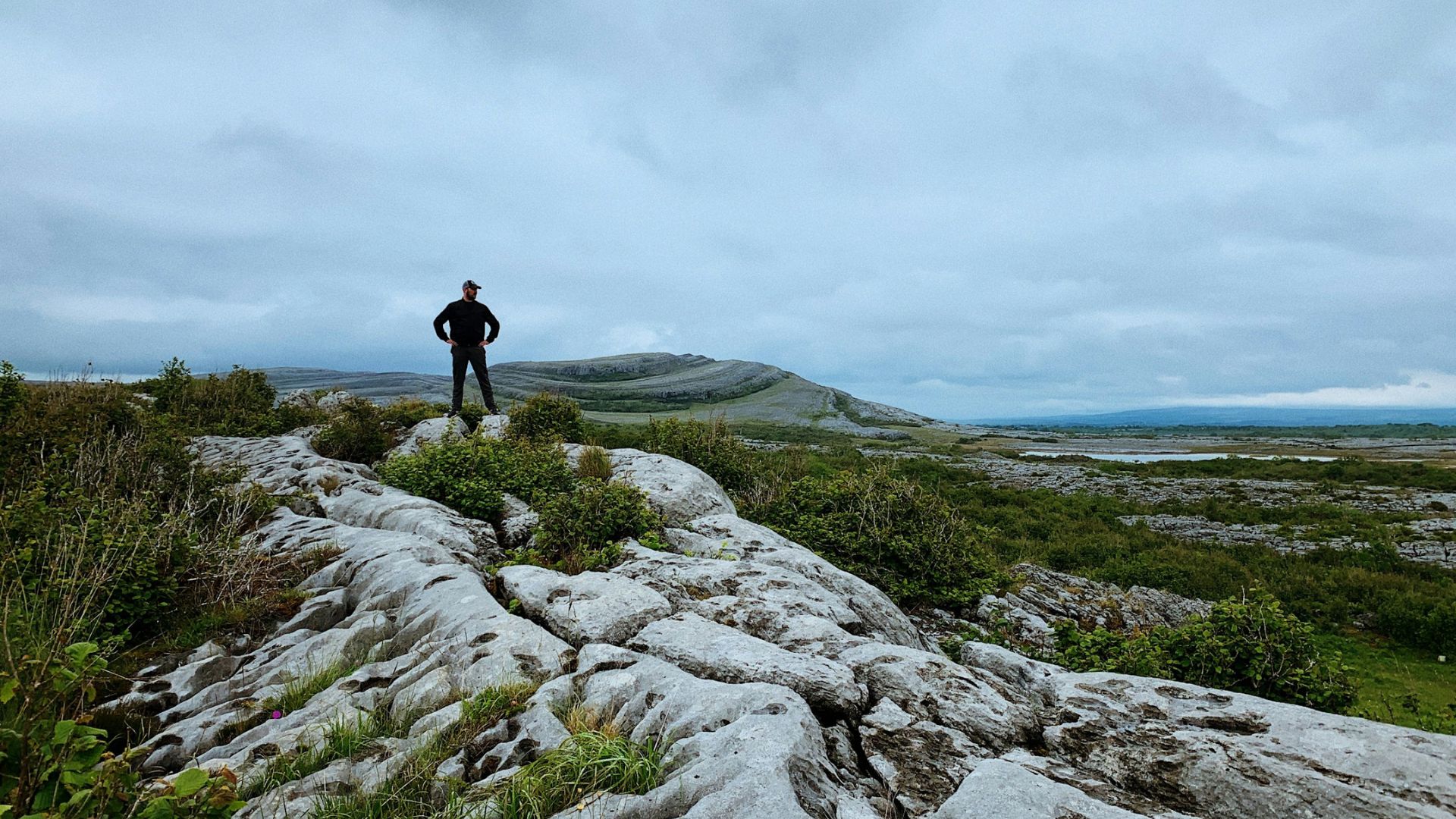
The landscape itself is formed from limestone pavements, sheets of flat grey rock criss-crossed with deep cracks called “grikes.” Those grikes create a sheltered microclimate at ground level where plants from completely different ecosystems grow side by side. You’ll find Mediterranean orchids, Arctic-alpine flowers, and Atlantic ferns all within a few steps of each other. Botanists travel from across Europe just to study this.
Under the surface, the Burren is riddled with caves, underground rivers, and turloughs (seasonal lakes that appear and disappear with rainfall). Above ground, you’re standing on top of roughly 4,000 years of human history, with more than 90 megalithic tombs, hundreds of ring forts, and early Christian sites scattered across the plateau.
It’s the kind of place that reveals itself slowly. You almost need to slow down to understand it.
The geology: Why the Burren looks the way it does
This is the part most visitors skip, but understanding it makes the whole landscape click.
About 350 million years ago, the Burren sat beneath a warm tropical sea. The limestone you’re walking on today is made up of compressed marine organisms, shells, and coral from that ancient seabed. Then, during the last Ice Age, glaciers stripped away the topsoil and scoured the surface clean, leaving behind the bare, cracked pavement you see today.
Rainwater, which is slightly acidic, slowly dissolves the limestone over thousands of years, carving out those grikes, cave systems, and the underground drainage channels that carry water invisibly beneath your feet. It’s a living geological process that’s still happening.
I spoke to a local guide named Ciaran, who runs walking tours near Ballyvaughan, and he put it perfectly: “People come here expecting green hills, and they’re confused when they see grey stone. But once you realise you’re basically standing on the floor of a 350-million-year-old ocean, it changes everything.” He’s right. It really does.
Top things to see and do in the Burren
There’s more here than most people realise. Here’s where to focus your time.
Poulnabrone Dolmen
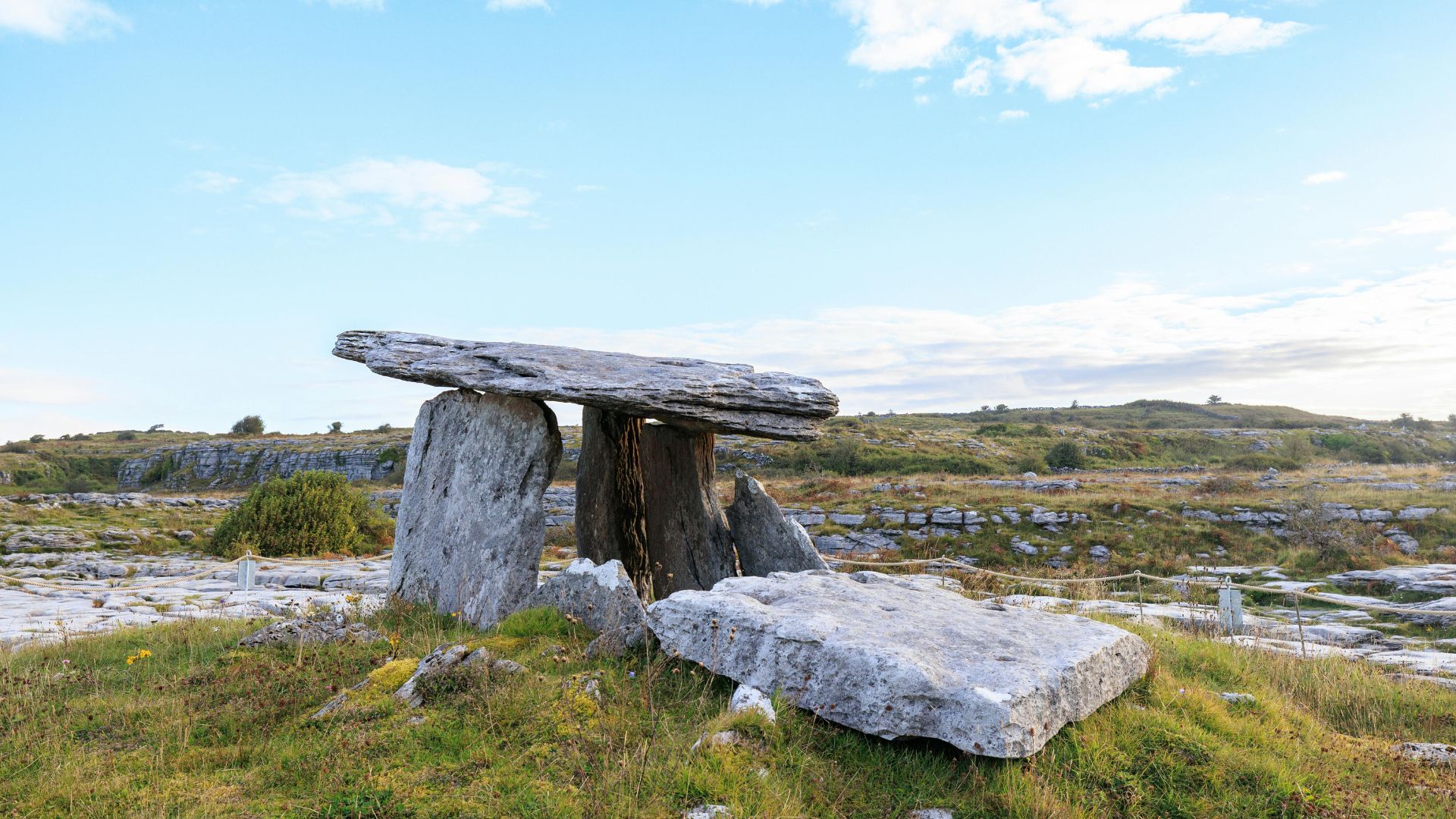
This is the Burren’s most iconic landmark and one of Ireland’s most photographed ancient monuments. Poulnabrone is a portal tomb built around 4,200 BCE, meaning it’s older than Stonehenge and the Pyramids of Giza. The skeletal capstone propped up by two upright stones sits right in the middle of an open limestone field, and the effect is quietly breathtaking.
Excavations in the 1980s found the remains of at least 33 people buried here, along with jewellery and tools. It wasn’t a casual grave. It was a monument of enormous social significance to the Neolithic communities who built it. Visit early morning or near sunset if you want it mostly to yourself.
Burren National Park
The Burren National Park covers about 1,500 hectares in the southeast of the Burren, centred around the Mullaghmore area. It’s the best place to walk across the limestone pavement and really feel the scale of the landscape. The looped trails are well-marked and range from easy strolls to more challenging hikes.
Spring is the best season to visit if you want to see the wildflowers in bloom. May and June in particular transform the grey rock into something almost colourful, with mountain avens, bloody cranesbill, and spring gentians appearing in the grikes and along the rocky edges.
Aillwee Caves and Birds of Prey Centre
The Aillwee Caves near Ballyvaughan give you a glimpse of what lies beneath the Burren’s surface. The guided tours take you through ancient underground river channels, past stalactites and stalagmites, and into the remains of a brown bear’s winter den. Brown bears haven’t roamed Ireland for over 2,000 years, so the bones found here were a significant discovery.
The Birds of Prey Centre at the same site is excellent, especially if you’re visiting with children. The falconry demonstrations run several times a day and are genuinely impressive.
Caherconnell Stone Fort
There are over 500 ring forts in the Burren, but Caherconnell is the most accessible and one of the best preserved. It dates to around the 10th century and was home to an early medieval Irish farming family. The visitor centre does a great job of putting the site in context, and there are sheepdog demonstrations that have become something of a local institution.
I once spent a late afternoon here with a history-obsessed friend who just wanted to sit inside the fort walls and read. The staff didn’t rush us out. That kind of unhurried welcome is part of what makes the Burren so easy to love.
Corcomroe Abbey
One of the Burren’s better-kept secrets. This 12th-century Cistercian abbey sits tucked in a valley and is largely free of tour groups. The carved stonework inside is remarkably detailed for somewhere so rarely visited, and the graveyard surrounding it is still in use by local families. It’s the kind of place that feels genuinely untouched.
Villages and towns to use as a base
The Burren doesn’t have a single obvious base. Instead, a handful of small towns sit on or near its edges, each with its own character.
- Ballyvaughan: A small harbour village on Galway Bay at the northern edge of the Burren. It has a good scattering of pubs, restaurants, and B&Bs, and it’s close to Aillwee Caves. It makes an ideal base if you want a quieter stay.
- Doolin: A famous traditional music village on the western edge. It’s busier and more tourist-oriented than Ballyvaughan but has genuine character, especially in its pubs at night. Doolin is also the jumping-off point for ferry trips to the Aran Islands.
- Lisdoonvarna: Famous for its annual Matchmaking Festival in September, this is a slightly larger town with more facilities. It sits just inland from the coast and is well placed for exploring both the Burren and the Cliffs of Moher.
- Kilfenora: A small village right in the heart of the Burren with an excellent visitor centre and a beautiful ruined cathedral. It is self-billed as the “Trad Music Capital of the World,” which tells you something about its personality.
Practical tips for visiting the Burren
A few things that will make your visit noticeably better:
- You need a car. The Burren is spread across a wide area, and public transport options are very limited. Renting a car is by far the most practical way to explore it properly.
- Wear sturdy shoes. The limestone pavement is uneven, and the grikes between the rocks can be ankle-trap territory if you’re not paying attention.
- Layer up. Wind off the Atlantic can be sharp even on sunny days. A waterproof outer layer is always a sensible choice in the west of Ireland.
- Go slow. It’s tempting to tick the big sites and move on, but the Burren rewards time. Even 30 extra minutes at a site you’d have rushed past can completely change your experience.
- Visit the Burren Food Trail. Local producers in the Burren have built something genuinely special around food tourism. Look for the trail’s member restaurants and shops for seasonal, locally sourced meals that reflect the landscape around you.
How long do you need in the Burren?
You can cover the key highlights in a long day trip from Galway or Limerick, but you’d be doing it a disservice. Two days is a much more comfortable pace and allows you to explore without rushing. If you’re serious about walking, photography, or archaeology, three to four days gives you enough time to get genuinely off the beaten track.
The Burren pairs naturally with the Cliffs of Moher (see more on that below), the Aran Islands, and if you’re heading north, the Connemara region. It sits neatly on the Wild Atlantic Way route, so many visitors fold it into a longer coastal drive. If you’re planning that kind of trip, check out our full guide to the Wild Atlantic Way for route ideas and stop suggestions.
For timing, late spring and early summer (May to June) is ideal for the wildflowers and longer daylight hours. Autumn brings a different kind of beauty, with dramatic light and smaller crowds. For broader advice on seasonality, our guide to the best time to visit Ireland breaks it all down.
Hidden corners worth seeking out
If you want to go beyond the obvious stops, the Burren has plenty to reward the curious traveller.
The Caher River Valley near Fanore is one of the quietest and most beautiful valleys in the Burren, with an easy walking route that follows the river through classic pavement scenery. It rarely appears on the tourist trail. Similarly, the coastal section around Bell Harbour and Aughinish on the eastern edge of the Burren is dramatically undervisited, with views across Galway Bay that rival anything you’ll find on the more popular stretches.
For more off-the-beaten-track ideas across the whole country, our guide to hidden gems in Ireland is worth a read.
Conclusion
The Burren doesn’t show off. It doesn’t need to. It’s the kind of place that asks you to put the camera down for a minute, look at what’s actually around you, and let it sink in. A 5,000-year-old tomb. Orchids growing through cracks in the rock. A cave that once sheltered brown bears. The sound of the Atlantic a few miles off.
It’s one of those places I find myself thinking about long after the trip is over, which is usually the sign of somewhere genuinely special. If you’re building a trip to the west of Ireland, the Burren belongs on your list. Not as a quick stop on the way to somewhere else, but as a destination in its own right.
Frequently asked questions about the Burren
Why is the Burren so famous?
The Burren is famous for several reasons at once, which is part of what makes it unusual. It’s one of Europe’s largest karst limestone landscapes, a UNESCO Global Geopark, and home to over 700 species of flowering plants, including rare Arctic-alpine and Mediterranean species that grow side by side. It also contains an extraordinary concentration of ancient monuments, with over 90 megalithic tombs and hundreds of ring forts scattered across the plateau. No single feature makes it famous. It’s the combination.
Are the Cliffs of Moher on the Burren?
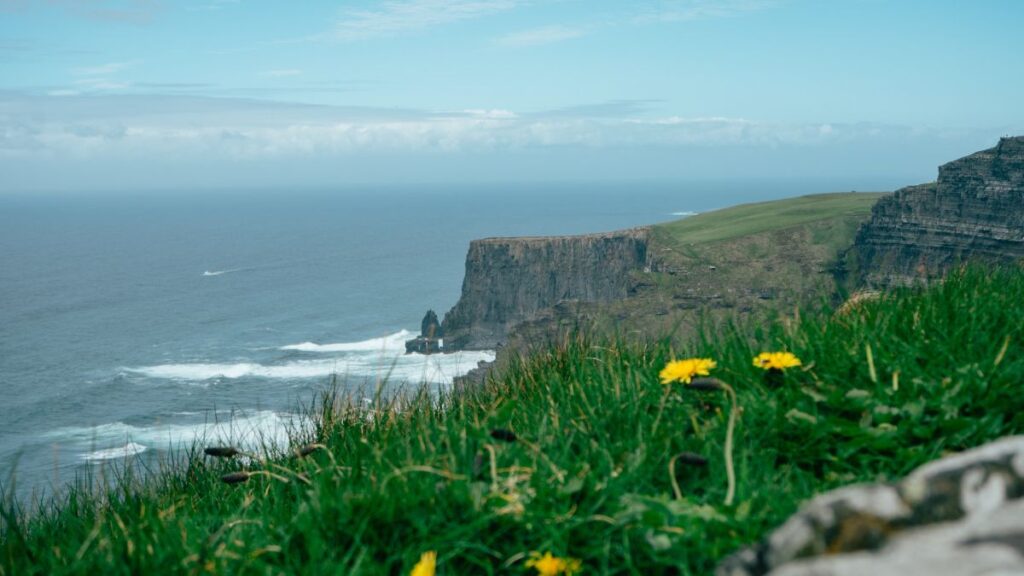
The Cliffs of Moher are closely associated with the Burren and are often visited together, but they’re technically a separate geological feature. The cliffs are formed from layers of sandstone and siltstone rather than limestone, and they sit on the western edge of County Clare rather than within the Burren plateau itself. That said, both sites are part of the Burren and Cliffs of Moher UNESCO Global Geopark, which recognises the wider landscape they share.
Is the Burren, Ireland worth seeing?
Absolutely, though it helps to go in with the right expectations. If you’re looking for postcard-green Irish countryside, the Burren will surprise you with its grey stone and open sky. But if you’re interested in ancient history, geology, botany, or simply landscapes that feel genuinely unlike anything else, the Burren is one of the most rewarding places in Ireland to spend time. It’s the kind of destination that gets more interesting the more attention you give it.
What does Burren mean in Irish?
The name Burren comes from the Irish word “Boireann,” which translates roughly as “great rock” or “rocky place.” It’s one of those place names that describes exactly what you see. The landscape is dominated by exposed limestone rock, and the Irish-speaking communities who named it weren’t being subtle about it. You’ll still hear the area referred to as “An Boireann” in Irish.
What was filmed in the Burren?
The Burren has been used as a filming location for several productions over the years, most notably as a backdrop in scenes from the TV series “The Tudors” and various documentary films about Irish history and landscape. Its distinctive moonscape quality makes it a popular choice for projects that need an ancient, otherworldly setting. The Poulnabrone Dolmen in particular has featured in numerous films and TV productions as a visual shorthand for prehistoric Ireland.