
Ask ten people how many national parks are in Ireland, and you’ll probably get ten different answers. I get some version of this question more than almost any other, usually from someone building their first big Ireland itinerary and trying to work out where to actually point the car.
Here’s the short answer: Ireland now has seven national parks, not six. The seventh, Ireland’s first marine national park, was established in County Kerry in April 2024. An eighth is in the works in County Meath, but it isn’t open to visitors yet, so it doesn’t count towards the total just yet. If you’ve read older guides that stop at six, they’re not wrong exactly; they’re just out of date.
In this guide, I’ll walk you through every national park in Ireland: Where each one is, what actually makes it worth the detour, and how to plan a visit without burning a full day of your trip figuring out logistics. Let’s get into it.
How many national parks are there in Ireland?
Ireland’s original six national parks were established between 1932 and 1998, and they’re the ones you’ll find in almost every guidebook. In April 2026, Ireland’s first marine national park, Páirc Náisiúnta na Mara, was opened.
- Killarney National Park (County Kerry): Ireland’s first, and still its most visited.
- Wicklow Mountains National Park (County Wicklow): the biggest of the original six, and the closest to Dublin.
- Connemara National Park (County Galway): rugged, boggy, and properly Atlantic.
- Glenveagh National Park (County Donegal): remote, dramatic, and quiet.
- The Burren National Park (County Clare): a limestone landscape unlike anywhere else in the country.
- Wild Nephin National Park, also called Ballycroy (County Mayo): Ireland’s wildest, least-visited park.
- Páirc Náisiúnta na Mara (County Kerry): Ireland’s first marine national park, added in April 2024.
That’s seven national parks in Ireland, established and open. An eighth, the Boyne Valley (Brú na Bóinne) National Park in County Meath, was announced back in 2023 but is still in the planning stage and isn’t open to visitors, so it doesn’t count towards the total yet. I’ll cover it further down, since it’s worth knowing about even if you can’t visit it yet.
Let’s take a closer look at the seven national parks in Ireland.
1. Killarney National Park
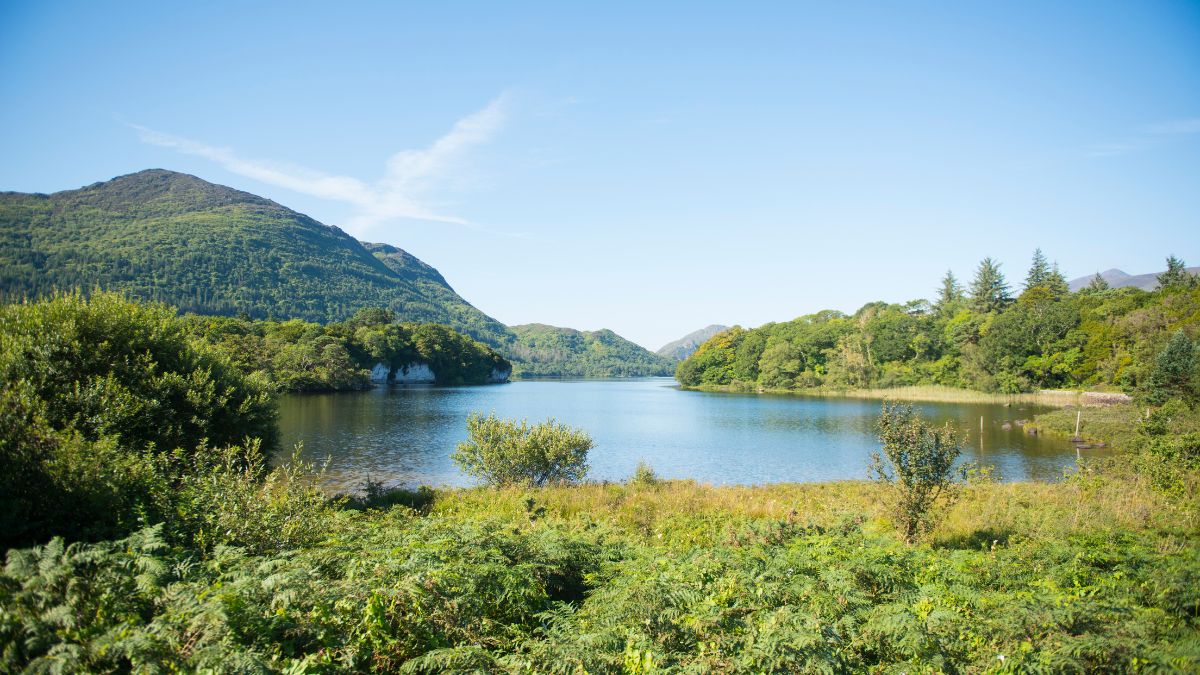
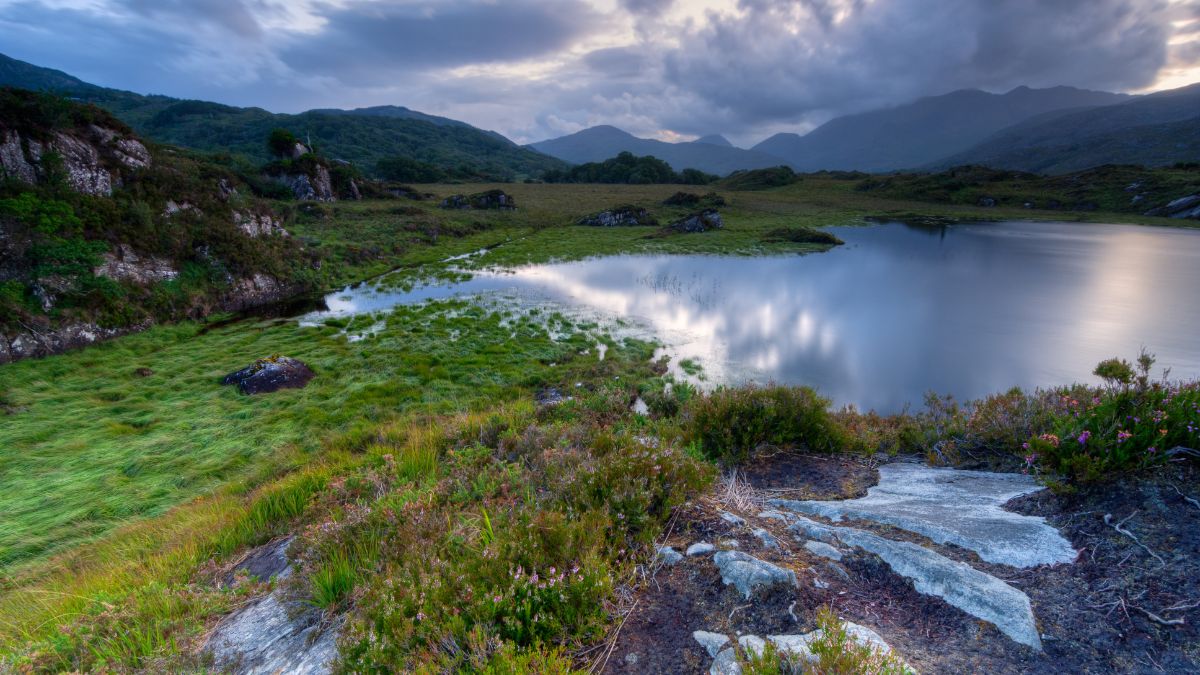
Killarney National Park became Ireland’s first national park in 1932, when the Muckross Estate was gifted to the state, and it’s still the one most people picture when they think of national parks in Ireland. You get lakes, oak and yew woodland, mountains, and Ireland’s only wild herd of native red deer, all packed into one accessible park on the edge of Killarney town.
Muckross House and its gardens are the obvious anchor, and the walk or cycle around Muckross Lake to Torc Waterfall is one of the most rewarding short outings anywhere in the country.
A reader of mine named Marie, who left Cork for Boston as a teenager, emailed me last year after her first trip home in two decades. She’d planned Killarney as a quick stop before heading off around the Ring of Kerry. She ended up staying two extra nights. What got her wasn’t the lakes; it was cycling the Muckross loop at dusk and having a red deer stag walk out onto the path ten feet ahead of her. She told me that was the moment the trip stopped feeling like tourism and started feeling like coming home. That’s Killarney in a nutshell: it sneaks up on you.
If you only have one day: Stick to the Muckross House, Muckross Lake, and Torc Waterfall loop. It’s well signposted, mostly flat, and gives you the full range of what the park offers in a few hours.
2. Wicklow Mountains National Park
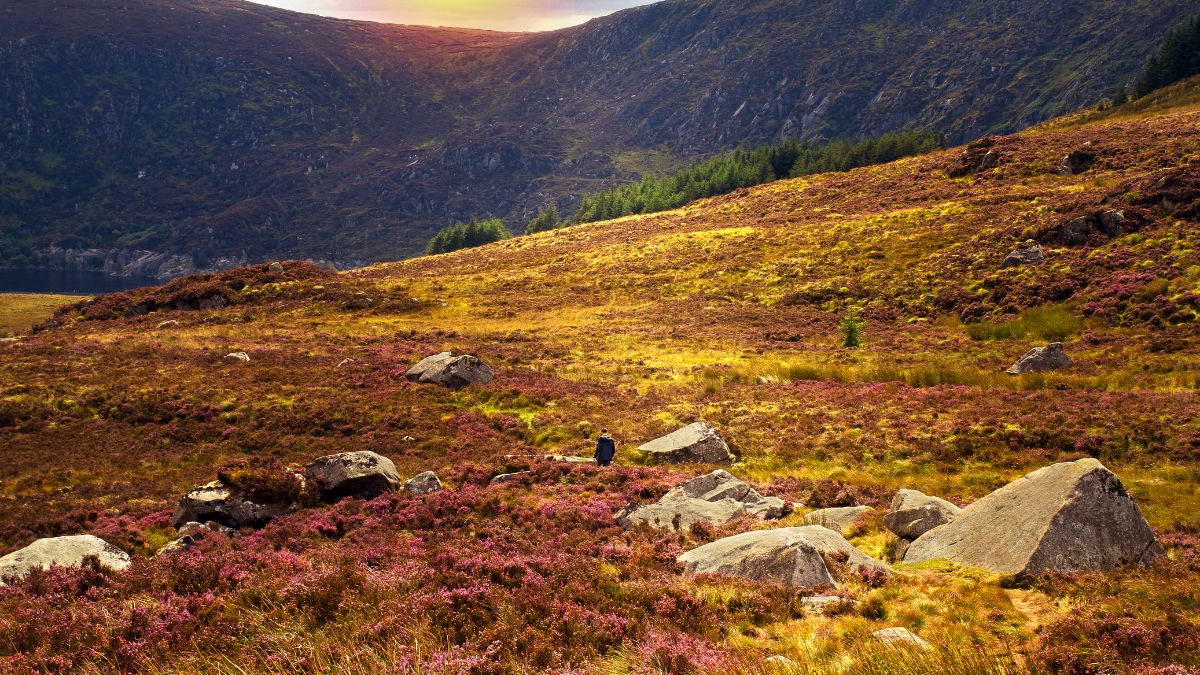
Wicklow Mountains is the largest of the original six national parks in Ireland, covering roughly 205 square kilometres of blanket bog, glacial valleys, and heather-covered hills. It’s also the only one of the six on the east coast, which makes it the easiest to reach if you’re starting in Dublin.
The heart of the park is Glendalough, an early Christian monastic site founded in the sixth century by St Kevin. A round tower, ruined churches, and two dark glacial lakes sit together in one valley, and you can walk the whole site in an afternoon.
Because it’s so close to the capital, Wicklow can get busy on weekends. Go on a weekday morning if you can, or push a little further into the park past Glendalough itself, where the crowds thin out fast.
3. Connemara National Park
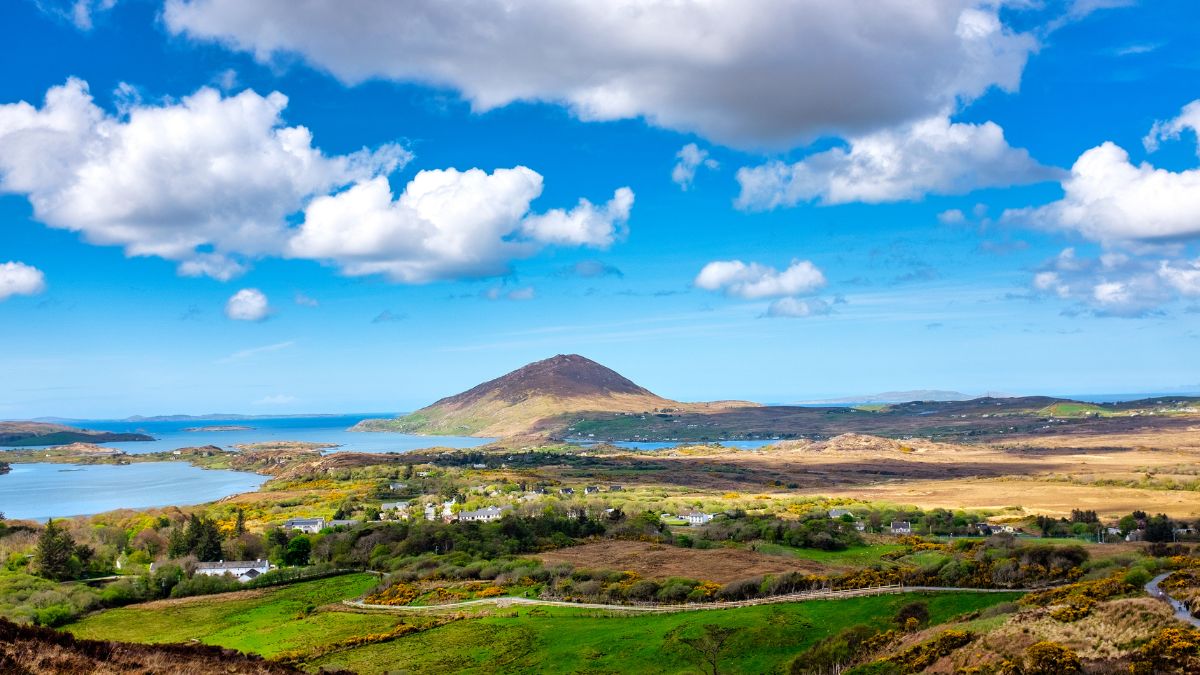
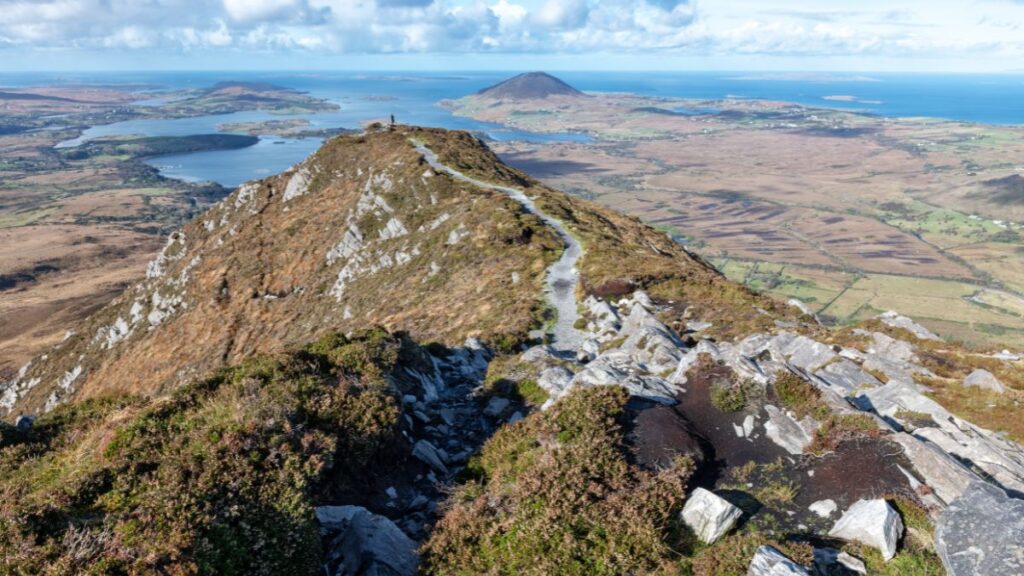
Connemara is the smallest of the original six national parks, but it doesn’t feel small once you’re standing at the top of Diamond Hill looking out over bog, heath, and the Atlantic beyond. This is quartzite mountain country, and it’s about as far from a manicured park as you can get.
Kylemore Abbey sits just outside the park boundary and gets most of the tour bus traffic, so the park itself often feels emptier than you’d expect for somewhere this photogenic. The Diamond Hill loop trail is the one to prioritise if you only do one walk here.
4. Glenveagh National Park
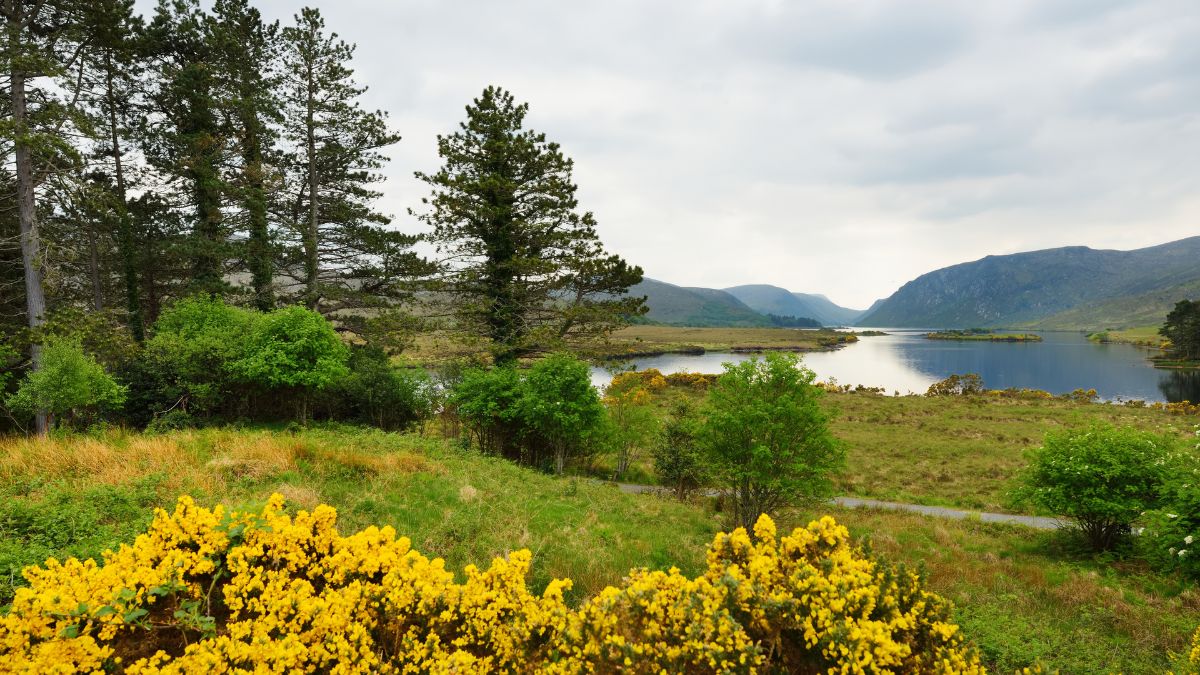
Glenveagh National Park is Donegal’s answer to Killarney, minus the crowds. At around 170 square kilometres, it’s the second largest of the original six, built around Lough Veagh and the Victorian-Gothic Glenveagh Castle, with gardens that feel almost tropical against the surrounding bog and mountain.
A minibus runs from the visitor centre to the castle along the lake shore, which is handy if you’re short on time, but the self-guided nature trail is where the park really opens up. Because Donegal sits off the main tourist trail through Ireland, Glenveagh tends to stay peaceful even in peak season.
5. The Burren National Park
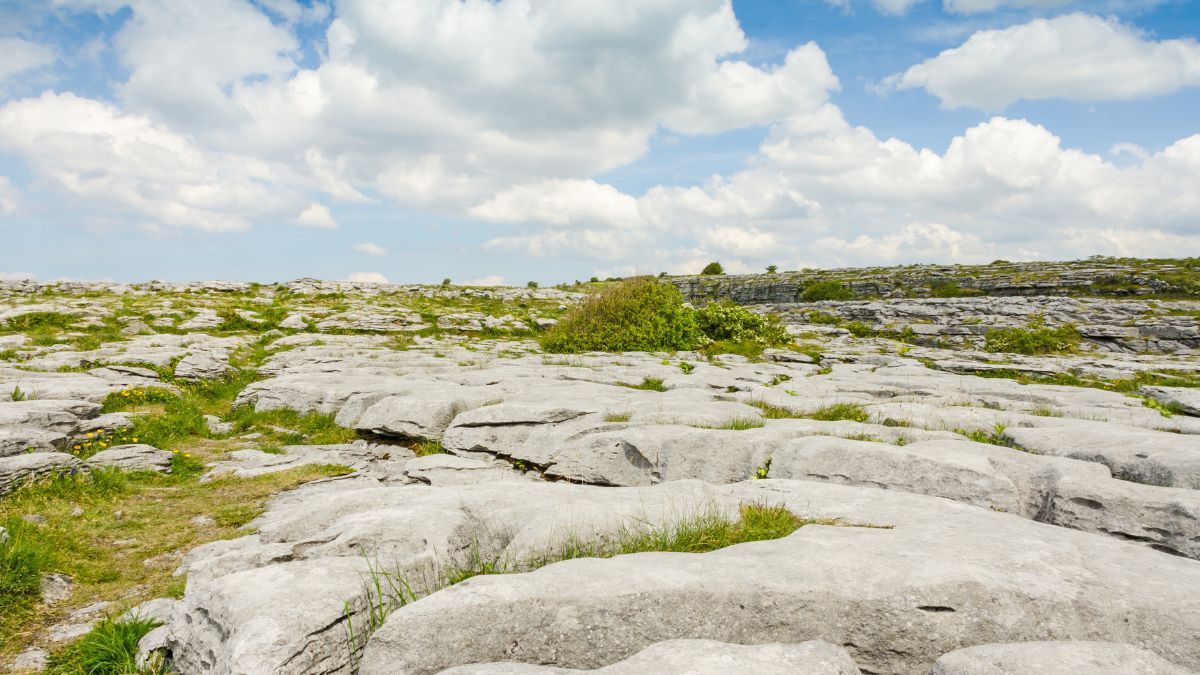
At just under 15 square kilometres, the Burren National Park is the smallest national park in Ireland, and also one of the strangest landscapes on the island. Exposed limestone pavement stretches for miles, dotted with wildflowers that shouldn’t, by rights, grow in a place that looks this barren.
The Poulnabrone Dolmen, a 5,000-year-old portal tomb, is the park’s most photographed feature and sits a short drive from the Cliffs of Moher. If you’re doing a west coast road trip, the Burren pairs naturally with a Clare itinerary.
6. Wild Nephin National Park
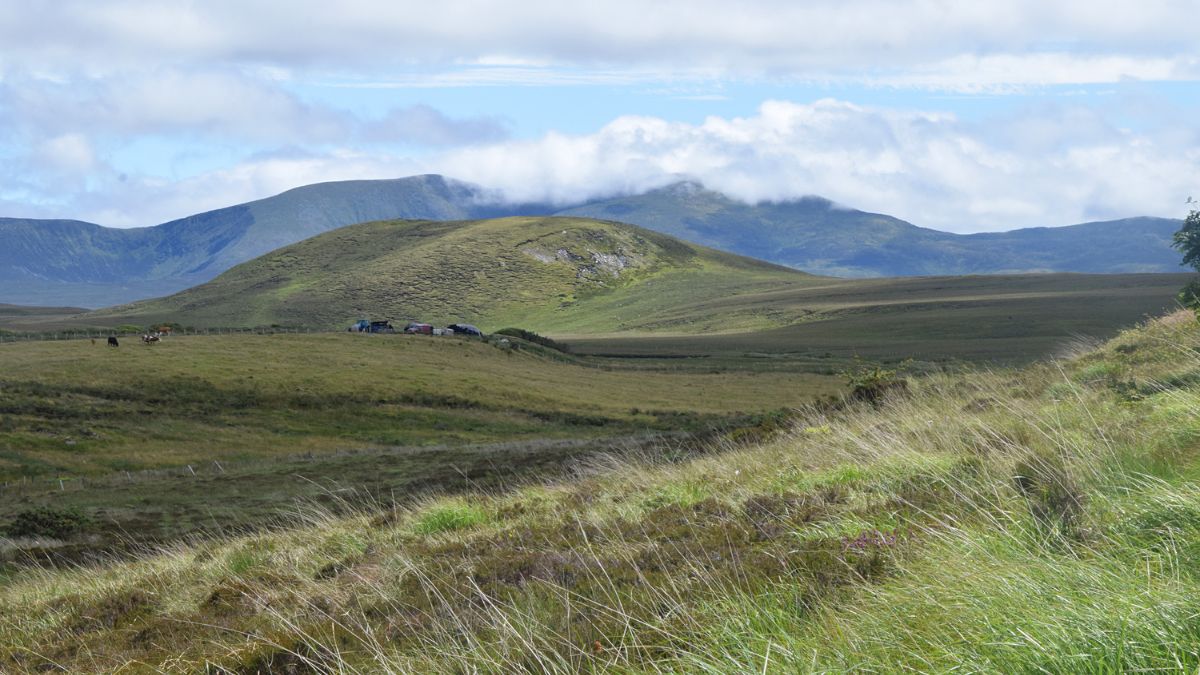
Wild Nephin, still commonly called Ballycroy, is the newest of the original six and by far the least visited. Tucked into a remote corner of County Mayo, it’s centred on the Owenduff-Nephin Beg bog complex, one of the last intact blanket bogs in western Europe.
This is Ireland’s only Gold Tier Dark Sky Park, and that’s the detail most people miss.
When I was researching this piece, I spent a good hour on the phone with a walking guide who leads groups through Wild Nephin. He told me that on a clear night, the park’s Dark Sky status means you can see the Milky Way with the naked eye, no telescope required, and that most visitors have genuinely never seen anything like it because so few of us live anywhere without serious light pollution anymore. He said the silence out there catches people off guard even more than the stars do. I haven’t made it out there myself yet, but that description has stuck with me every time someone asks which park to prioritise on a Mayo itinerary.
If solitude is what you’re after, this is the national park in Ireland that delivers it best.
7. Páirc Náisiúnta na Mara
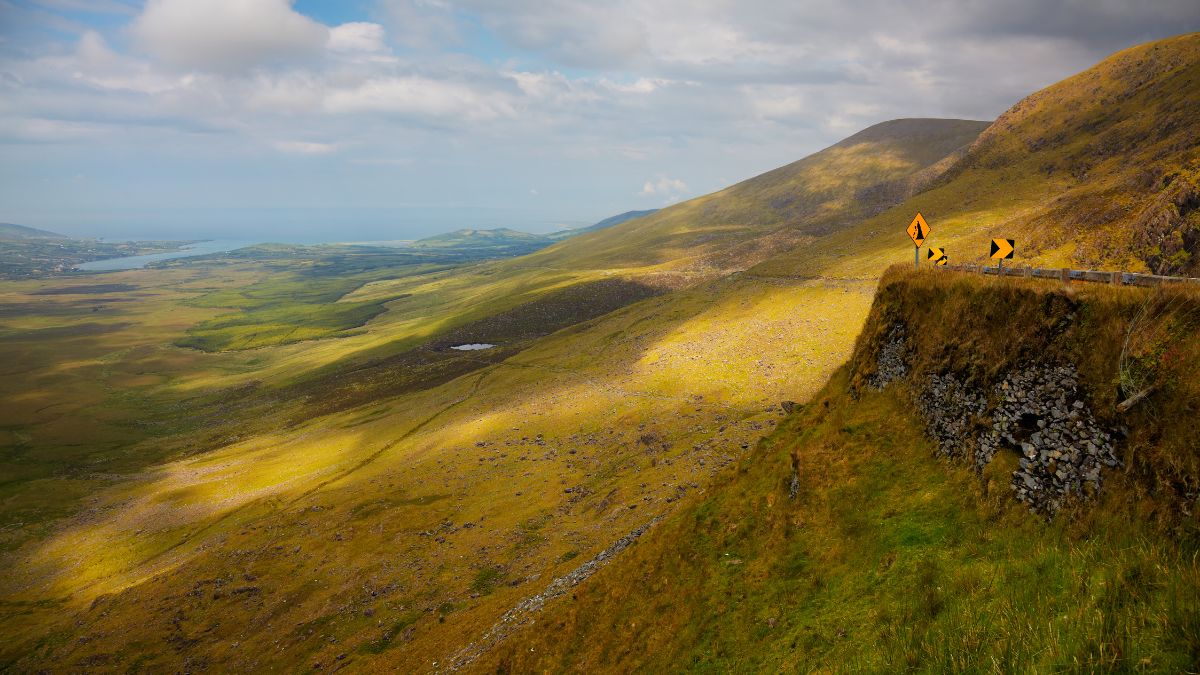
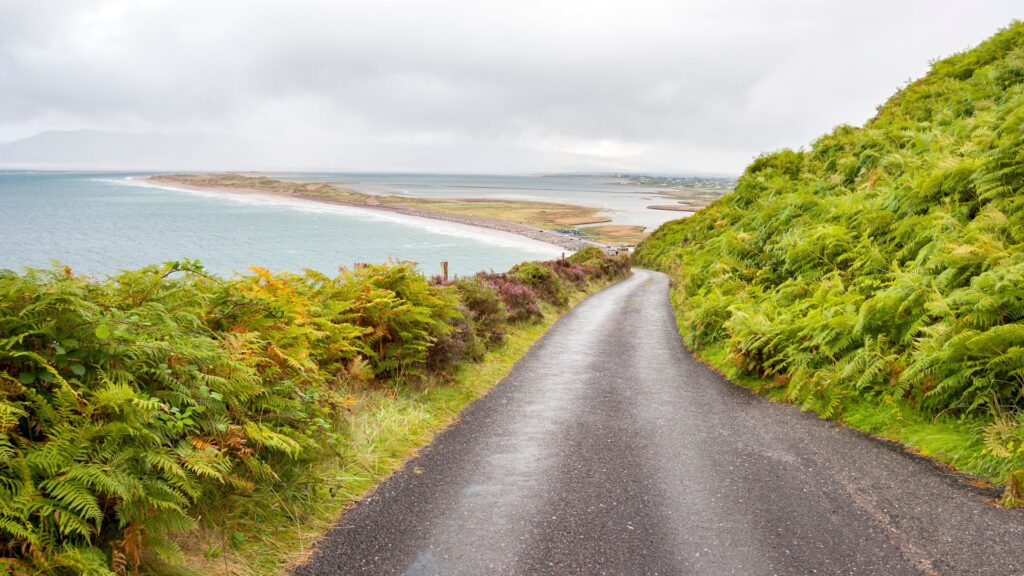
Established in April 2024, Páirc Náisiúnta na Mara, Ciarraí (Kerry Marine National Park) is the newest national park on this list and the first of its kind in Ireland: A national park built around the sea rather than the land. It runs along the Dingle Peninsula in County Kerry, taking in the Conor Pass, coastal dunes, sea cliffs, limestone reefs, and offshore waters, roughly 283 square kilometres in total, which makes it larger by area than any of the original six.
Because it’s so new, there’s no dedicated visitor centre yet, the way you’ll find at Killarney or Glenveagh. In practice, that means visiting it is less about a single trailhead and more about exploring the Dingle Peninsula as a whole: driving the Conor Pass, walking sections of the coastline, and knowing that the water and cliffs around you now carry official protection.
If you’re already doing the Dingle Peninsula: The Conor Pass drive is the easiest way to experience this park without any extra planning, since you’d likely be doing that stretch of road anyway. I’d treat it as a bonus layered onto a Dingle trip rather than a standalone destination for now, and I’ll update this section as its visitor infrastructure develops.
Boyne Valley National Park: Ireland’s future eighth
In September 2023, the state purchased Dowth Hall and its surrounding demesne in County Meath to create the Boyne Valley (Brú na Bóinne) National Park, sitting within the wider Brú na Bóinne UNESCO World Heritage Site alongside Newgrange and Knowth. It’s a genuinely exciting addition on paper, layering 5,000 years of archaeology with parkland and river habitat along the Boyne.
As of now, though, it’s still in the master-planning stage and isn’t open to casual visitors, so it doesn’t count towards the current total of seven and isn’t worth building a trip around just yet. If you’re in the area, you can still visit Newgrange and Knowth themselves, which sit right beside the future park boundary and are very much open. I’ll update this section as Boyne Valley develops and opens to the public.
Planning your visit to Ireland’s national parks
A little planning goes a long way here, mostly because these parks are spread right across the country, and public transport won’t get you to most of them.
When to go
- May to September gives you the longest days and the most reliable weather.
- Spring brings wildflowers, especially noticeable in the Burren.
- Autumn turns Killarney’s woodlands into something worth the trip on its own.
- Winter is your best shot at Wild Nephin’s dark skies, since nights are longest.
How much time you actually need
Wicklow and Killarney work well as a half-day to full-day stop. Connemara, Glenveagh, and the Burren reward a slower pace, ideally with a night nearby. Wild Nephin is worth building an entire day around, given how far off the beaten path it sits. Páirc Náisiúnta na Mara is easiest to fold into a Dingle Peninsula day rather than treating as its own stop.
If you plan on hiking during your visit to Ireland, be sure to check out our guide to the best hikes in Ireland.
Conclusion
Ireland’s national parks are proof that you don’t need Yellowstone-scale distances to feel properly wild. Seven parks, soon to be eight, cover everything from ancient oak woodland to limestone moonscapes to some of the darkest skies left in Europe. Pick two or three that match the shape of your trip rather than trying to visit all of them, and you’ll come away with a far better sense of what makes this country’s landscape so specific to itself.
Frequently asked questions
1. What is the most beautiful national park in Ireland?
This comes down to taste, but Killarney National Park gets named most often, thanks to its combination of lakes, mountains, and ancient woodland in one accessible spot. If you want something starker and more otherworldly, the Burren tends to win people over instead.
2. Which is the biggest national park in Ireland?
Among the original six, Wicklow Mountains National Park is the largest at around 205 square kilometres. If you count Ireland’s newest marine national park in Kerry, established in 2024, that one is actually larger still at roughly 283 square kilometres, though it’s a very different kind of landscape.
3. What are the big 5 national parks in Ireland?
There’s no official “big five” designation for Ireland’s national parks the way there is for African safari parks, but if you go by visitor numbers and reputation, most people would point to Killarney, Wicklow Mountains, Connemara, Glenveagh, and the Burren as the five most talked about. Wild Nephin usually gets left off simply because it’s the least known, not because it’s less worthwhile.
4. Are Ireland’s national parks free?
Yes, entry to every national park in Ireland is free, including trails and visitor centres. A handful of specific attractions inside or near them, like Glenveagh Castle or Muckross House, do charge a separate admission fee.
5. Which is bigger, Yellowstone or Ireland?
If you’re comparing Yellowstone to the country of Ireland as a whole, Ireland wins easily. The island of Ireland covers around 84,000 square kilometres, roughly nine times the size of Yellowstone’s 8,983 square kilometres. But if you’re comparing Yellowstone to all of Ireland’s national parks combined, Yellowstone comes out on top. Even added together, Ireland’s six original parks cover a little over 650 square kilometres, a fraction of Yellowstone’s footprint.