The history of Halloween in Ireland

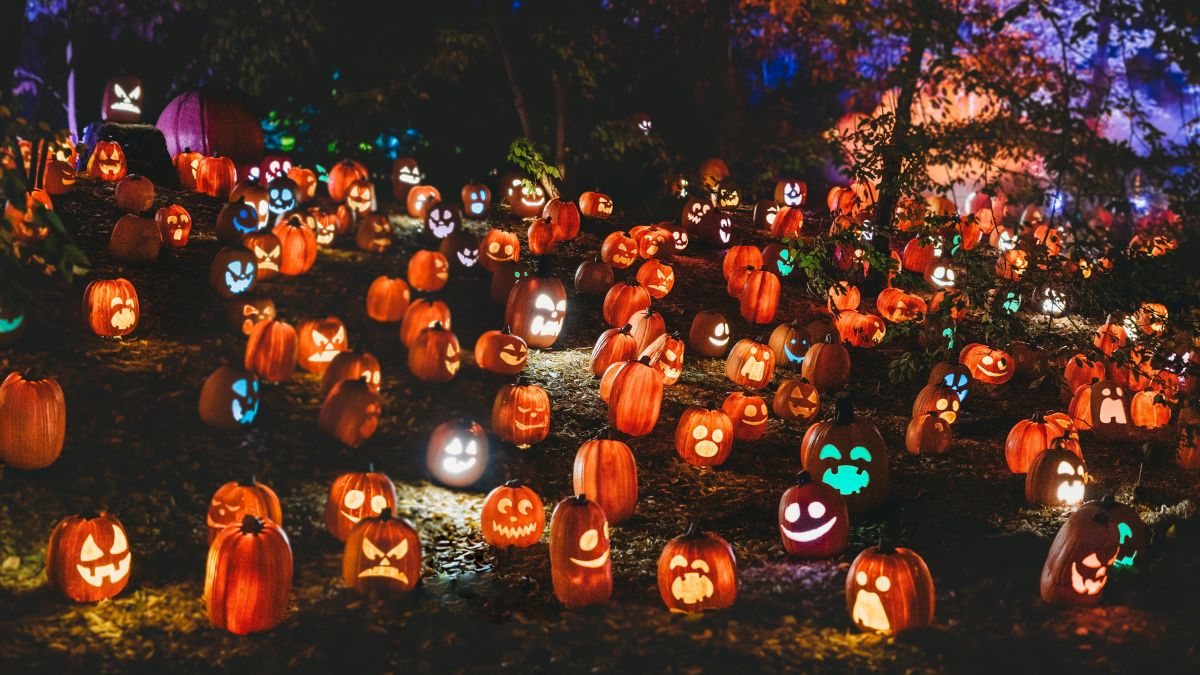
Carved Halloween Pumpkins with Illumination Inside

Every October 31st, kids all over the world pull on costumes, grab a bag, and go knock on strangers’ doors for sweets. Almost none of them know where it actually started. Not a shopping mall in Ohio. Not a Victorian parlour game. A hillside in Ireland, more than 2,000 years ago.

That’s the part I find genuinely funny about Halloween in Ireland. The holiday everyone thinks of as American, with its plastic pumpkins and inflatable skeletons, is actually one of the oldest surviving festivals in Europe. It just took a very long, very Irish road to get back to us looking like that.

So, what is the origin of Halloween? It comes from Samhain (pronounced “sow-in”), an ancient Gaelic festival marking the end of the harvest and the start of winter. The Celts believed that on this one night, the boundary between our world and the world of the dead grew thin enough for spirits to cross over. People lit bonfires, left out food for wandering souls, and wore disguises to avoid being recognised by anything otherworldly. Centuries later, the Christian church folded this pagan festival into its own calendar as All Hallows’ Eve, and Irish emigrants eventually carried the whole tradition across the Atlantic, where it grew into the Halloween we know today.

That’s the short version. The long version is a lot more interesting, and it’s the one I want to walk you through.

Samhain: the Celtic festival where it all began

Long before anyone said the word “Halloween,” the Celts living in Ireland marked four major turning points in the farming year. Samhain was the biggest one of all. It fell around the 31st of October and 1st of November, sitting exactly halfway between the autumn equinox and the winter solstice.

For a farming community, this was serious business. Samhain marked:

  • The end of the harvest season.
  • The point when livestock were brought down from summer pastures.
  • The start of the “darker half” of the year.
  • A liminal night when the normal rules of the world felt suspended.

The Celts didn’t divide the year into four neat seasons the way we do. They split it into two halves: light and dark. Samhain was the hinge. It was New Year’s Eve, the last harvest festival, and a spiritual event all rolled into one night.

The Celtic beliefs behind Samhain

Here’s the bit that still gives me chills every time I read about it. The Celts believed that on Samhain night, the wall between the human world and the Otherworld became thin enough for spirits, fairies, and the dead to slip through.

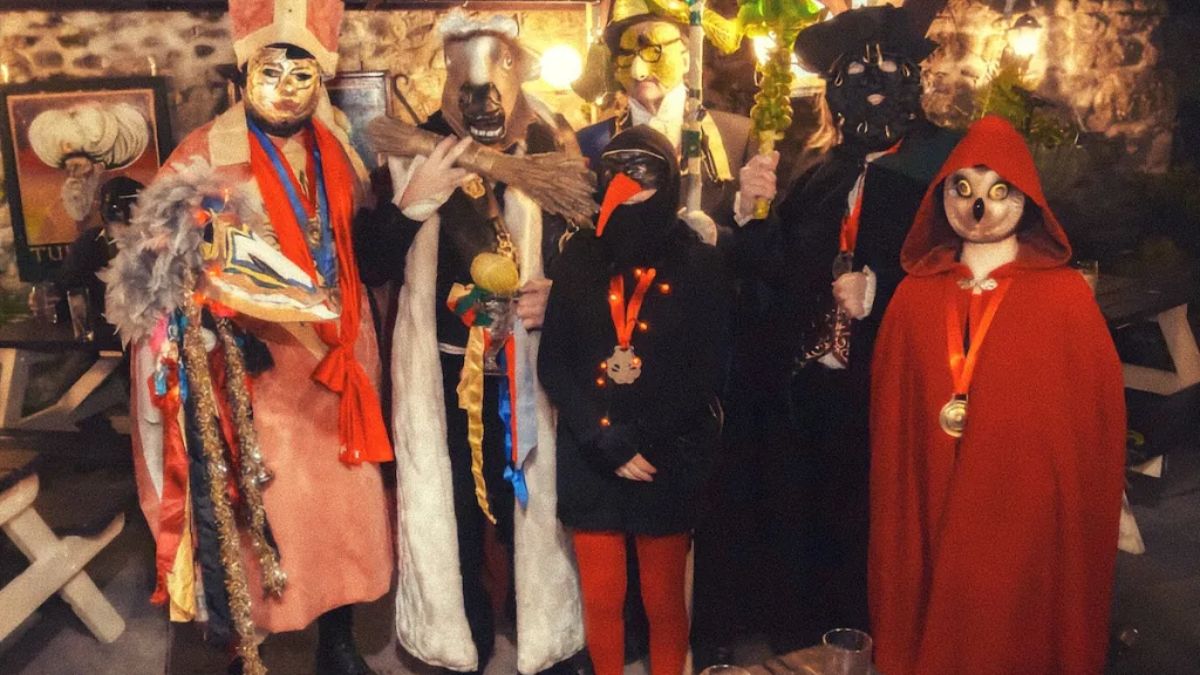
This wasn’t seen as purely frightening. Some of those spirits were believed to be ancestors coming home. People left out food and drink to welcome them, a custom that, if you squint, looks a lot like an early ancestor of trick-or-treating. But other things crossing that thin veil weren’t so friendly, and that’s where the disguises came in. Wearing a costume or blackening your face with ash was a way of confusing the spirits so they’d pass you by.

Bonfires, sacrifice, and the turning of the year

bonfire

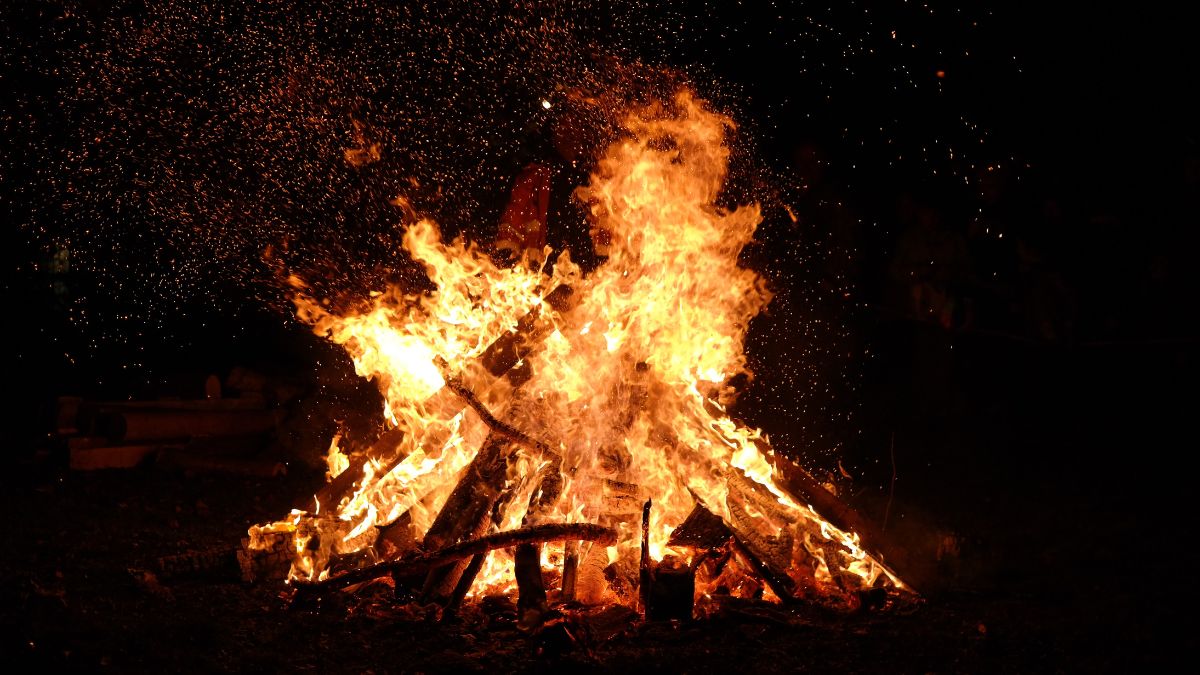
Fire sat right at the centre of Samhain. Communities lit enormous bonfires on hilltops, and there’s strong archaeological evidence that one of the most important of these fires burned at the Hill of Ward (Tlachtga) in County Meath. People would extinguish their home hearths beforehand, gather at the bonfire, and then carry a flame from that shared fire back to relight their own hearths. It was a way of literally connecting every household to the same protective source of light heading into the dark half of the year.

Historical sources also point to animal sacrifice as part of these rites, tied to slaughtering livestock for the winter and offering thanks (or appeasement) to the gods. It’s not the cosy image most of us have of Halloween, but it’s a lot closer to the truth.

How the church turned Samhain into Halloween

Samhain didn’t disappear when Christianity arrived in Ireland. It got absorbed.

In the 9th century, the church moved the feast of All Saints (also called All Hallows) to the 1st of November, right on top of Samhain. Historians still debate exactly why, but the timing lines up too neatly to be a coincidence. It’s a pattern you see again and again with Christian holidays landing on existing pagan dates: rather than stamp out a deeply rooted local festival, the church absorbed it and gave it a new meaning.

The night before All Hallows’ Day became All Hallows’ Eve. Say that fast enough, over a few hundred years of regional accents, and you get “Halloween.”

All Hallows’ Eve and All Souls’ Day

A second Christian layer was added on the 2nd of November: All Souls’ Day, a day set aside to pray for the souls of the dead. Between the 31st of October and the 2nd of November, you now had a three-day stretch that blended Celtic beliefs about wandering spirits with Christian prayer for the departed.

This is really the heart of the “Is Halloween Catholic or Celtic?” question people still ask. It’s genuinely both. The bones of the festival, the timing, the fire, the sense of the dead walking among the living, are Celtic. The name and the religious framing around it are Christian. Ireland is where those two layers fused, which is a big part of why Halloween in Ireland still feels so distinct from its American cousin.

Irish traditions that shaped modern Halloween

This is the part I love reading about most, because so many “classic” Halloween traditions are directly, provably Irish, even when people have no idea.

The real story of the jack-o’-lantern

Everyone knows the pumpkin. Almost nobody knows the turnip came first.

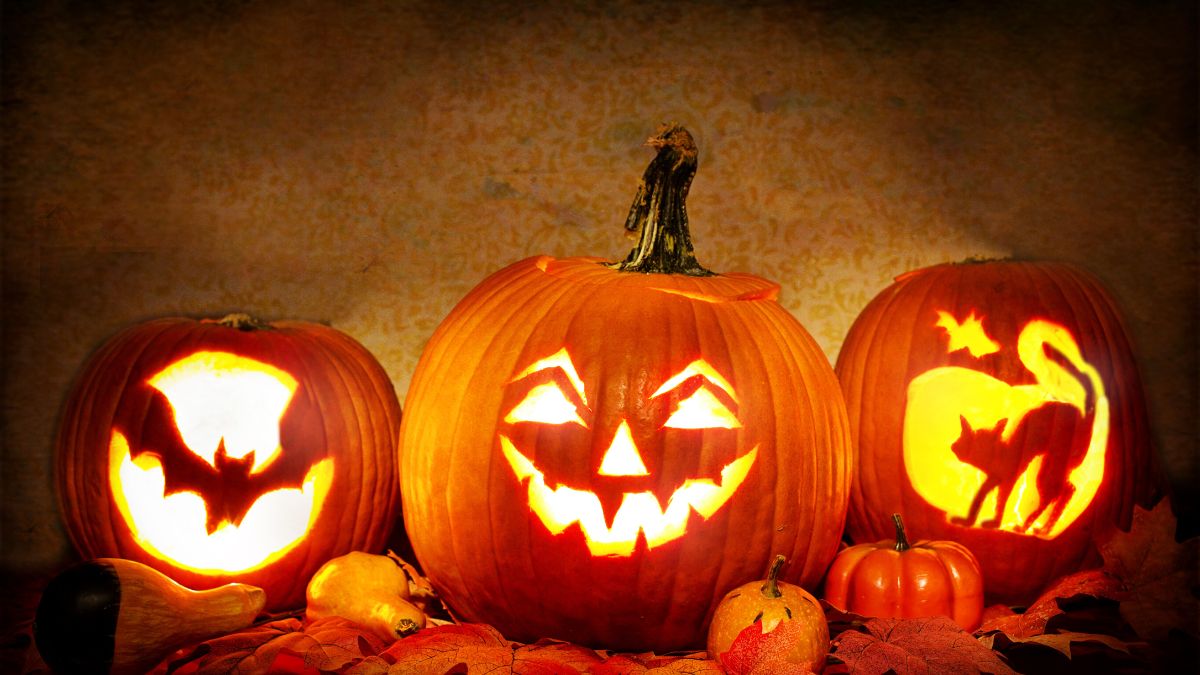
In Ireland, people carved faces into turnips (and sometimes mangel-wurzels or beets), hollowed them out, and put a burning coal or candle inside. The lit turnip was set on a windowsill or carried while out walking, and it served the exact same purpose the plastic pumpkin serves today: warding off the wandering spirits of Samhain, and specifically a folklore figure called Stingy Jack.

The story goes that Jack was a trickster who outwitted the devil, but when he died, he wasn’t welcome in heaven or hell. He was doomed to wander the earth with only a hollowed-out turnip and a burning coal to light his way, earning him the nickname “Jack of the Lantern.”

When Irish emigrants reached America in large numbers, they found a vegetable that carved easier and grew a lot bigger: the pumpkin. The tradition survived. The vegetable didn’t.

Trick-or-treating’s Irish roots

Trick-or-treating has a few tangled ancestors, but two Irish customs stand out clearly.

The first is “souling,” where people, often children or the poor, went door to door on All Souls’ Day offering prayers for the dead in exchange for soul cakes.

The second is “guising,” where young people dressed up in costume and went house to house performing a song, poem, or trick in exchange for food, nuts, or coins. Guising is much closer to modern trick-or-treating than souling is, and it was already well established in Ireland and Scotland long before anything similar appeared in America.

Games, food, and fortune-telling on Halloween night

Halloween Irish Bambrack

Old Irish Halloween traditions leaned heavily on fortune-telling, especially around love and marriage. A few that turn up again and again in folklore accounts:

  • Apple bobbing, where the first person to bite an apple was said to be the next to marry.
  • Snap-apple, a game involving apples on strings, hung from a doorway or ceiling.
  • Barmbrack fortune-telling, where objects baked into a loaf of bread predicted your year ahead (more on that below).
  • Nut burning, where couples placed nuts side by side in a fire; if they burned quietly together, the relationship was solid; if they popped apart, trouble was coming.

I’ve spent hours going through old folklore collections for this blog, and what strikes me every time is how playful a lot of these customs were. Samhain had a genuinely dark, spiritual core, but by the 18th and 19th centuries, a lot of what people actually did on the night was closer to a village party than a solemn ritual.

The Great Famine and Halloween’s journey to America

Halloween traditions had already been trickling into North America before the 1840s, but it was mass Irish emigration during the Great Famine that turned Halloween into a truly American holiday.

Between 1845 and roughly 1852, well over a million people left Ireland, and a huge number of them settled in the United States. They brought Samhain-rooted customs with them: guising, bonfires, fortune-telling games, and turnip lanterns. Those customs mixed with existing harvest traditions already present in America and, over the following decades, evolved into the costume-and-candy version of Halloween that spread across the country in the 20th century.

It’s a strange loop when you think about it. A festival born in Ireland got shaped by American commercial culture through most of the 1900s, and then, thanks to films, TV, and global trade, that American version got exported right back to Ireland. A lot of what Irish kids do on the 31st today, dressing as movie characters, going trick-or-treating door to door, actually reflects that American reimport more than it reflects the original 19th-century Irish version.

Why Halloween in Ireland still feels different today

Even with all that back-and-forth influence, Halloween in Ireland has never felt quite like Halloween anywhere else, and I don’t think that’s nostalgia talking.

A reader once messaged me asking why her grandmother, who’d emigrated from County Clare decades earlier, always left a plate of food out on Halloween night, even in her Boston kitchen. That question sent me down a genuinely long research trail, and the answer traces straight back to those Samhain offerings for wandering ancestors. That custom survived quietly in diaspora households for generations, long after most people had forgotten why they were doing it.

A few things keep Halloween in Ireland distinct:

  • October 31st has strong folk memory attached to specific places, like the Hill of Ward in County Meath, where a modern Samhain festival is held every year.
  • Bonfires are still lit in towns and neighbourhoods, particularly in Dublin, in a fairly direct echo of the original hilltop fires.
  • Bank holiday timing: The last Monday of October is a public holiday in Ireland, giving Halloween an official long weekend that most other countries don’t attach to the date.
  • Traditional foods still show up, even alongside the sweets and costumes.

None of this makes modern Irish Halloween some kind of pure, unbroken ritual. It’s a genuinely layered holiday: Celtic bones, Christian framing, American packaging, and Irish habits that never fully let go of where the whole thing started.

Traditional Irish Halloween customs

Bonfires and community gatherings

Across Ireland, massive bonfires were a central feature of Halloween. Families extinguished their hearth fires and relit them with flames from the communal bonfire, symbolizing unity and protection.

Fortune-telling games and divination practices

Irish households played games predicting love, marriage, and fortune. Nuts were roasted on the fire to test romantic compatibility, while apples were used in bobbing contests and divination games.

Irish food traditions: Barmbrack and Colcannon

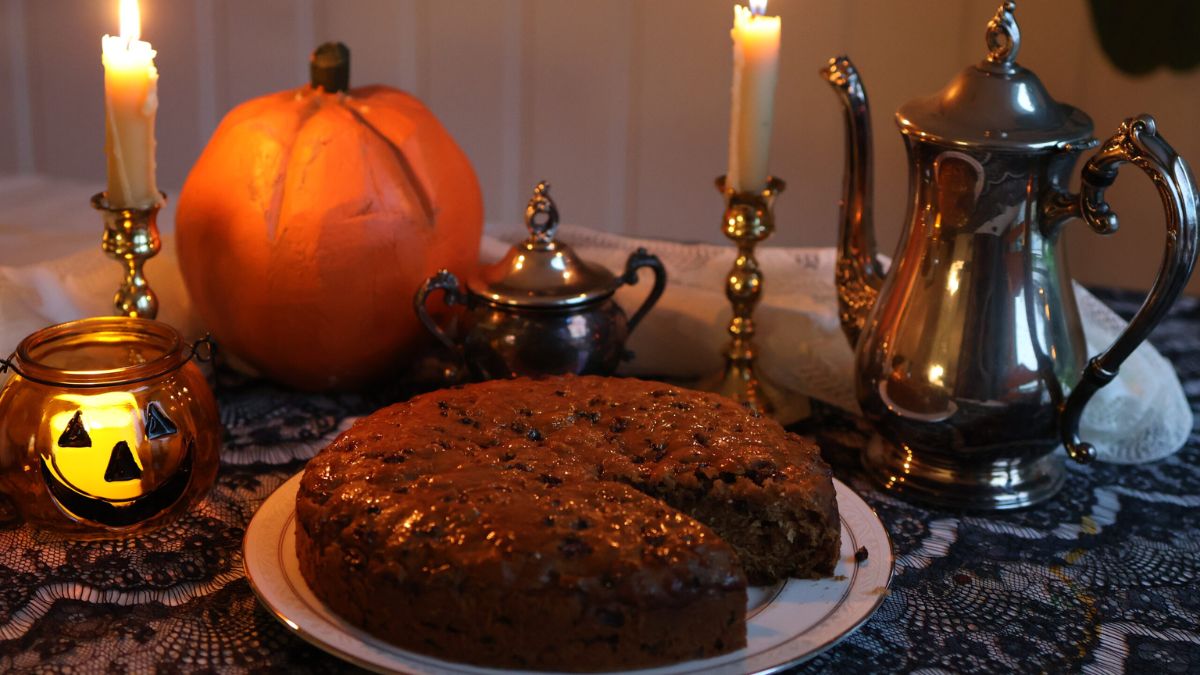
Food played a vital role in Samhain. Barmbrack, a fruit loaf, often contained hidden rings, coins, or buttons, foretelling a person’s future. Colcannon, a dish of potatoes and cabbage, was also enjoyed, sometimes with tokens hidden inside.

How Ireland celebrates Halloween now

Modern Halloween in Ireland is a genuine mix of old and new. You’ll still find:

  1. Community bonfires in towns and city neighbourhoods.
  2. Barmbrack is sold in nearly every bakery and supermarket from early October.
  3. Trick-or-treating that looks close to the American version, especially in cities.
  4. Local Samhain festivals, particularly around the Hill of Ward and the Boyne Valley.
  5. Fireworks and organised events in Dublin and other cities, since Ireland doesn’t celebrate Bonfire Night the way the UK does, so a lot of that energy lands on Halloween instead.

It’s genuinely one of the few holidays where you can watch three layers of history happening on the same street at the same time: a kid dressed as a superhero, a neighbour lighting a bonfire their grandparents would recognise, and a bakery selling bread with a ring baked into it for luck.

Conclusion

Halloween in Ireland didn’t start as a costume party. It started as a solemn, slightly frightening turning point in the farming year, a night when the Celts believed the dead could walk among the living and the only real defence was fire, disguise, and a bit of luck. The church gave it a new name and a new meaning. Irish emigrants carried it across the Atlantic during and after the Great Famine. America handed it back to us dressed in plastic and sugar.

What I find genuinely satisfying about tracing all this is realising how much of “American” Halloween is actually just Irish folklore wearing a different coat. The turnip became a pumpkin. Guising became trick-or-treating. A bonfire on a hill in Meath became a backyard fire pit in Boston. The shape changed. The bones underneath didn’t.

So next time you carve a pumpkin or bite into a barmbrack, you’re not taking part in a modern invention. You’re doing something people in Ireland have been doing, in one form or another, for well over two thousand years.

Frequently asked questions

Is Halloween American or Irish?

Halloween is Irish in origin. It developed from Samhain, an ancient Celtic festival celebrated in Ireland and Scotland long before America existed as a country. Irish and Scottish emigrants carried these traditions to North America, where they were reshaped into the commercial, costume-focused holiday most people recognise today.

What is the original Halloween story?

The original story centres on Samhain, the Celtic festival marking the end of harvest and the start of winter. The Celts believed the boundary between the world of the living and the Otherworld thinned on this one night, allowing spirits and ancestors to cross over. Bonfires, disguises, and food offerings were used to honour and welcome spirits and ward off unwelcome ones.

Why is Halloween such a big deal in Ireland?

Because it’s where the holiday actually began. Ireland still holds strong folk memory around specific Samhain sites, like the Hill of Ward in County Meath, and many original elements, bonfires, seasonal foods, and fortune-telling customs, are still practised today alongside modern trick-or-treating. Ireland also has an official bank holiday attached to the end of October.

Is Halloween Catholic or Celtic?

It’s both, layered on top of each other. The core traditions, the thin veil between worlds, bonfires, disguises, come from the pre-Christian Celtic festival of Samhain. The Catholic church later placed All Hallows’ Day and All Souls’ Day on the same dates, adding a Christian religious framework over the existing Celtic festival rather than replacing it outright.

What do the Irish eat on Halloween?

The classic dish is barmbrack (báirín breac), a spiced fruit loaf with small objects baked inside that supposedly predict your year ahead: a ring for marriage, a coin for wealth, a pea for a poor year. Other traditional foods include colcannon (mashed potato with cabbage or kale), toffee apples, and roasted nuts.

Similar posts