Getting around Ireland: A transportation guide

Share this
Let me save you the stress right away.
The best way for most visitors to get around Ireland is to rent a car. Full stop. Nothing else gives you the freedom to pull over at a random stone wall, discover a village that isn’t on any “Top 10” list, or actually reach the places that make Ireland worth visiting in the first place.
But here’s the thing: that’s not the right answer for everyone. If you’re sticking to Dublin and a handful of day trips, you don’t need a car at all. If you’re nervous about driving on the left, there are solid alternatives. And if you’re on a tight budget, a mix of trains and buses can absolutely work, with the right expectations.
This guide breaks down every realistic option for getting around Ireland, tells you what actually works (and what travel blogs usually gloss over), and helps you figure out the right setup for your trip.
Why getting around Ireland is trickier than it looks on a map
Ireland is small. On paper, it looks like you could drive from Dublin to Galway before lunch and be in Cork by dinner. And technically, you could, if you took the motorway the whole way and stopped for nothing.
But that’s not how Ireland works.
The roads narrow fast once you leave the main routes. Google Maps will cheerfully route you down a single-track lane with grass growing up the middle and a 90-degree bend you couldn’t see coming. The Wild Atlantic Way is spectacular and brutally slow. And the west coast, where a huge chunk of the magic lives, has almost no public transport.
So before you plan anything, adjust your mental map. Ireland rewards slow travel. It punishes people who try to cram too much in.
1. Renting a car

If you want to see rural Ireland, driving is not optional. It’s the only real option.
I spoke with Sarah Hennessy, a travel consultant based in Cork who has been helping international visitors plan Irish road trips for over a decade. Her advice is consistent: “People always underestimate how long things take on Irish roads. I tell every client to halve the number of stops they’re planning and double the time they think each leg will take. Then they actually enjoy themselves.”
That’s solid wisdom. Driving in Ireland is wonderful, just not fast.
What you need to know before renting a car:
- Drive on the left: Americans and most non-UK visitors will need an adjustment period. It’s very manageable, but budget for a tense first hour or two.
- Manual vs. automatic: Most Irish rental cars are manual (stick shift). Automatics exist but cost significantly more and book out quickly. Reserve early if you need one.
- Roads vary wildly: The M1 motorway to Belfast feels like any European road. The Connemara backroads feel like driving through a sheep painting. Both are worth it.
- Narrow roads are real: Hedgerows line many rural roads so tightly that two cars passing each other require one driver to partially pull into a passing place. It’s stressful at first, then it becomes oddly fun.
- Insurance: Check your credit card’s coverage before paying for the rental company’s collision damage waiver. Many cards include it, but verify the details; excess amounts vary.
Parking in small towns is almost always free or very cheap. In Dublin city centre, it’s expensive and frustrating. Don’t bring your rental car into Dublin if you can avoid it.
2. Dublin’s public transport

Dublin has a good public transport network, and if you’re spending a few days in the capital before or after a road trip, you genuinely don’t need a car.
The Luas (tram/light rail) covers a lot of ground and is easy to use. The Dublin Bus network is extensive but can be slow in traffic. The DART (suburban rail) runs along the coast from Malahide in the north to Greystones in the south and it’s genuinely lovely and worth taking just for the sea views.
For getting around Dublin, the Leap Card is essential. It’s a top-up travel card that works across buses, Luas, and DART and it’s significantly cheaper than paying cash fares. Pick one up at any newsagent or the airport.
3. Irish Rail

Irish Rail (Iarnród Éireann) connects Dublin to Ireland’s major cities: Cork, Galway, Limerick, Belfast, Waterford, and Killarney. The trains are comfortable, generally punctual, and offer genuinely good scenery on some routes.
The Dublin-Cork route takes about 2 hours and 30 minutes and is excellent. Dublin-Galway takes around 2 hours and 15 minutes. Neither requires a car at the destination, if you’re doing a city break.
The catch: The rail network doesn’t extend to most of the places tourists actually want to go. The Cliffs of Moher, the Ring of Kerry, the Aran Islands, the Causeway Coast, and the Dingle Peninsula, none of these are reachable by train. Once you leave the main arteries, rail stops being useful.
4. Bus Éireann and private coaches
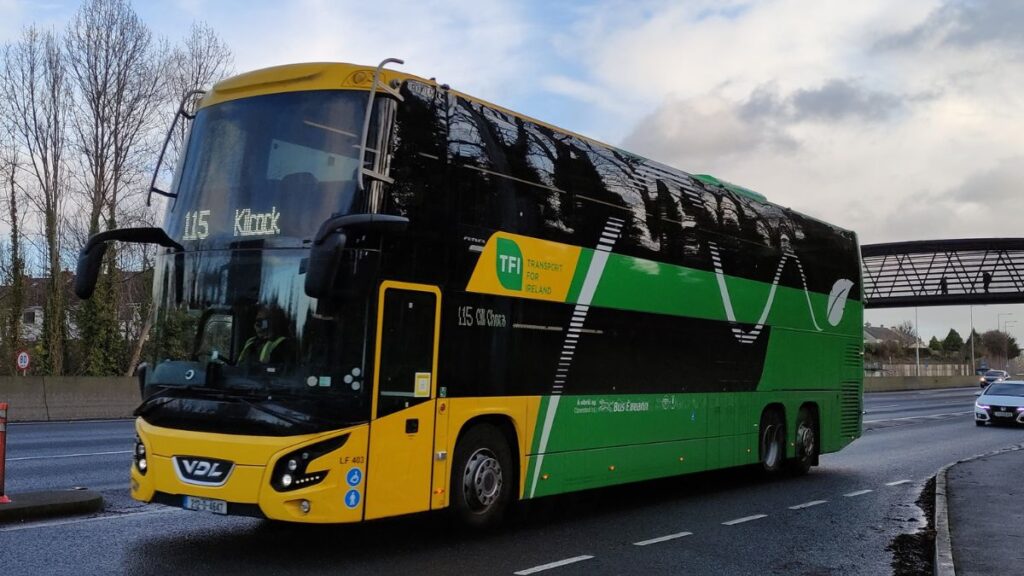
Bus Éireann is the national bus company, and it covers a lot more of the country than trains do. For budget travellers, it’s a legitimate way to move between towns.
GoBus and Citylink are private operators running fast, comfortable coaches between Dublin and Galway/Cork and are often cheaper than the train and sometimes faster.
The honest downside: buses take longer, schedules don’t always align with where you want to go or when you want to go, and rural services can be infrequent. Some villages have one bus per day or fewer.
I met a young couple from Melbourne at a hostel in Westport a few years back – Marcus and Claire – who’d been trying to do the west coast by bus. They’d spent half their trip waiting around rather than exploring. “We should’ve just rented a car between Galway and Westport,” Marcus told me. “We spent 40 euros on buses and wasted two days.”
They hired a car for the second half of their trip and called it the best decision they made.
5. Organised tours

If driving on unfamiliar roads genuinely worries you, or if you’re travelling solo and don’t want the hassle, organized day tours are a good and enjoyable option.
From Dublin, you can reach the Cliffs of Moher, the Wicklow Mountains, the Giant’s Causeway, and Newgrange all by organised coach tour in a single day. These tours are well-run, informative, and reasonably priced.
The trade-off is flexibility. You’re on someone else’s schedule, and you’ll often spend more time at tourist hotspots than at the quieter spots in between.
For older travellers or those who prefer not to navigate, they’re a brilliant option.
6. Cycling
Ireland’s Greenway network has expanded significantly in recent years. The Great Western Greenway in Mayo (running from Westport to Achill Island) is one of the finest cycle routes in Europe; flat, car-free, and breathtakingly beautiful.
Cycling isn’t practical for covering large distances or moving between regions, but as a way to explore a specific area deeply, it’s hard to beat.
Electric bikes are increasingly available for hire if the hills worry you.
7. Private driver/Chauffeur
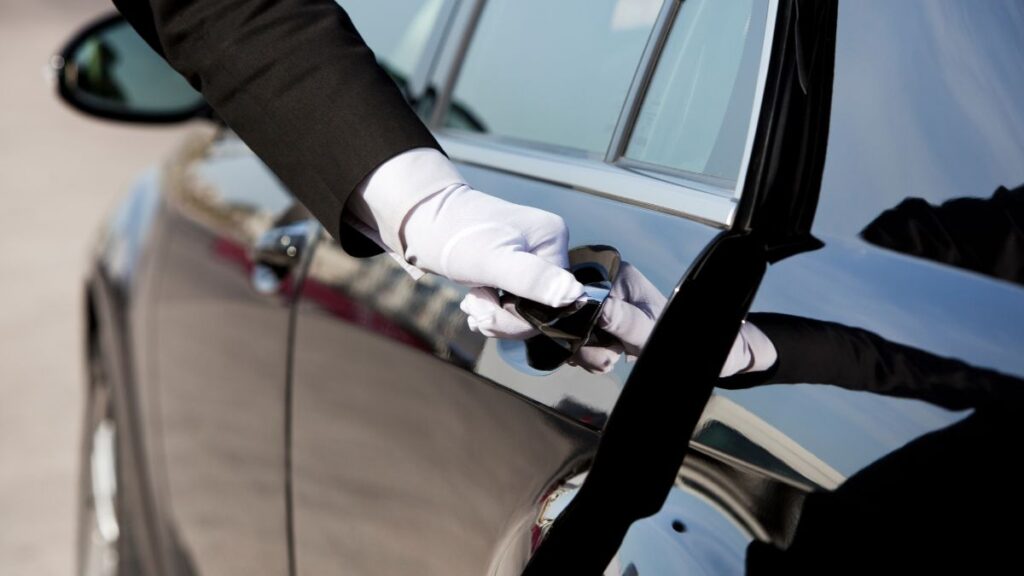
If budget isn’t your primary concern and you’d rather someone else handle the navigation, a private chauffeur is genuinely worth considering, especially for special occasions, honeymoons, or older travellers who want comfort without compromise.
Several reputable companies operate chauffeur-driven tours across Ireland, typically in high-end saloons or SUVs. Your driver doubles as a local guide, and the itinerary is usually built entirely around you. Want to stop at a ruined abbey you spotted from the road? Just say the word.
The cost is significantly higher than renting a car yourself; expect to pay anywhere from €400 to €800+ per day, depending on the vehicle, itinerary length, and operator. But for a honeymoon couple or a group of four splitting the cost, it’s not as extravagant as it sounds. And you get to sit back and actually look at the scenery instead of white-knuckling it around a hairpin bend in Killarney.
A few operators offer multi-day packages that include accommodation booking as well, which takes even more planning off your plate.
8. Taxis and ride-sharing

Free Now (formerly MyTaxi) is the dominant ride-hailing app in Ireland and works well in Dublin, Cork, Galway, and Limerick. Uber also operates in Ireland, but it functions differently than in the US. Drivers must hold a taxi licence, so it’s essentially the same pool of drivers as regular taxis, just booked through a different app.
For short urban journeys, taxis are convenient and reasonably priced. Dublin to the airport from the city centre typically costs around €25–€35.
Where taxis fall down is anywhere outside the main cities. Rural Ireland simply doesn’t have the driver density for reliable on-demand services. Trying to hail a cab in a small Kerry village on a Sunday evening is a lesson in patience you don’t need on a holiday.
Use taxis for city transfers and late-night returns from restaurants. Don’t rely on them as your primary transport strategy outside urban areas.
9. Ferries
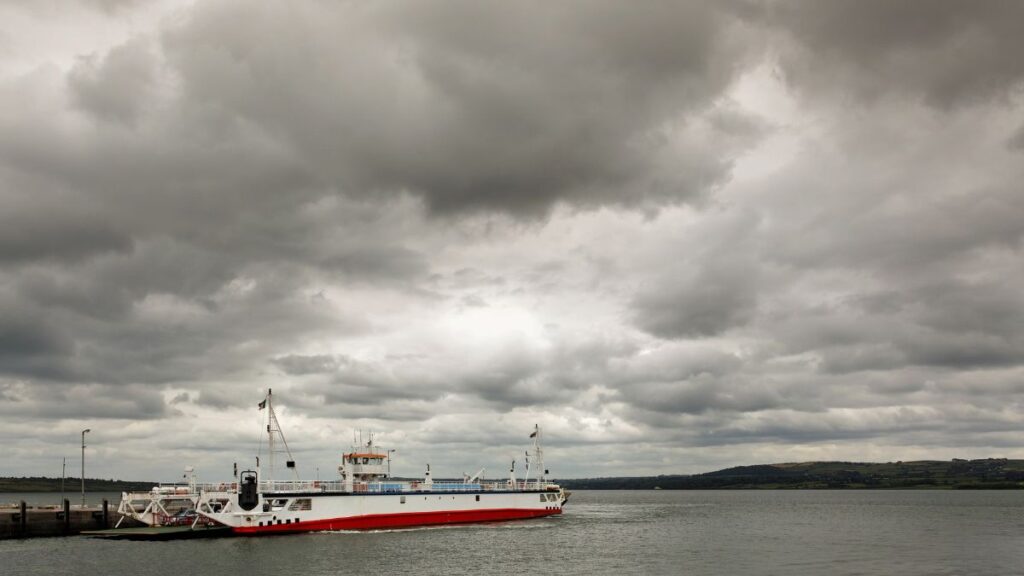
If you’re planning to visit the Aran Islands off the Galway coast, a ferry is your only option, and it’s a trip worth doing. Boats run from Rossaveal (near Galway) and Doolin (in County Clare) to Inis Mór, Inis Meáin, and Inis Oírr. The crossing takes 40-90 minutes, depending on departure point, and the islands themselves are one of the most distinctive places in Ireland.
Ferries also connect the Irish mainland to some offshore islands along the Wild Atlantic Way – Sherkin Island, Cape Clear, and Arranmore, among them. These aren’t major tourist routes, but if you stumble across one, they’re worth the detour.
On a larger scale, if you’re travelling between Ireland and Britain, Stena Line and Irish Ferries run routes between Dublin/Rosslare and Holyhead/Fishguard. These are popular with people bringing their own car from the UK, a cost-effective way to have your own vehicle without paying car rental prices.
10. Domestic flights
Ireland is small enough that domestic flights rarely make sense for most visitors. Flying Dublin to Cork, for example, takes less time than the train, but once you factor in getting to the airport, checking in, and collecting bags at the other end, you’ve probably lost an hour or two compared to just taking the train.
That said, there are a couple of exceptions worth knowing about.
Dublin to Donegal is one. The drive from Dublin to Donegal town is around three hours on a good day, longer if you’re heading to the far northwest. Aer Lingus Regional operates this route, and if your time is genuinely limited, it can save a meaningful chunk of a day.
Dublin or Shannon to the Aran Islands via Aer Aran (small propeller aircraft) is another, though the ferry is equally memorable and far cheaper.
For most itineraries, skip domestic flights entirely. But if you’re pressed for time and Donegal is on your list, it’s worth a look.
The best way to get around Ireland: A practical summary
Here’s a quick breakdown based on trip type:
| Trip type | Recommened approach |
|---|---|
| Dublin city break only | Public transport (Luas, DART, Leap Card) + taxis for late nights |
| Dublin + one or two city visits | Train or coach between cities; taxis within each city |
| West coast / rural Ireland | Hire a car, no real alternative |
| Full Irish road trip | Hire a car from day one |
| Honeymoon / luxury trip | Private chauffeur or hire car with curated stops |
| Group or solo, no driving | Mix of trains, buses, and organized day tours |
| Active / adventure travel | Cycling (Greenways) + car for longer transfers |
| Island visits (Aran, Sherkin, etc.) | Ferry, no other option |
| Time-poor, Donegal on the list | Consider domestic flight Dublin-Donegal |
| Travelling from the UK with your own car | Irish Ferries or Stena Line car ferry |
A few things no one tells you
- Fuel is more expensive than you expect: Budget for it, especially for a long road trip.
- Signage can be inconsistent: On some older roads, signs appear in Irish (Gaeilge) only. Download offline maps on Google Maps or Maps.me before you leave your accommodation each morning.
- Speed limits are in kilometres per hour: Even in Northern Ireland, where road signs are in miles, once you cross the border into the Republic, the signage switches to km/h. Rental cars typically show both.
- Northern Ireland is a different jurisdiction: Most Republic of Ireland car rentals cover travel in Northern Ireland, but confirm this before you book. Your insurance and breakdown cover should cross the border, but double-check.
- Petrol stations get sparse in rural areas: Don’t let your tank drop below a quarter in Connemara, Donegal, or Kerry without a plan.
Conclusion
Getting around Ireland isn’t complicated once you know what you’re working with. The country is small, but the roads are slow, the scenery is the destination, and the best moments tend to happen between the places on your itinerary rather than at them.
For most visitors, especially anyone travelling beyond Dublin, renting a car gives you Ireland on your own terms, and that’s when the country really opens up. If you’re staying in urban areas, public transport will serve you well. And if driving feels like too much, the tour options are genuinely good.
Whatever you choose, don’t rush it. Ireland is one of those places that rewards the people who give it enough time.
Frequently asked questions
Slán go fóill (goodbye for now)!