
If you’re searching for the best monasteries in Ireland, here’s your short answer: Glendalough, Clonmacnoise, Skellig Michael, Kylemore Abbey, Mellifont, Holy Cross Abbey, Fore Abbey, Scattery Island, Tintern Abbey, and Inishmurray Island. That list covers a wide range, from easily accessible visitor centres to remote islands that take real effort to reach.
But honestly, picking just ten from the monasteries scattered across this island felt almost wrong. Ireland’s monastic tradition is ancient, layered, and in many ways unlike anything else in Europe. These weren’t just places of prayer. They were centres of learning, art, trade, and influence, long before universities or printing presses existed.
I’ve visited most of these sites over the years, sometimes as part of a longer road trip and sometimes on deliberate pilgrimages of my own. Some I stumbled into almost by accident. What follows is a mix of practical information and personal impressions, with the kind of detail I wish someone had given me before I showed up.
Why Ireland has so many monasteries
Ireland’s monastic landscape is dense for a small island. That’s not a coincidence. When Christianity arrived in Ireland in the 5th century, it embedded itself into a society that was already deeply spiritual, community-based, and rural. Unlike much of continental Europe, Ireland had no major Roman cities. So instead of bishops anchoring themselves in urban centres, the Church here grew outward from monasteries.
These communities became the beating heart of Irish cultural life. Monks copied manuscripts, trained scholars, and sent missionaries across Europe. Some of the most important early medieval texts in existence were written in places like Clonmacnoise and Iona. If you’ve ever admired the Book of Kells in Trinity College Dublin, you’re looking at the direct output of this tradition.
That context matters when you visit. You’re not just looking at ruins. You’re standing in spaces that shaped European civilisation. And if you want to understand more about the communities that maintained their Gaelic and Catholic identity through centuries of pressure, it helps to read about Irish speaking areas in Ireland, where much of this cultural continuity survived longest.
The 10 best monasteries in Ireland
1. Glendalough, County Wicklow

Glendalough is probably the most visited monastic site in Ireland, and for good reason. Founded by St Kevin in the 6th century, it sits in a glacial valley surrounded by two lakes and forested hillsides. On a quiet morning before the tour groups arrive, it’s genuinely breathtaking.
The site includes a near-perfect round tower (about 30 metres high), the Gatehouse, several stone churches, and St Kevin’s Kitchen, a small oratory with a distinctive corbelled roof. There’s a visitor centre near the lower lake where you can get solid historical context before you explore.
Practical tip: Arrive before 9 am, especially in summer. The car park fills fast, and the atmosphere shifts considerably once coaches start pulling in.
- Best time to visit: Early morning, spring or autumn
- Location: Glendalough, County Wicklow.
- Admission: The visitor centre has a fee; the grounds are free to walk.
2. Clonmacnoise, County Offaly

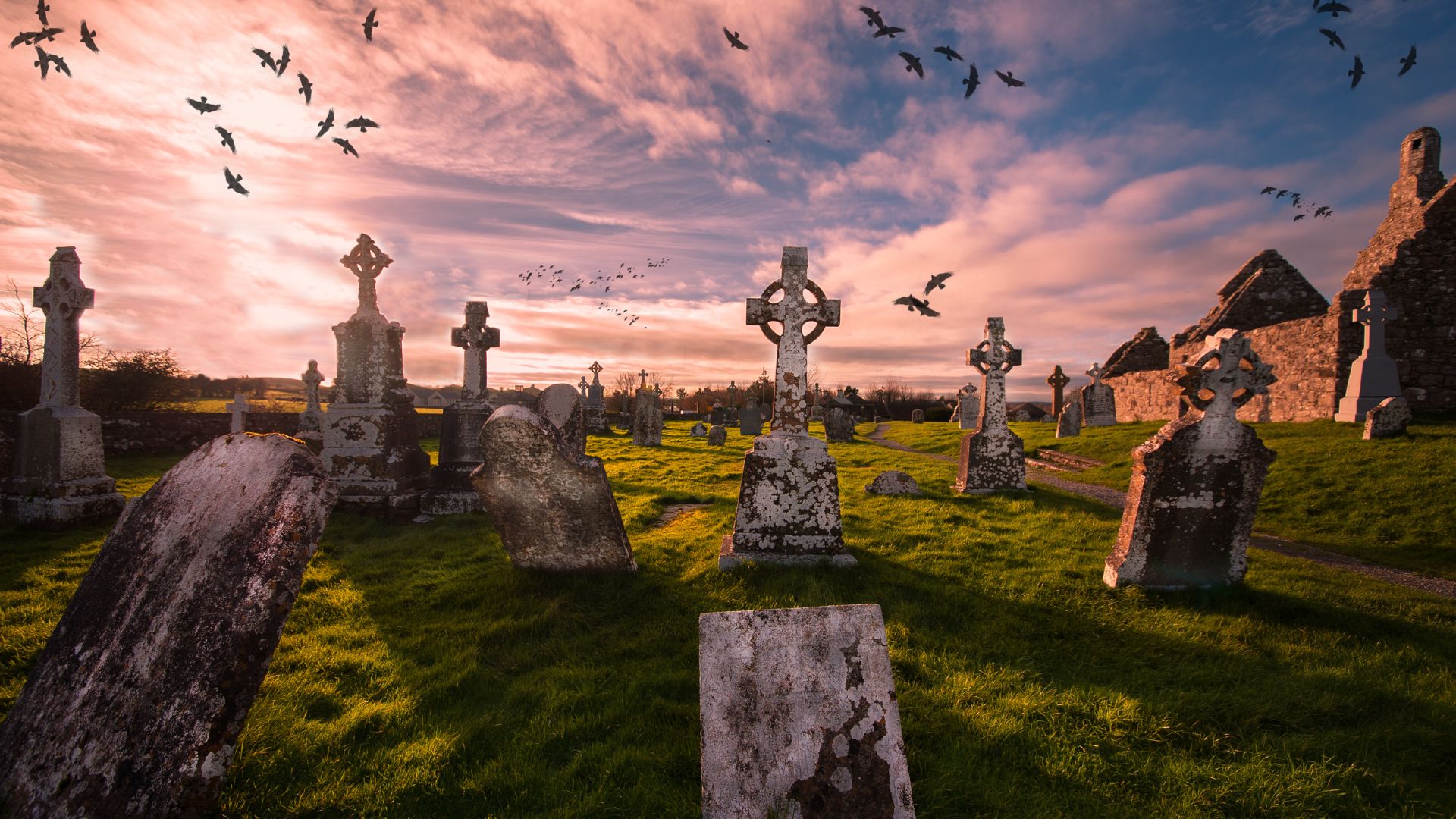
This is the one I’d argue most Irish people underestimate. Clonmacnoise sits on the banks of the River Shannon in the flat midlands, and the landscape feels almost otherworldly at dusk. Founded by St Ciarán in 544 AD, it became one of Ireland’s most important monastic cities, attracting scholars from across Europe.
What survives is remarkable: two round towers, a cathedral, eight churches, three ornate High Crosses, and hundreds of early Christian grave slabs. The originals of the famous crosses are now housed inside to protect them from erosion, with replicas standing outside in their original positions.
Firsthand note: On a visit a few years ago, I arrived just as a light mist was rolling off the Shannon. The round tower disappeared halfway up into the fog, and the grave slabs were almost completely silent of other visitors. It’s the kind of moment that makes you realise why people once walked hundreds of miles to reach this place.
- Best time to visit: Weekday morning or early evening.
- Location: Shannonbridge, County Offaly.
- Admission: Yes, managed by the OPW (Office of Public Works).
3. Skellig Michael, County Kerry

Skellig Michael is not for everyone, and that’s part of what makes it so special. This UNESCO World Heritage Site sits on a jagged rock 12 kilometres off the Kerry coast, rising almost 218 metres out of the Atlantic. Monks built and inhabited a beehive-hut monastery up there between the 6th and 12th centuries. The fact that they did is almost incomprehensible.
You reach it by boat from Portmagee, Ballinskelligs, or Cahersiveen, and the crossing takes about 45 minutes. It can be rough. Once you land, there’s a steep climb of around 600 steps cut into the rock. But what you find at the top, six drystone beehive huts and two oratories clinging to the clifftop, is extraordinary.
Important: Visitor numbers are strictly limited (around 180 per day). Book boat trips several months in advance during peak season. Trips are also frequently cancelled due to weather, so build flexibility into your plans.
- Season: May to September (weather dependent).
- Location: 12km off the Iveragh Peninsula, County Kerry.
- Admission: Boat trip fee applies; site managed by OPW.
4. Holy Cross Abbey, County Tipperary

What makes Holy Cross Abbey unusual is that it’s still a functioning place of worship. Founded in the 12th century and dedicated to a relic of the True Cross, it fell into ruin after the Reformation but was painstakingly restored between 1969 and 1975. Mass is still celebrated here.
The interior is genuinely impressive. Look for the medieval wall paintings, the unusual ‘monks’ waking place’ carved from stone, and the shrine housing the relic. It’s one of the few monastic sites in Ireland where you get a real sense of continuity between past and present.
- Note: Check times before visiting as services may affect access.
- Location: Holycross, County Tipperary.
- Admission: Free (donations welcomed).
5. Scattery Island, County Clare
Scattery Island sits in the Shannon Estuary, a short ferry ride from Kilrush in County Clare. St Senan founded a monastery here in the 6th century, and the island has one of the tallest and best-preserved round towers in Ireland, standing about 29 metres, with its door at ground level (most round towers have elevated doors as a defensive measure).
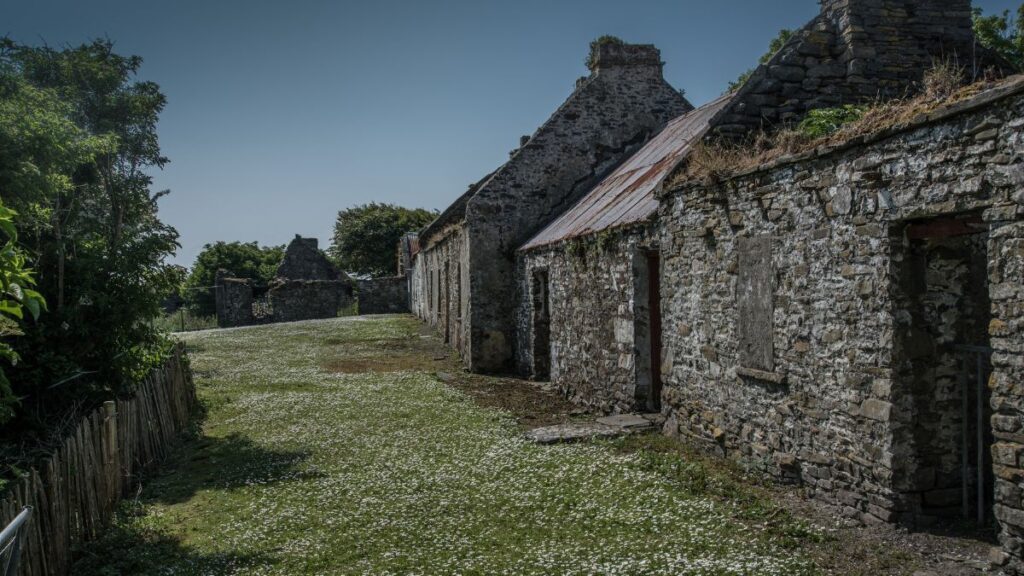
The island is uninhabited now, but was once a thriving monastic settlement. There are several ruined churches and a peaceful, slightly melancholy atmosphere that’s hard to describe until you’ve felt it. Ferry services run from Kilrush Marina during the summer months.
- Season: April to September (ferry dependent).
- Location: Shannon Estuary, County Clare (ferry from Kilrush).
- Admission: Ferry cost applies; the site itself is free.
6. Tintern Abbey, County Wexford

This is not the famous Tintern Abbey in Wales, though the two are connected. The Irish Tintern was founded in the 13th century by William Marshal, the Earl of Pembroke, reportedly after he survived a violent storm at sea and made a vow to God. He named it after the Welsh abbey from which the founding monks came.
It’s a beautiful Gothic ruin in the rolling countryside of County Wexford, managed by the OPW. Unlike many monastic ruins, Tintern has some of the most intact stonework you’ll find, including the tower and nave. The surrounding woodland walks add to the appeal.
- Bonus: The grounds connect to Tintern Wood, a lovely short walk.
- Location: Saltmills, County Wexford.
- Admission: Small OPW fee.
7. Fore Abbey, County Westmeath

Fore is one of those sites that rewards the curious. Located in a quiet valley near Lough Lene, it was founded by St Fechin in the 7th century. What makes it stand out is the story of the Seven Wonders of Fore, a set of local legends that have been attached to the site for centuries, including water that flows uphill and a mill without a race.
Firsthand note: I visited Fore on a grey October afternoon with almost no one else around. The three separate buildings across the valley floor, connected by a road that runs through the old monastic town, gave the whole place a peculiar, quiet energy. It’s the kind of site that doesn’t shout at you. It waits.
It’s also worth mentioning that if you enjoy less-obvious historical sites, Ireland is full of them. Our piece on lesser-known castles in Ireland covers a similar spirit of discovery if you want to keep exploring off the beaten path.
- Best time to visit: Anytime; uncrowded year-round.
- Location: Fore, County Westmeath.
- Admission: Free.
8. Inishmurray Island, County Sligo

Inishmurray is the most remote site on this list and requires the most effort to reach. It sits about 6 kilometres off the Sligo coast and was abandoned by its permanent residents in 1948. The early Christian monastery here, enclosed within a massive cashel (stone wall), is one of the best-preserved examples in Ireland.
Inside the enclosure, you’ll find beehive huts, three churches, a firehouse, and the famous ‘cursing stones,’ a collection of stones said to have been used to call down misfortune on enemies. Private boats can be arranged from Mullaghmore or Rosses Point during the summer. It’s weather-dependent and can feel genuinely isolated, which is exactly the point.
- Season: May to September (weather dependent).
- Location: Off the Sligo coast (boat from Mullaghmore or Rosses Point).
- Admission: Boat cost applies; no entrance fee on the island.
9. Kylemore Abbey, County Galway

Kylemore is technically a Benedictine abbey rather than an early Christian monastic site, and it looks like a Victorian castle because it essentially is one. Built in the 1860s as a private home, it was purchased by Benedictine nuns in 1920 after they were displaced from Belgium during World War I.
It’s set on the edge of a lake in Connemara with mountains behind it, and it photographs like a dream. The nuns still live and work here, running a school and a craft shop. You can visit the Gothic church on the grounds, the walled Victorian garden, and the main abbey building.
- Best time to visit: Midweek to avoid weekend crowds.
- Location: Pollacapall, Connemara, County Galway.
- Admission: Yes.
10. Mellifont Abbey, County Louth

Mellifont was Ireland’s first Cistercian monastery, founded in 1142 by St Malachy after he visited Clairvaux in France and returned with a reforming vision for Irish monasticism. It was a genuinely transformative moment in Irish religious history. The formal Continental style brought by the Cistercians was quite different from the organic, community-centred model that had defined Irish monasteries for centuries.
What remains today is partial but worth seeing. The most striking survival is the Lavabo, an octagonal Romanesque washing room that would have served the monks before meals. The site is managed by the OPW and has a small exhibition space.
- Nearby: Monasterboice (round tower and High Crosses, 10 minutes away).
- Location: Collon, County Louth.
- Admission: Small OPW fee.
Planning your visit to monasteries in Ireland
A few things worth knowing before you go:
- OPW Heritage Card: If you plan to visit several OPW-managed sites (Clonmacnoise, Glendalough, Mellifont, Tintern, and others), an annual Heritage Card pays for itself quickly. It covers over 90 sites across Ireland.
- Opening seasons: Many monastic ruins are freely accessible year-round. Visitor centres and island-access sites tend to operate from April or May to September or October.
- Island sites require planning: Skellig Michael, Scattery Island, and Inishmurray all depend on weather and have limited boat availability. Book well in advance.
- Respect the sites: These are sacred spaces to many people. Keep noise low, don’t climb on ruins, and leave nothing behind.
- Go early or off-season: The difference between Glendalough at 8am in October and at 11am in August is the difference between a spiritual experience and a tourist traffic jam.
Conclusion
The monasteries in Ireland aren’t just historical curiosities. They’re a window into a version of the world that valued contemplation, scholarship, and community in ways that feel surprisingly relevant today. Whether you’re standing on a windswept rock off the Kerry coast or walking quietly through a misty valley in Wicklow, these sites have a way of making the noise of modern life go quiet for a while.
Start with Glendalough or Clonmacnoise if you want something accessible and well-interpreted. Push further to Skellig Michael or Inishmurray if you want something that takes real effort and rewards it generously. And if you find yourself wandering through a quiet ruin in the Westmeath midlands with no one else around, wondering how you ended up there, you’ve probably found the best version of this trip.
Frequently asked questions about monasteries in Ireland
What is a famous monastery in Ireland?
Glendalough in County Wicklow is probably the most famous monastic site in Ireland. Founded by St Kevin in the 6th century, it features a well-preserved round tower, multiple stone churches, and a stunning valley setting. Clonmacnoise in County Offaly and Skellig Michael off the Kerry coast are also among the most widely recognised.
What is the most spiritual place in Ireland?
This is subjective, but Skellig Michael comes up time and again in conversations about Ireland’s most spiritually charged places. The isolation, the physical effort required to reach it, and the scale of what the monks built there create an experience that’s hard to replicate anywhere else. Croagh Patrick in County Mayo, an important pilgrimage mountain, is another strong contender for many visitors.
Can you stay in monasteries in Ireland?
Yes, a small number of monasteries and abbeys in Ireland offer retreat accommodation. Glenstal Abbey in County Limerick, a Benedictine monastery, offers limited retreat places for visitors who want to spend time in a working monastic community. Kylemore Abbey also has connections to guest accommodation nearby. It’s worth researching specific retreat opportunities well in advance, as spaces tend to be limited.
What is the largest monastery in Ireland?
Clonmacnoise is often cited as the largest in terms of historical scale and importance. At its peak, it was effectively a monastic city with thousands of residents. In terms of surviving modern structures, Glenstal Abbey in County Limerick is one of the most substantial working monastic complexes in the country.
What religion are Irish monks?
Historically, Irish monks were Catholic Christians, following the Celtic Christian tradition that developed from the 5th century onward. This tradition had some distinctive practices that differed from Roman custom, including differences in how Easter was calculated and how monks were tonsured. Over time, Irish monasticism aligned more closely with Roman practice. The working monasteries in Ireland today, including Glenstal and those connected to the Benedictine and Cistercian orders, remain part of the Catholic tradition.