
Picture this: it’s a quiet morning in 795 AD on the island of Rathlin, off the northern Irish coast. Monks go about their routines, tending manuscripts and prayers. Then, without warning, longships appear on the horizon. Within hours, the monastery is burning.
That was the moment Ireland’s world changed forever.
The Viking invasion of Ireland didn’t happen in one dramatic sweep. It was more like a slow tide, coming in waves over nearly three centuries, reshaping everything it touched: settlements, trade, language, politics, and even the Irish gene pool. If you’ve ever wondered how deeply the Norse left their mark on this island, the answer is: far more deeply than most people realise.
What was the Viking Age in Ireland?

The Viking Age in Ireland roughly spans from 795 AD to 1014 AD, though Norse influence lingered well beyond that. It was a period defined by raids, then settlement, then an uneasy coexistence that eventually blended into something entirely new.
It’s worth understanding who these people actually were. The Vikings weren’t a monolithic army with a single master plan. They were Scandinavian seafarers, primarily from Norway in Ireland’s case, driven by a mix of land shortages at home, the promise of wealth abroad, and frankly, an extraordinary talent for building ships that could cross open ocean.
Ireland was an attractive target for a very specific reason: its monasteries. These weren’t just places of prayer. They were the wealthiest institutions in the country, packed with gold chalices, illuminated manuscripts, jewelled reliquaries, and stores of food. They were also, crucially, undefended.
The first raids: Targeting the monasteries
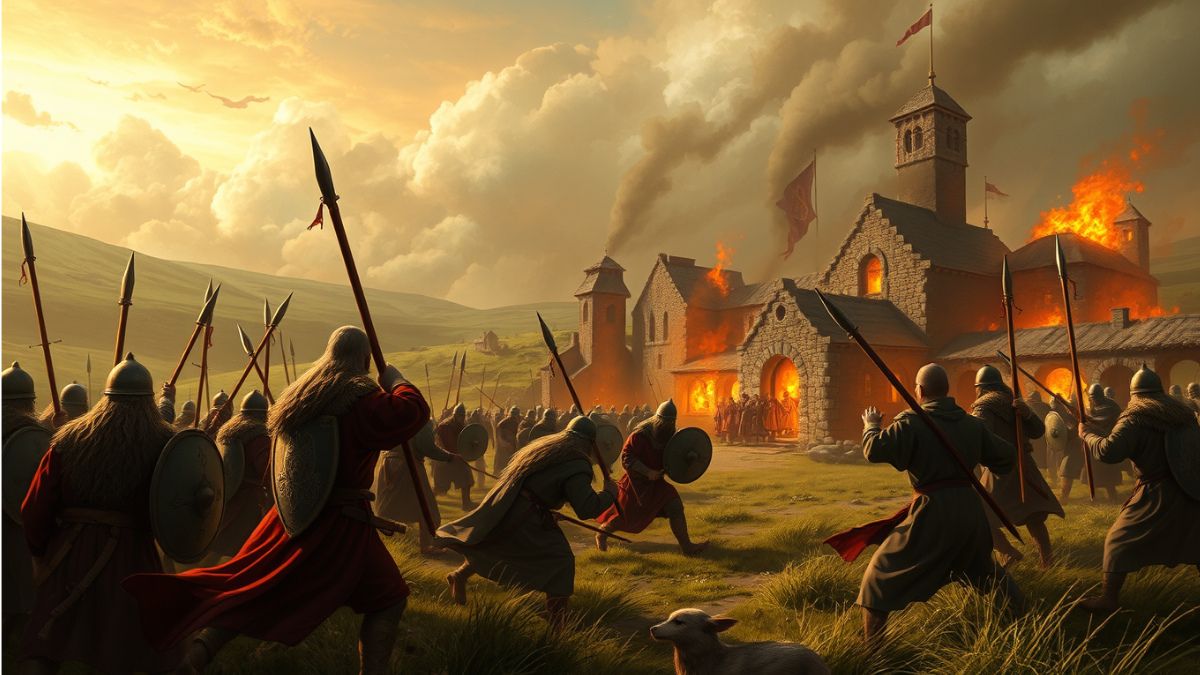
The initial phase of the Viking invasion of Ireland was hit-and-run raiding, pure and simple.
The first recorded attack was on Rathlin Island in 795 AD, followed quickly by raids on Iona (off the Scottish coast but closely tied to Irish monastic culture), Inishmurray, and Inishbofin. By the early 800s, no coastal monastery was safe.
What made these raids so effective? A few things:
- Speed: Viking longships could land directly on beaches. There were no deep harbours needed.
- Surprise: Ireland had no standing military to respond quickly.
- High-value targets: Monasteries concentrated wealth in one place.
- Limited resistance: Monks weren’t warriors.
The raiding patterns also shifted over time. In the early years, the Vikings hit coastal sites and retreated. By the 820s and 830s, they were pushing inland along Ireland’s rivers, the Shannon, the Boyne, the Liffey, reaching monasteries deep in the country’s interior.
Armagh, the most important ecclesiastical centre in Ireland, was raided three times in 832 AD alone.
From raiders to settlers: The longphort era

Here’s where the story gets genuinely interesting. Around 840 AD, the Vikings stopped going home.
Instead of returning to Scandinavia after each raid, Norse fleets began overwintering in Ireland. They built fortified harbour camps called longphorts (from the Old Norse for “ship enclosure”). These were essentially the first permanent Norse settlements on the island.
The most significant of these was established at the mouth of the Liffey. It would eventually become Dublin.
Other longphorts appeared at Waterford, Limerick, Wexford, and Cork. Sound familiar? Almost every major city on Ireland’s coast today has Viking DNA in its founding. The Norse word “fjord” survives in Waterford (Veðrafjǫrðr) and Wexford (Veisafjǫrðr).
This shift from raiding to settling changed the entire dynamic. The Vikings weren’t just enemies anymore. They were neighbours, trading partners, and, increasingly, competitors for political power.
Irish Resistance: Kings and Battles
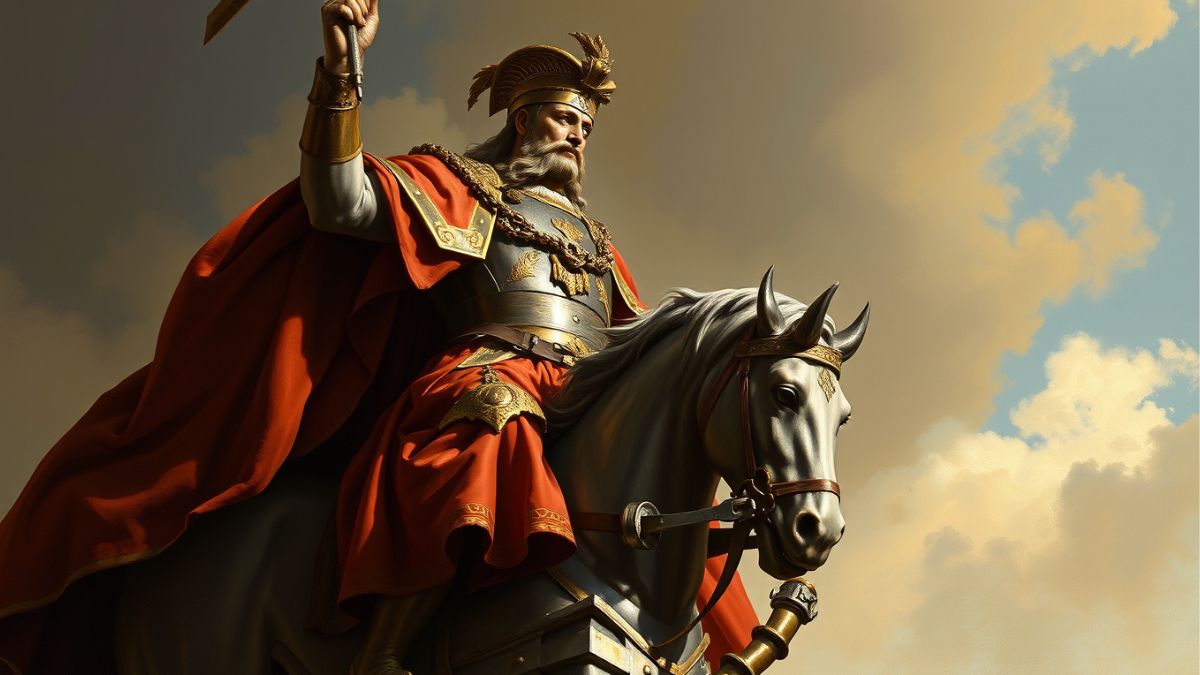
The Irish weren’t passive victims. That’s a simplification worth correcting.
Ireland at this time was a patchwork of regional kingdoms, with no single high king capable of organising a unified response. But individual kings fought back hard, often successfully. The Annals of Ulster record numerous Irish victories against Viking forces throughout the 9th century.
One of the most significant turning points came in 848 AD, when Máel Sechnaill I, king of Meath, defeated a Viking force at the Battle of Forach, reportedly killing around 700 Norse fighters. Pope Leo IV wrote to congratulate him.
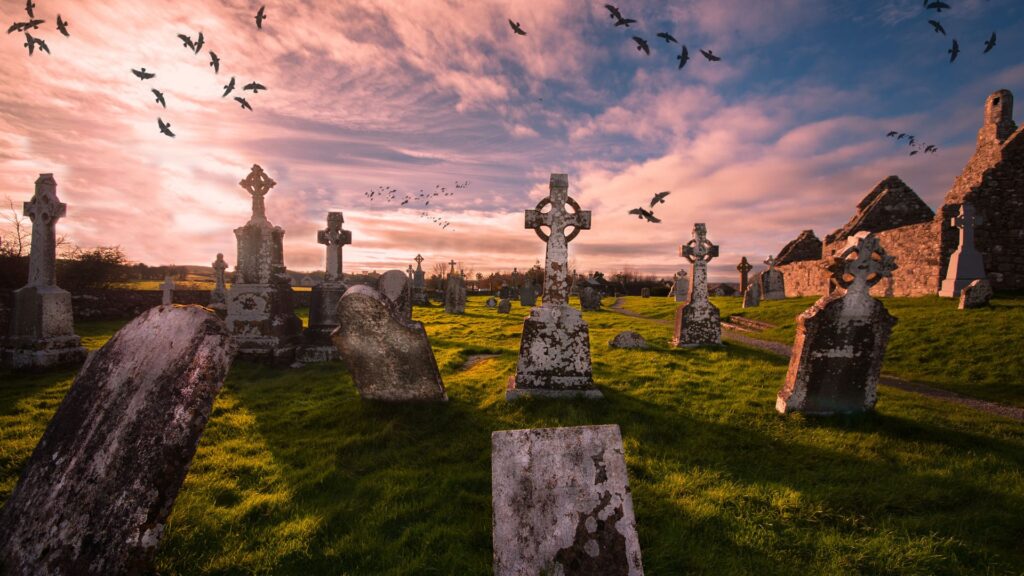
The Irish also adapted. They began building round towers, those distinctive stone spires you still see dotting the Irish landscape. These weren’t just bell towers. They were also refuges: monks could climb inside, pull up the ladder, and wait out a raid.
For a fascinating look at what Ireland was like before the Vikings arrived, and who the earlier inhabitants were, read our article on Celts in Ireland.
The Uí Ímair: A dynasty between two worlds
One of the most fascinating chapters in the Viking invasion of Ireland involves a dynasty that was neither fully Norse nor fully Irish.
The Uí Ímair (grandsons of Ímar) were a ruling family who controlled Dublin and parts of northern Britain from roughly 850 onwards. Their origins are debated: possibly descendants of a Norse leader named Ímar, who may or may not be the same as Ivar the Boneless of Great Heathen Army fame.
What’s remarkable is how quickly this dynasty became embedded in Irish political life. They made alliances with Irish kings, married into Irish families, converted to Christianity (at least nominally), and fought as often against other Vikings as against the Irish.
By the 900s, the Norse settlers in Ireland were developing a distinct identity. Historians call them Hiberno-Norse, people who were culturally somewhere between Scandinavia and Ireland, speaking a blend of languages, worshipping at the intersection of two traditions.
Dublin under the Uí Ímair became one of the most important trading cities in northwestern Europe, with connections to Scandinavia, Britain, Iceland, and the Frankish kingdoms.
Brian Boru and the Battle of Clontarf
No discussion of Vikings in Ireland would be complete without Brian Boru, and specifically the Battle of Clontarf in 1014 AD.
Brian was from the Dal Cais tribe of Munster, an unlikely candidate for high kingship. But through a combination of military brilliance, political cunning, and relentless ambition, he clawed his way to becoming the most powerful ruler Ireland had ever seen.
By 1002, Brian had claimed the title of High King of Ireland, something no one had genuinely held before. But his power was contested, particularly by Máel Mórda, king of Leinster, who allied himself with the Viking rulers of Dublin (the Sigtrygg Silkbeard branch of the Uí Ímair) and called in reinforcements from Viking strongholds in Orkney and the Isle of Man.
The Battle of Clontarf, fought on Good Friday, 23 April 1014, was the result. It was a brutal, all-day engagement fought north of Dublin. The outcome was a decisive Irish victory. The Leinster-Viking alliance was crushed.
But here’s the twist: Brian Boru died that same day. At around 70 years old, he was killed in his tent after the battle, reportedly by a fleeing Viking named Brodir of Man.
The battle’s significance has been debated by historians for centuries. It wasn’t quite the “expulsion of the Vikings” that later nationalist storytelling made it out to be. The Norse didn’t leave Ireland. Dublin remained Hiberno-Norse in character for generations. But Clontarf marked the end of any serious Viking attempt to dominate the island politically.
What the Vikings actually left behind
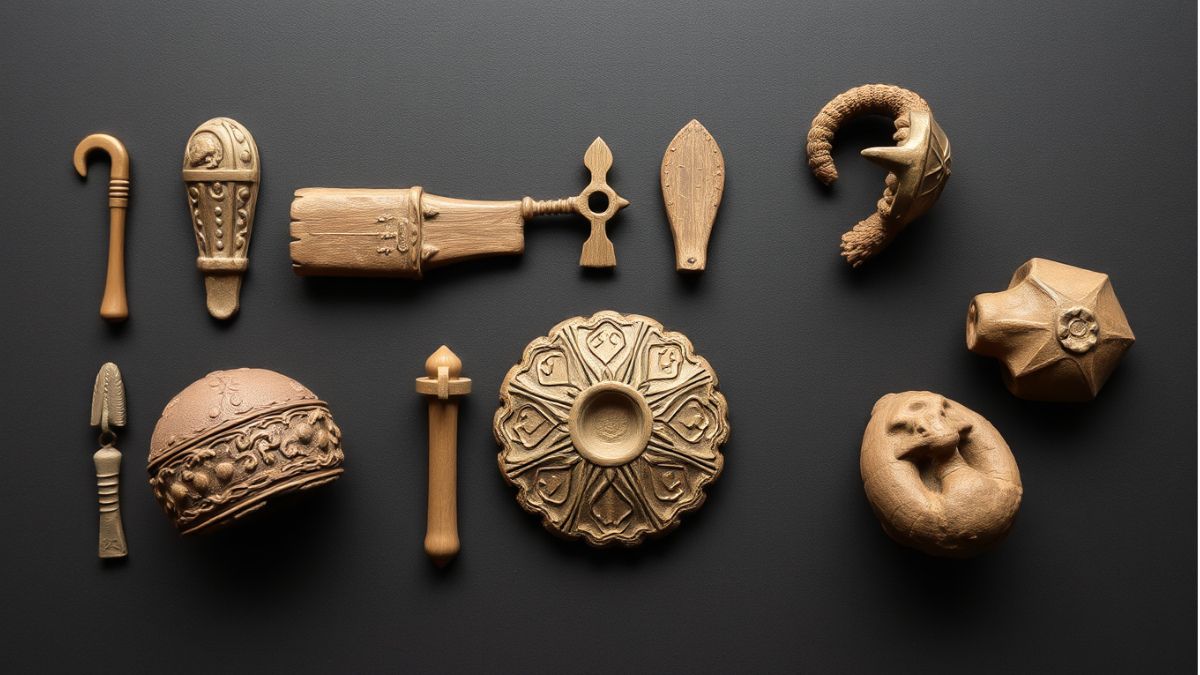
The Viking legacy in Ireland is woven into the fabric of daily life in ways most people don’t notice.
Language: Dozens of English words used in Ireland today came via Old Norse through the Hiberno-Norse community. “Ransack,” “slaughter,” “husband,” “knife,” and “skull” are all Norse in origin. Many Irish placenames, particularly around coastal areas, contain Norse elements.
Cities: As already mentioned, Dublin, Waterford, Wexford, Limerick, and Cork all grew from Viking longphorts or Norse trading settlements. The grid pattern of medieval Dublin was Norse in layout.
Trade networks: The Vikings plugged Ireland into a European and Atlantic trading system it hadn’t previously had access to. Silver from Central Asia, silk from Byzantium, and wine from France all moved through Dublin’s markets.
DNA: Studies of Irish genetic ancestry have found Norse markers, particularly in families from Dublin and along the eastern and southern coasts. The traces are modest but real.
Art and metalwork: The Hiberno-Norse period produced a distinctive fusion style, blending Irish knotwork with Norse animal motifs. You can see it in artefacts at the National Museum of Ireland.
After the Vikings: what came next
The end of the Viking Age in Ireland didn’t bring peace or unity. The Irish kingdoms continued their centuries-old cycle of competition and warfare.
It was, in fact, that very instability that opened the door to the next wave of outside intervention: the Norman conquest of the 12th century. In 1169, Norman forces landed in Wexford, invited by the exiled king of Leinster, Diarmait Mac Murchada. The consequences were seismic and long-lasting.
To understand how that chapter unfolded, and how it built on the world the Vikings had partly created, read our article on the Norman Conquest of Ireland.
Conclusion
The Viking invasion of Ireland is one of history’s more nuanced stories. It begins with violence, genuine and devastating violence against vulnerable communities. But it evolves into something far more complicated: assimilation, intermarriage, cultural exchange, and the creation of cities that still exist today.
The Vikings didn’t destroy Ireland. In many ways, they transformed it, connecting a relatively isolated island to wider European networks, founding its major cities, and leaving traces in its language, genes, and art that are still visible a thousand years later.
Next time you walk through Dublin or Waterford, remember: you’re walking through a city that Norse settlers built.
Frequently asked questions
How long did the Vikings occupy Ireland?
The Viking presence in Ireland lasted roughly from 795 AD to the mid-11th century, around 250 years of significant Norse activity. However, the term “occupy” is a bit misleading. The Vikings never controlled all of Ireland. They held key coastal settlements and trading towns, most notably Dublin, but large parts of the island remained under Irish rule throughout. After the Battle of Clontarf in 1014, Norse political dominance declined, though Hiberno-Norse communities continued in Irish cities for generations after.
Do most Irish have Viking blood?
Genetic studies suggest that Viking ancestry in the Irish population exists but is relatively modest compared to the Norse contribution to populations in parts of Britain and Scandinavia. The strongest Norse genetic signals appear in people with family origins in Dublin and along the eastern and southern coasts, which makes sense given the location of the main Viking settlements. So while it’s not accurate to say “most” Irish have significant Viking blood, a meaningful minority do carry some Norse ancestry.
Did the Irish ever defeat the Vikings?
Yes, frequently. The idea that the Irish were helpless against Viking raids is a myth. From at least the mid-9th century, Irish kings were organising successful military resistance. Máel Sechnaill I won major victories against Norse forces in the 840s, and Irish kings throughout the following century regularly defeated Viking armies. The Battle of Clontarf in 1014 is the most famous example, where Brian Boru’s forces decisively defeated a coalition of Leinster and Viking allies.
Who kicked the Vikings out of Ireland?
No single person “kicked the Vikings out,” because the Vikings were never fully expelled. After the Battle of Clontarf in 1014, Norse political ambitions in Ireland effectively ended. Brian Boru is the figure most associated with that turning point, though he died on the day of his greatest victory. The Hiberno-Norse communities in Dublin and other cities gradually assimilated into Irish society over the following century and a half, until the Norman invasion of 1169 reshaped the political landscape again.
What is the most Viking town in Ireland?
Waterford is often considered the most Viking of Irish towns. Founded as a Norse settlement around 914 AD under the name Veðrafjǫrðr, it has the most intact Viking archaeological heritage in the country. The Waterford Viking Triangle, a heritage quarter in the city centre, contains Reginald’s Tower, which dates to the Viking era and is one of the oldest civic urban buildings in Ireland. Waterford also has a dedicated Viking Museum and hosts an annual Viking festival. Dublin is larger and was arguably more important during the Viking Age itself, but Waterford has made the Norse legacy central to its modern identity.