

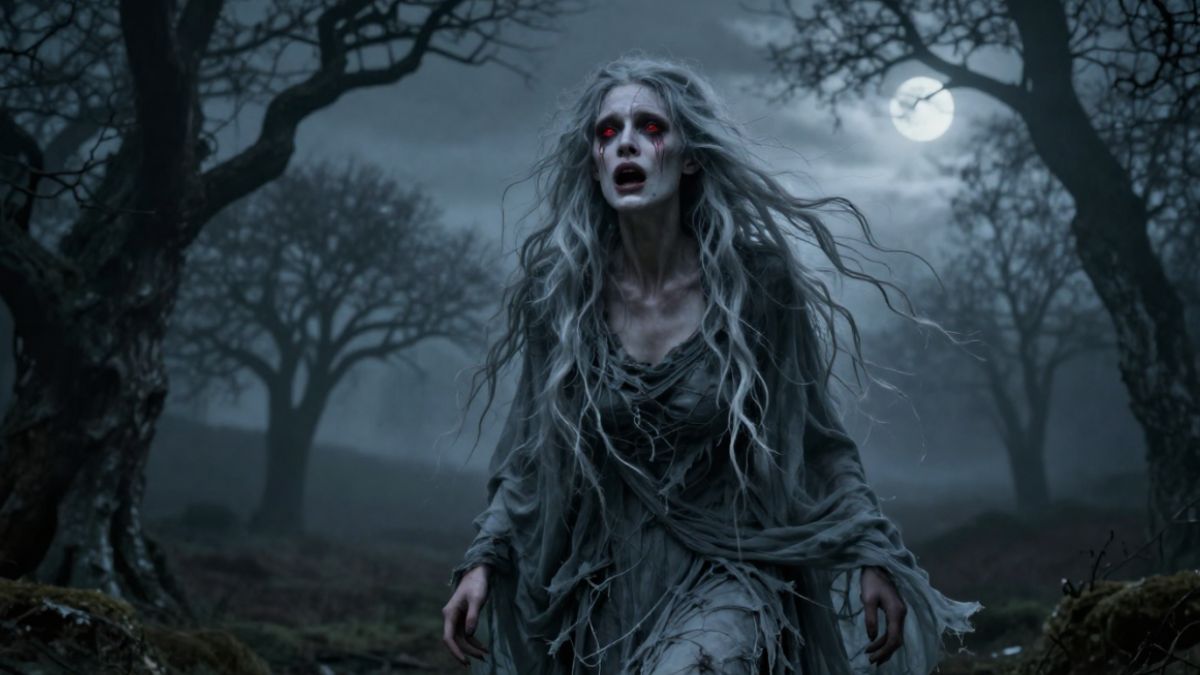
Picture this: It’s the dead of night somewhere in rural Ireland. The fire is low, the wind has picked up, and then you hear it. A sound that doesn’t belong to any animal you’ve ever known. Somewhere between a wail and a keen, it rises and falls in the dark.
Your grandmother goes pale. She doesn’t say a word. She doesn’t need to.
That sound has a name: the banshee.
So, what exactly is a banshee? In the simplest terms, a banshee (from the Irish bean si, meaning “woman of the fairy mound”) is a female spirit from Irish mythology whose cry is said to foretell the death of someone in a particular Irish family. She doesn’t cause death. She doesn’t haunt houses. She’s more like a messenger, a grieving spirit attached to certain bloodlines, whose wail signals that loss is coming.
That distinction matters, and we’ll get into why.
The bean si: unpacking the original Irish name
The word “banshee” is an anglicisation of the Old Irish bean si (sometimes written bean sidhe). Break it down, and you get bean (woman) and si (fairy, or more precisely, a being of the fairy mound). The plural in Irish is mna si, “women of the fairy mounds.”
The fairy mounds, or sidhe, are the ancient burial mounds scattered across Ireland, places like Newgrange and Knocknarea. In early Irish belief, these weren’t just graves. They were seen as doorways between the living world and the otherworld, home to powerful supernatural beings.
The bean si, then, isn’t a ghost in the traditional sense. She’s something older and stranger: a being tied to the earth, to blood, and to the old ways of grief.
Where does the Banshee tradition actually come from?
This is where things get genuinely fascinating, because the banshee isn’t just a spooky bedtime story. She has deep, traceable roots.
The keening tradition
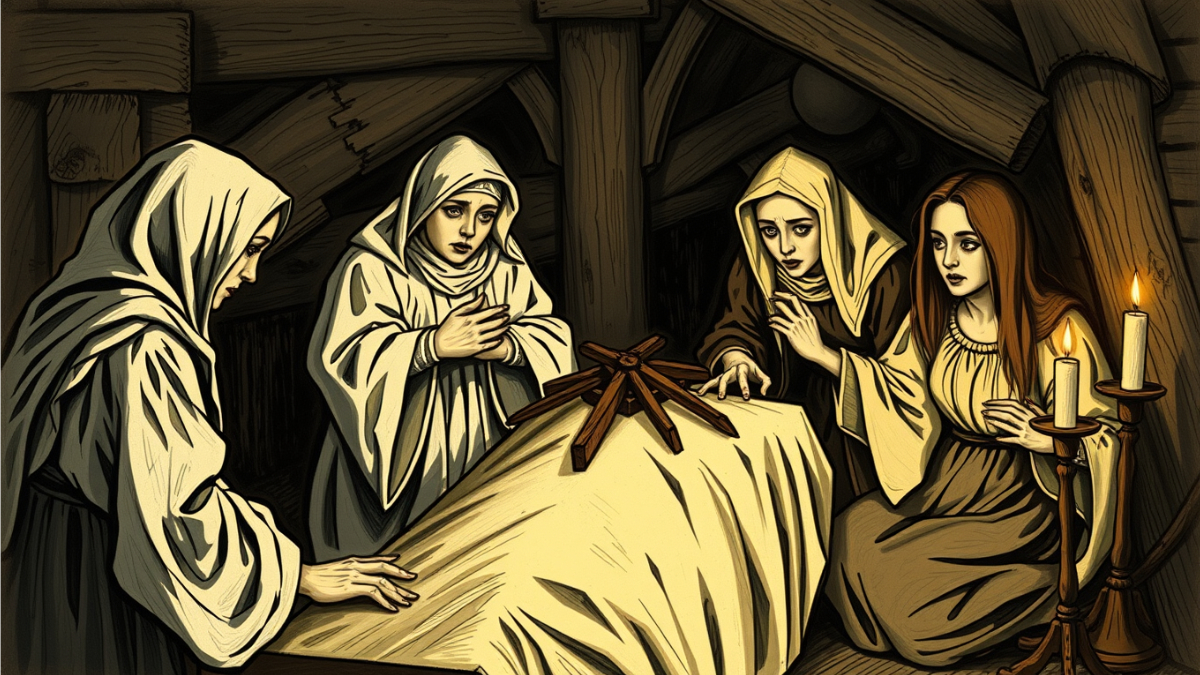
Before professional funeral homes, before quiet church services, the Irish tradition of mourning involved caoinadh (keening), a form of ritualistic wailing performed by women at the time of death. It was raw, communal, and ancient. Certain women in communities were known as mna caointe, keening women, who were called upon to lead mourning at wakes and gravesides.
Over centuries, this very human tradition seems to have merged with fairy lore. The bean sí became a supernatural version of the keening woman, a spirit who mourns before the death even happens.
The five great Irish families
Historically, the banshee was said to follow specific ancient Irish families. The main ones you’ll see referenced in old texts are families whose surnames begin with “Mac” or “O'” (the prefixes that denote Gaelic descent): names like O’Brien, O’Neill, O’Connor, O’Grady, and the Kavanaghs.
The logic was that only families with genuine Gaelic roots, those connected to the ancient Irish aristocracy, had a bean sí attached to them. Over time, as Irish culture spread and intermarried, the belief broadened. But that original connection to lineage and heritage is still part of her identity.
First recorded mentions
The bean sí appears in early Irish texts going back to at least the 8th century. She appears in accounts of the death of High King Conn of the Hundred Battles, and she’s referenced in medieval Irish literature as a powerful female figure tied to fate. She was never a minor superstition. She was woven into how the Irish understood mortality itself.
What does a banshee look like?
Ask ten different people from ten different Irish counties, and you might get ten different answers. That’s part of what makes folklore so alive. The banshee isn’t fixed. She shifts.
But there are recurring descriptions worth knowing:
- The old hag: In many accounts, she appears as an ancient, haggard woman with long white or silver hair, wild eyes, and a grey cloak. Her face is creased with centuries of grief. This version feels like death itself, personified.
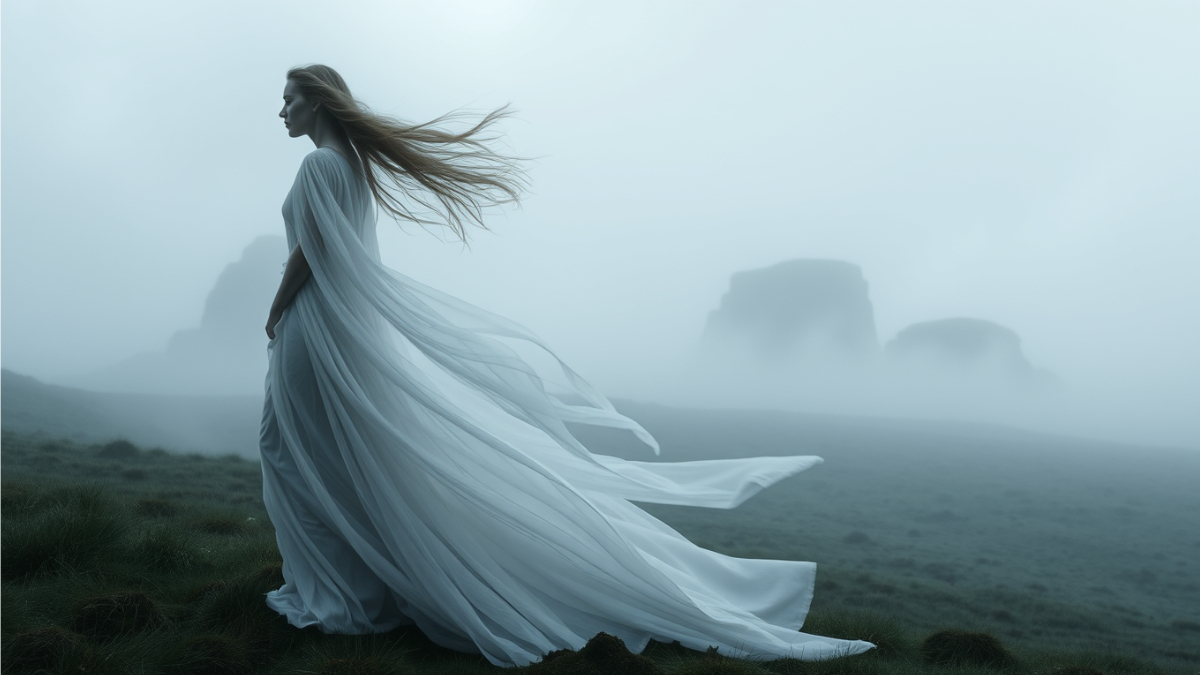
- The young woman: In other traditions, she’s strikingly beautiful, a pale young woman in white or green, weeping at a riverbank or by a roadside. This version connects to older Irish mythology’s ban draoi (female druids) and the washer at the ford, a figure who appears before battle washing the clothes of those about to die.
- The middle-aged woman: Some accounts describe her as middle-aged and simply mournful, more sad than terrifying. A grieving mother figure rather than a monster.
What almost all versions share is the hair. Long. Usually silver, white, or red. And being combed, endlessly combed, often with a silver comb.
One old piece of folk advice: if you find a comb on the ground in rural Ireland, don’t pick it up. It might belong to her, left as a trap.
Her cry: the sound that stops the blood
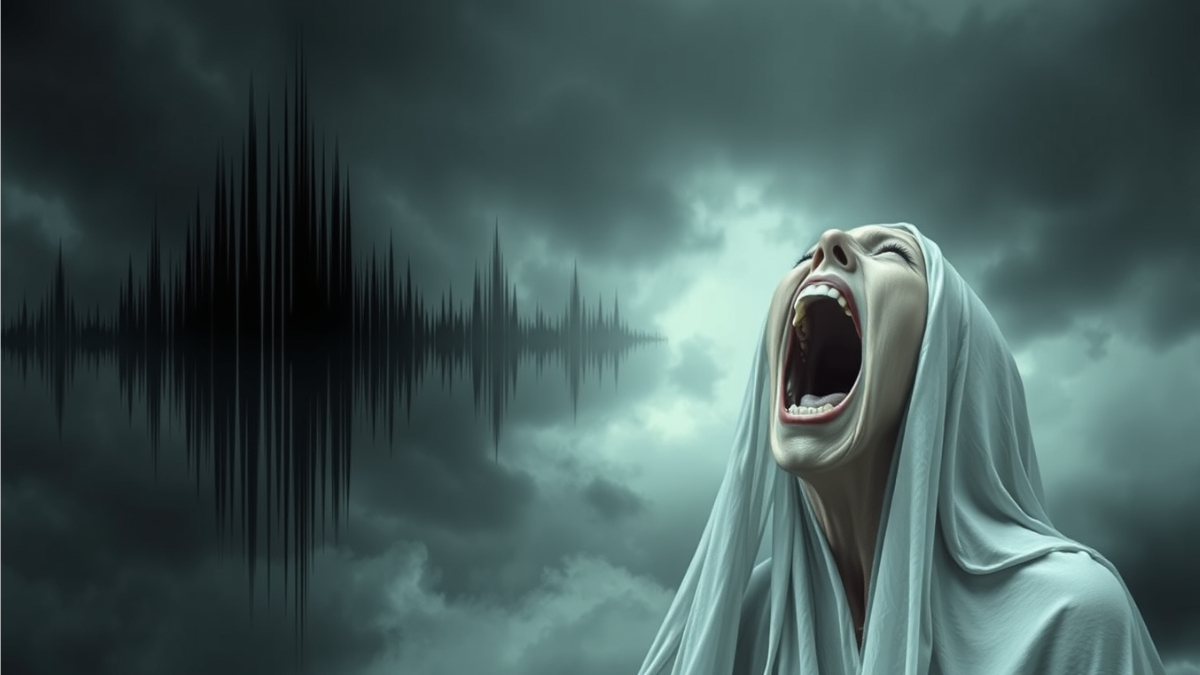
If the banshee’s appearance varies, her cry does not. Or rather, its effect doesn’t. Regardless of how she looks, the sound she makes is universally described as devastating.
The Irish have a specific word for it: caoin (pronounced “keen”), which is also the root of that keening tradition mentioned earlier. It’s been described as:
- A long, mournful wail that rises and falls like a woman in unbearable grief.
- A shriek that seems to come from nowhere and everywhere at once.
- Something between a scream and a song, almost musical but deeply wrong.
- A sound that seems to vibrate inside your chest rather than just reach your ears.
What makes this detail so interesting is how consistent it is across centuries and counties. People who claimed to have heard it weren’t describing a simple scream. They were describing something that felt like it bypassed ordinary hearing entirely.
Is the banshee evil?
Here’s where people get it wrong, and it’s worth being clear about.
The banshee is not evil. She’s not a predator, a demon, or a malicious spirit. She doesn’t want to harm you. She doesn’t cause death. She simply knows it’s coming.
Think of her more like a messenger you didn’t ask for. Her grief is genuine. In many accounts, she’s portrayed as sorrowful, even compassionate, a spirit who mourns the people she’s attached to across generations. She’s been watching your family for centuries. She knows the names. She’s cried this cry before.
That said, hearing her is obviously terrifying, because it means the message is meant for someone you love.
The fear isn’t of her. It’s about what she’s announcing.
This is a meaningful distinction in Irish folk belief. Evil spirits in Irish mythology tend to be tricksters or destroyers. The bean si is neither. She’s a mourner. And in a culture that took mourning seriously, that made her powerful in a different way.
Regional variations you probably haven’t heard of
Irish folklore is regional in ways that outsiders often don’t realise. The banshee tradition isn’t identical across the country.
Munster and Connacht
In the south and west of Ireland, the banshee tradition is particularly strong. She’s often described in these regions as being heard three times, each cry louder than the last. Some accounts from County Clare describe her as sitting on a stone wall outside a house, which has an oddly mundane, almost neighbourly quality to it.
Ulster
In the north, some accounts describe multiple banshees appearing together before the death of someone particularly important. The more banshees, the greater the person. Kings, chieftains, and bishops supposedly drew more than one.
The banshee and the fetch
In some parts of Ireland, the banshee merges with another piece of folklore: the fetch, a doppelganger that appears as a double of a living person and signals their imminent death. The lines between these figures blur in some rural traditions, suggesting that death-omen folklore was a rich, locally evolving tradition rather than a fixed system.
The banshee in modern Irish life
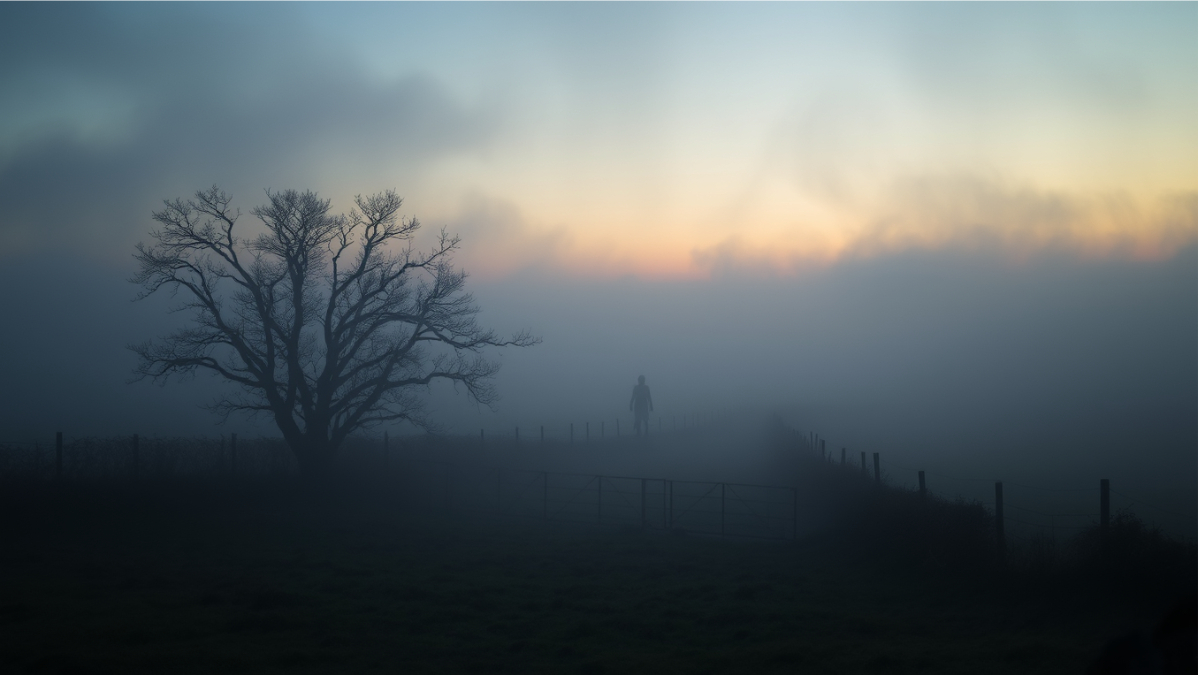
You might think this is all ancient history. It isn’t quite.
Talk to older people in rural parts of Ireland, particularly in counties like Clare, Galway, or Kerry, and you’ll find that banshee stories aren’t always spoken of in the past tense. Grandparents who swear they heard something the night before a family member died. Communities where the subject is still treated with a certain careful respect rather than outright dismissal.
Irish playwright and folklorist Lady Gregory collected accounts of banshee experiences in the early 20th century that read as genuine testimony rather than performance. The people she interviewed weren’t trying to seem interesting. They were telling her what they’d experienced, often reluctantly.
There’s also the matter of the Irish diaspora. The banshee tradition travelled with the Irish to America, Australia, and beyond. You’ll find banshee stories from Irish-American communities in Boston and Chicago that echo the original Irish accounts almost exactly, carried across oceans in family memory.
The banshee in popular culture: what they get wrong
Hollywood tends to make the banshee a monster, a screaming supernatural predator to be defeated. You’ll see her in horror films, video games, and fantasy novels as essentially a death-creature with aggression.
This misses the point entirely.
The original bean sí has dignity. She’s ancient and sorrowful, not violent. Stripping that away turns her into just another jump-scare creature and loses everything that makes her genuinely interesting: the grief, the loyalty to bloodlines, the sense of something vast and patient watching over generations.
The more thoughtful portrayals in Irish literature, particularly in the work of writers like Seamus Heaney and in traditional song, tend to understand her better. She’s elemental. She belongs to a world where death wasn’t hidden away but acknowledged, wept over, and given ceremony.
Conclusion
The banshee, the bean sí, is one of Ireland’s most enduring and genuinely singular contributions to world mythology. She’s not a monster dressed in Irish clothes. She’s something far more specific and more human: a figure built from the experience of grief, from the ancient practice of keening, from the Irish relationship with death as something to be met rather than avoided.
Understanding her properly means understanding something real about Irish culture, the weight placed on family, the seriousness given to mourning, and the old belief that the world of the living and the world of the dead are separated by less than we might like to think.
So next time someone uses “banshee” as shorthand for “screaming woman,” you’ll know there’s a much stranger, sadder, and more beautiful story behind it.
Frequently asked questions
What is a bean sí?
Bean sí (sometimes written bean sidhe) is the original Irish name for the banshee. It translates as “woman of the fairy mound” and refers to a female spirit from Irish mythology who is said to announce an upcoming death in a specific Irish family through her cry or wail. The term comes from Old Irish and reflects the deep connection between the fairy world (the sidhe) and the ancient burial mounds of Ireland.
Why do banshees scream in Irish mythology?
The banshee’s cry, called a caoin (keen), is an act of mourning rather than aggression. She screams because she is grieving the person whose death she knows is approaching. The tradition echoes the real practice of keening (ritual wailing) that Irish women performed at wakes and funerals for centuries. The banshee’s cry is essentially a supernatural version of that grief, an ancient mourning that begins before the death itself.
Is a banshee good or evil?
Neither, really, at least not in traditional Irish folklore. The banshee is a neutral figure who carries a devastating message. She doesn’t cause death, and she doesn’t wish harm on the people she’s attached to. In many accounts, she’s portrayed as genuinely sorrowful, a spirit who has mourned the same families across generations. The fear she inspires comes not from malice but from what her presence announces. She’s best understood as a messenger, or perhaps more accurately, as grief given form.
What is the Mexican version of a banshee?
The closest Mexican equivalent to the banshee is La Llorona (“the weeping woman”), a spirit from Mexican and wider Latin American folklore who is said to wail and weep, usually near water. The two figures share some surface similarities: both are female, both cry, and both are connected to death and grief. However, their stories are quite different. La Llorona is generally a tragic figure who drowned her own children and is condemned to wander searching for them, making her more of a cautionary tale and, in some traditions, a danger to children. The banshee, by contrast, is a loyal spirit who mourns rather than harms.
What kills banshees?
In traditional Irish folklore, the banshee isn’t really something you kill. She exists outside the normal rules of life and death, which is rather the point. Some folk traditions suggest that if you can steal her comb (which she carries and combs her hair with), she might be compelled to grant a wish or answer questions in exchange for its return. But confrontation with the banshee isn’t really a feature of authentic Irish folklore, that idea belongs more to modern fantasy and video games. In the original tradition, the wisest response to the banshee was simply to listen and to prepare.


