10 Celtic symbols and their meanings explained
Share this
Ireland, a country steeped in rich history and enduring cultural traditions, is home to some of the most recognizable symbols in the world. These emblems, from the shamrock and harp to St. Brigid’s Cross and Celtic knots, are deeply intertwined with the nation’s identity, history, and folklore. Each tells a unique story, reflecting Ireland’s vibrant heritage and the values it holds dear. In this article, we’ll uncover the fascinating origins and significance of these iconic symbols.
1. The Shamrock
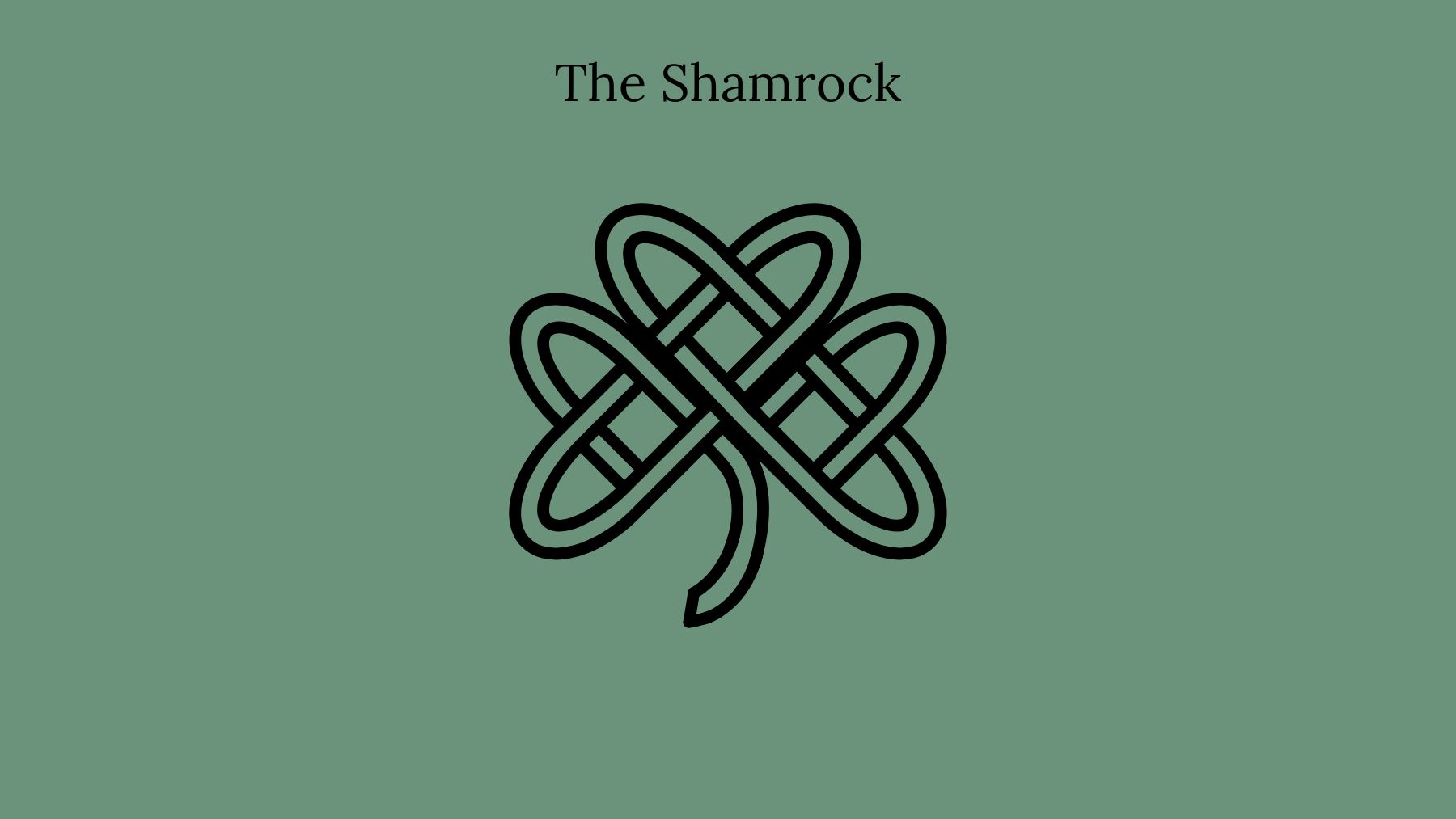
Let’s start with the obvious one. The shamrock is so synonymous with Ireland that it’s basically shorthand for the entire country. But there’s more to it than green plastic hats on St. Patrick’s Day.
The shamrock (from the Irish seamróg, meaning “little clover”) was used long before Christianity arrived in Ireland. The ancient Celts considered the number three sacred, and the three-leafed plant was seen as representing the natural cycles of life: birth, death, and rebirth.
Then St. Patrick, according to tradition, used it to explain the concept of the Holy Trinity to the Irish people in the 5th century. Whether that story is a historical fact or a folk legend, it stuck, and the shamrock became one of the most enduring Celtic symbols in the world.
A quick note: the shamrock is not a four-leaf clover. They’re different plants. The four-leaf clover is considered lucky precisely because it’s a rare mutation.
2. The Irish Harp
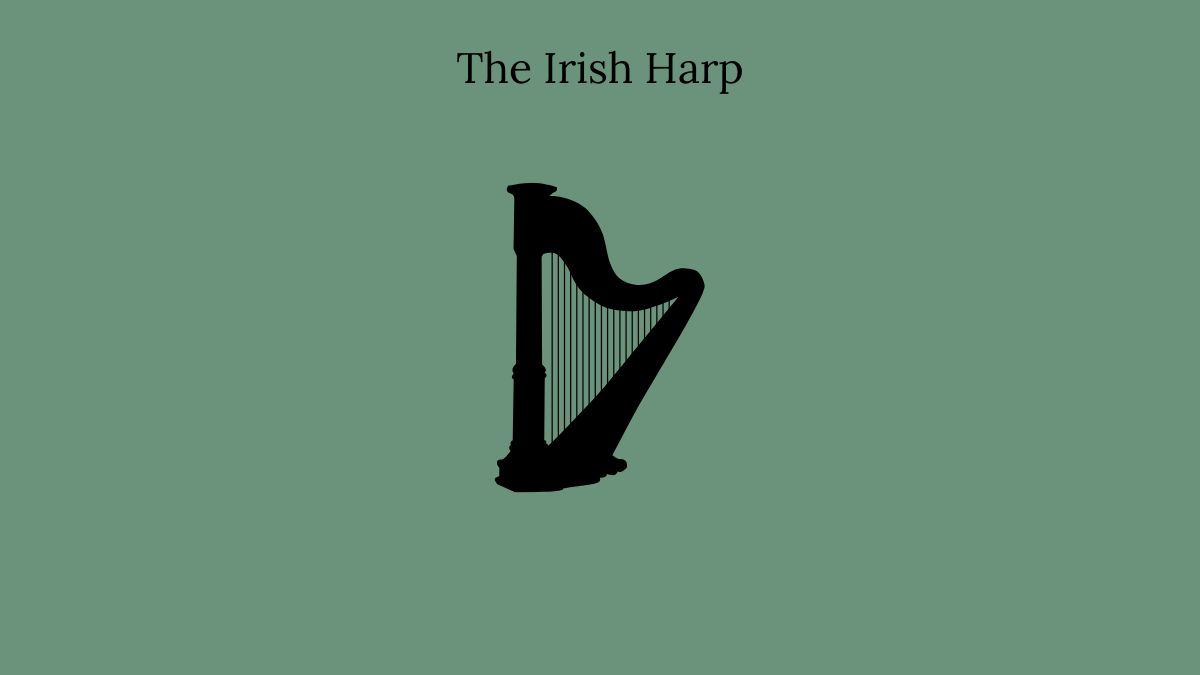
The harp is the official national emblem of Ireland, appearing on government documents, euro coins, and Guinness pints (though, interestingly, the Guinness harp faces the opposite direction to the state emblem).
The harp’s roots in Irish culture go back well over a thousand years. Harpers were among the most respected figures in ancient Celtic society, almost on par with druids and poets. Music wasn’t just entertainment; it was considered a form of power, capable of healing, inspiring courage in battle, or even putting an enemy to sleep.
The harp became a potent political symbol during the centuries of English rule in Ireland, and it remained a rallying symbol for Irish identity. Today, it represents resilience and cultural pride more than anything else.
3. St. Brigid’s Cross
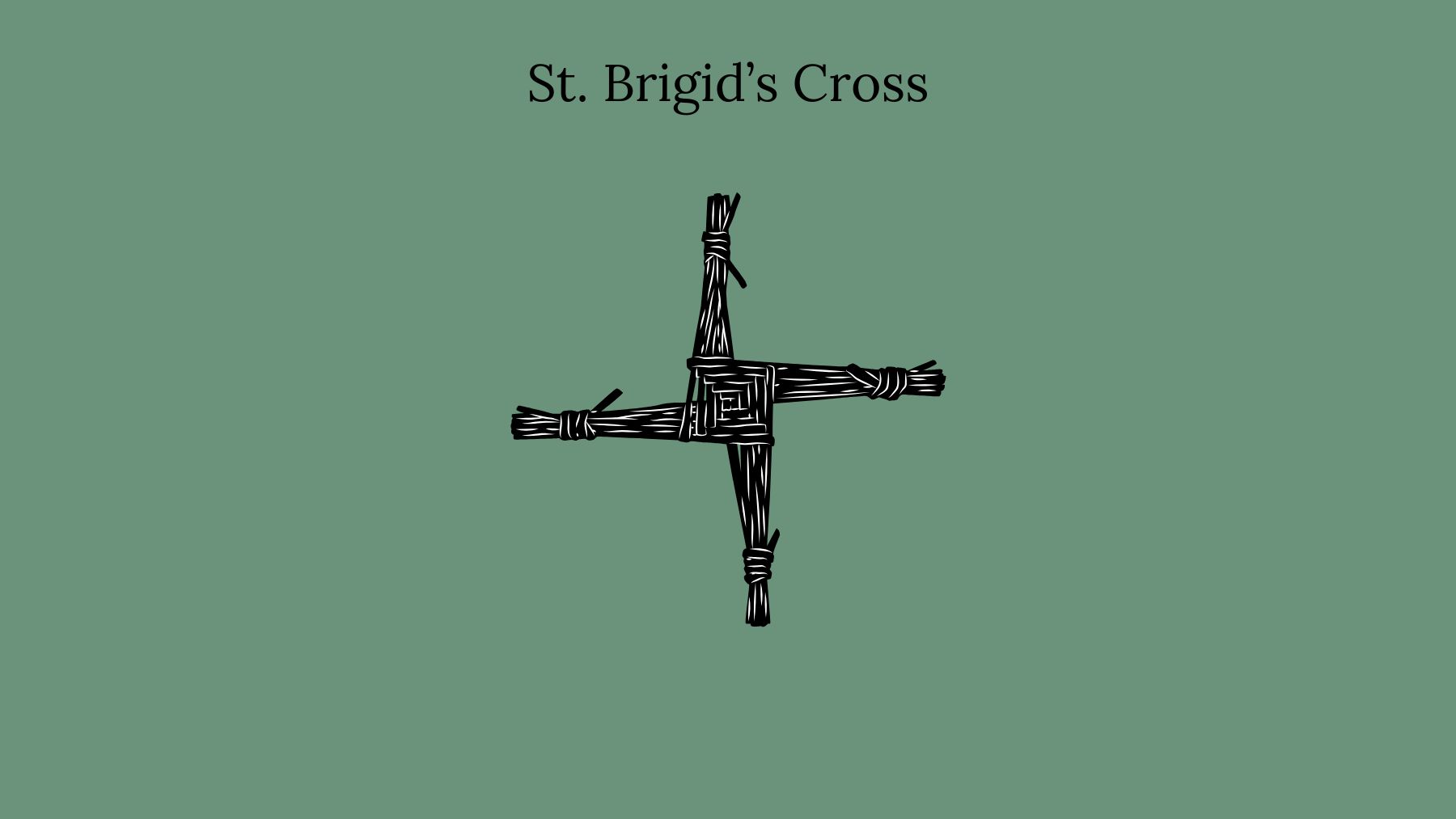
Walk into almost any Irish home, especially older rural homes, and you’ll likely spot a St. Brigid’s Cross woven from rushes hanging near the door. It’s one of those Celtic symbols that feels genuinely alive in everyday Irish life rather than just sitting behind glass in a museum.
St. Brigid’s Cross is made each year on the 1st of February, which is St. Brigid’s Day (also the ancient Celtic festival of Imbolc, marking the beginning of spring). The cross is woven in a distinctive four-armed design with a woven square at the centre, and it’s traditionally believed to protect the home from fire, evil, and illness.
What makes this symbol particularly interesting is how seamlessly it blends pre-Christian and Christian traditions. Brigid herself exists in two forms: the pagan goddess Brigid, associated with fire, healing, and poetry, and the Christian saint, one of Ireland’s three patron saints. The cross carries both identities, which is very fitting for a country where those two worlds have always overlapped.
4. The Celtic Cross
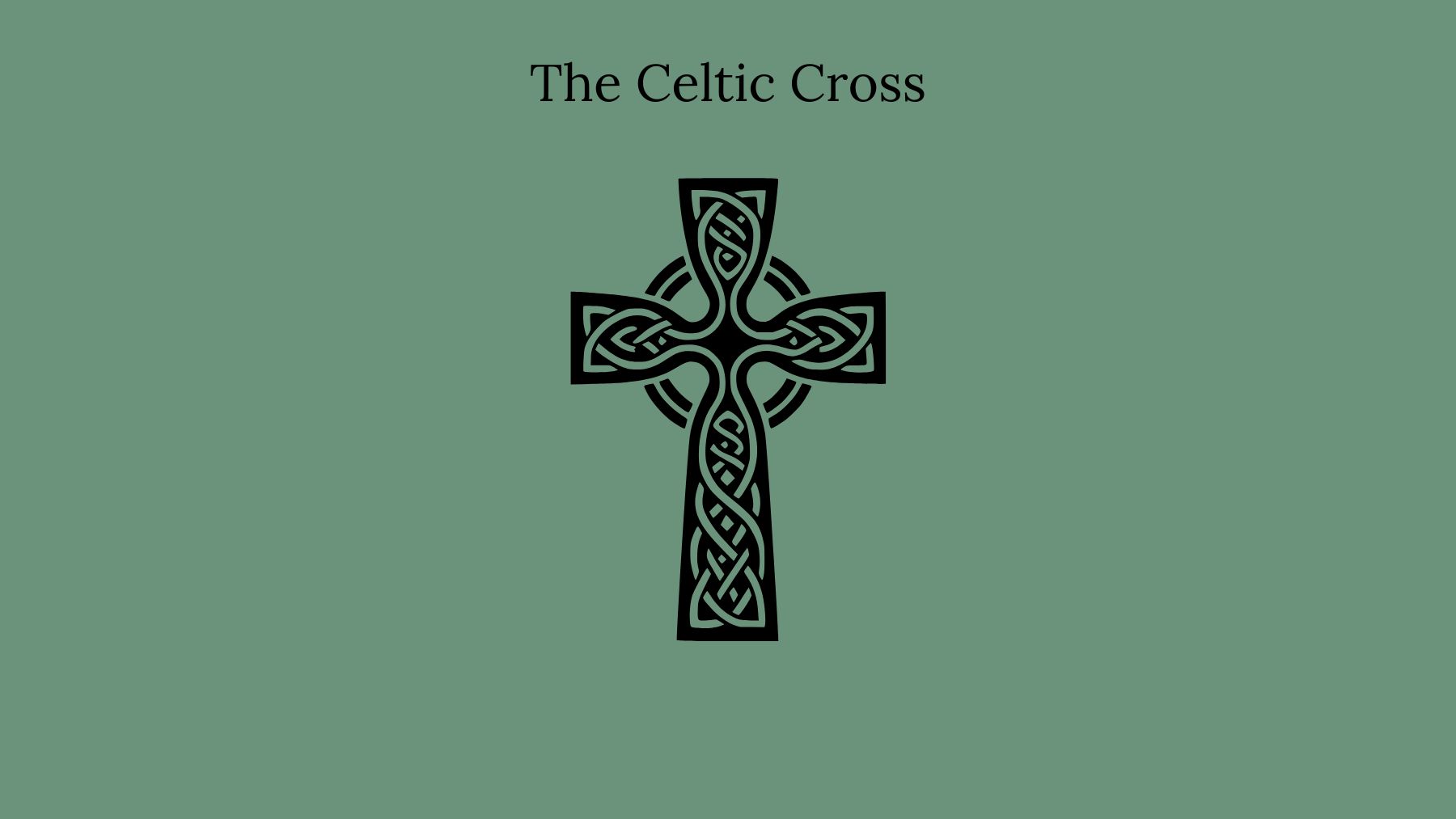
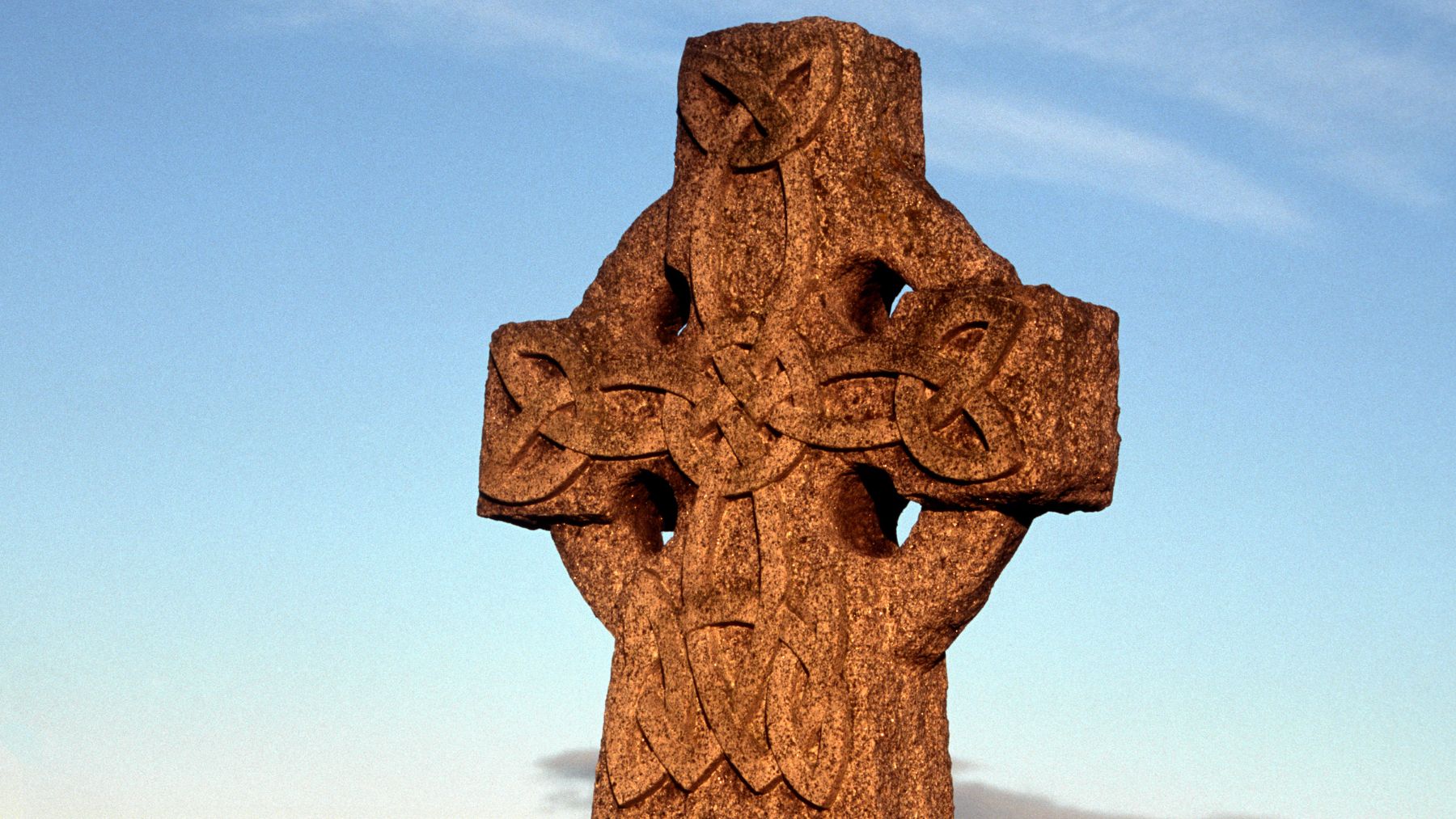
The Celtic cross is one of the most iconic Celtic symbols in existence, and if you’ve ever visited a historic Irish graveyard or a place like the Rock of Cashel, you’ve seen it up close.
It looks like a Christian cross but with a distinctive ring (or nimbus) connecting the four arms. That circle is the defining feature, and there are several theories about what it represents. Some say it’s a solar symbol from the pre-Christian era. Others say early Christian monks added it to make the cross more structurally stable when carved in stone. The most poetic interpretation is that the circle represents eternity, with no beginning and no end.
The High Crosses of Ireland, like those at Monasterboice and Clonmacnoise, are covered in intricate biblical carvings and are genuine masterworks of early medieval art. They’re worth seeing in person if you ever get the chance.
5. The Claddagh Ring
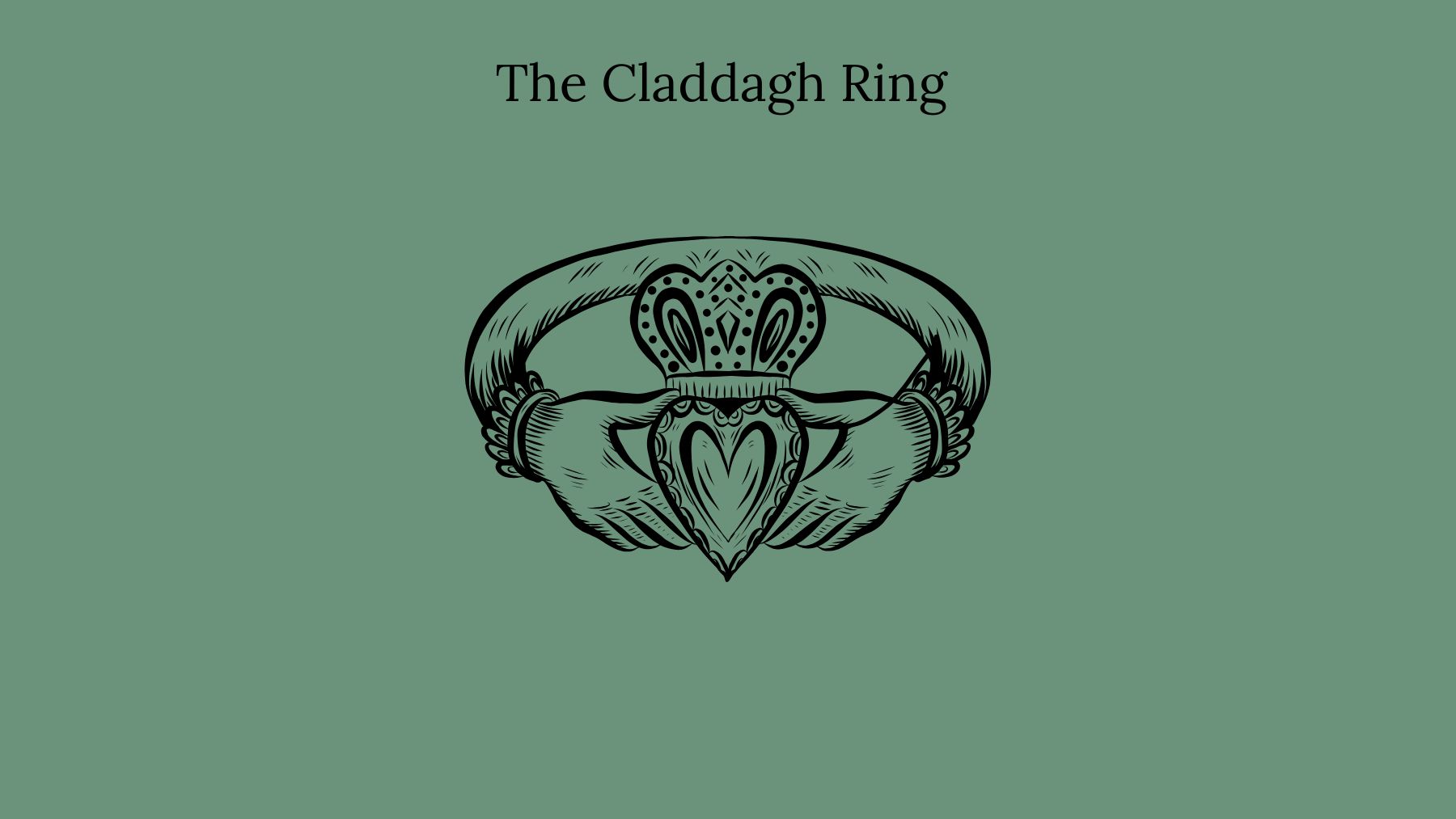
The Claddagh ring is probably the most emotionally loaded of all Celtic symbols. You’ve almost certainly seen one: a heart held by two hands, topped with a crown.
- The heart represents love.
- The hands represent friendship.
- The crown represents loyalty.
The ring originates from the small fishing village of Claddagh, just outside Galway city, and dates to the 17th century. It’s traditionally given as a token of love or friendship, and the way it’s worn carries meaning too. On the right hand, with the heart facing outward means the wearer is single. Heart facing inward on the right hand means someone has caught their eye. On the left hand with the heart inward means they’re taken.
It’s one of those Celtic symbols that has genuinely practical use in daily life, not just historical significance.
6. The Triquetra / Trinity Knot
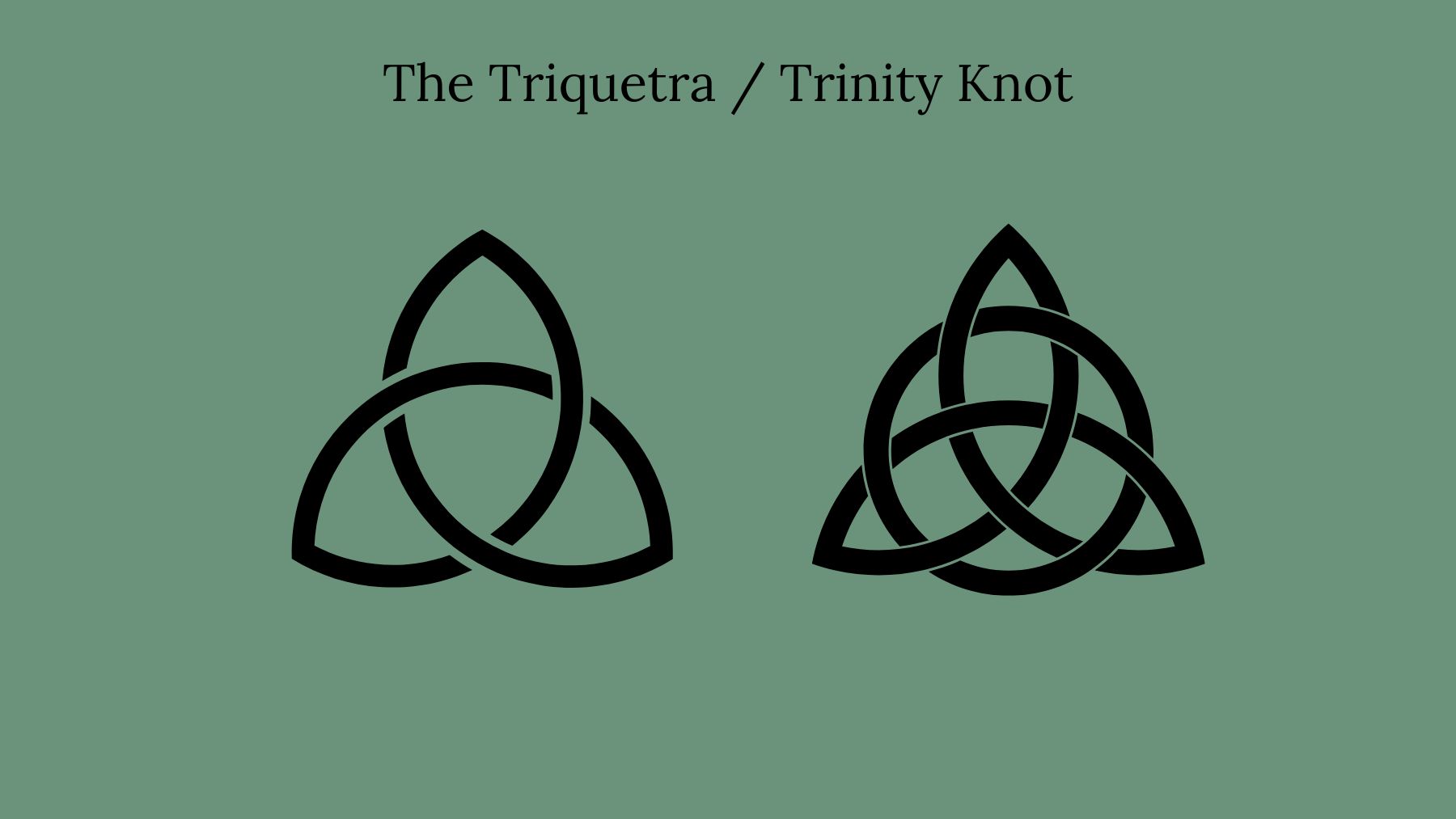
The Triquetra (pronounced try-KWET-ra) is one of the most visually striking Celtic symbols, and you’ll find it absolutely everywhere: jewellery, tattoos, illuminated manuscripts, and even the cover of the Book of Shadows in the TV show Charmed.
The word comes from Latin, meaning “three-cornered.” It’s a continuous, interwoven three-pointed knot with no beginning and no end, and like most Celtic symbols involving the number three, it carries layered meaning:
- In pre-Christian Celtic belief: land, sea, and sky; or past, present, and future
- In early Christianity: the Father, Son, and Holy Spirit
- More broadly: the triple nature of life, mind, body, and spirit
The Triquetra appears in the Book of Kells, the illuminated gospel manuscript created by Celtic monks around 800 CE, which is itself one of Ireland’s greatest treasures and well worth seeing at Trinity College Dublin.
7. The Tree of Life
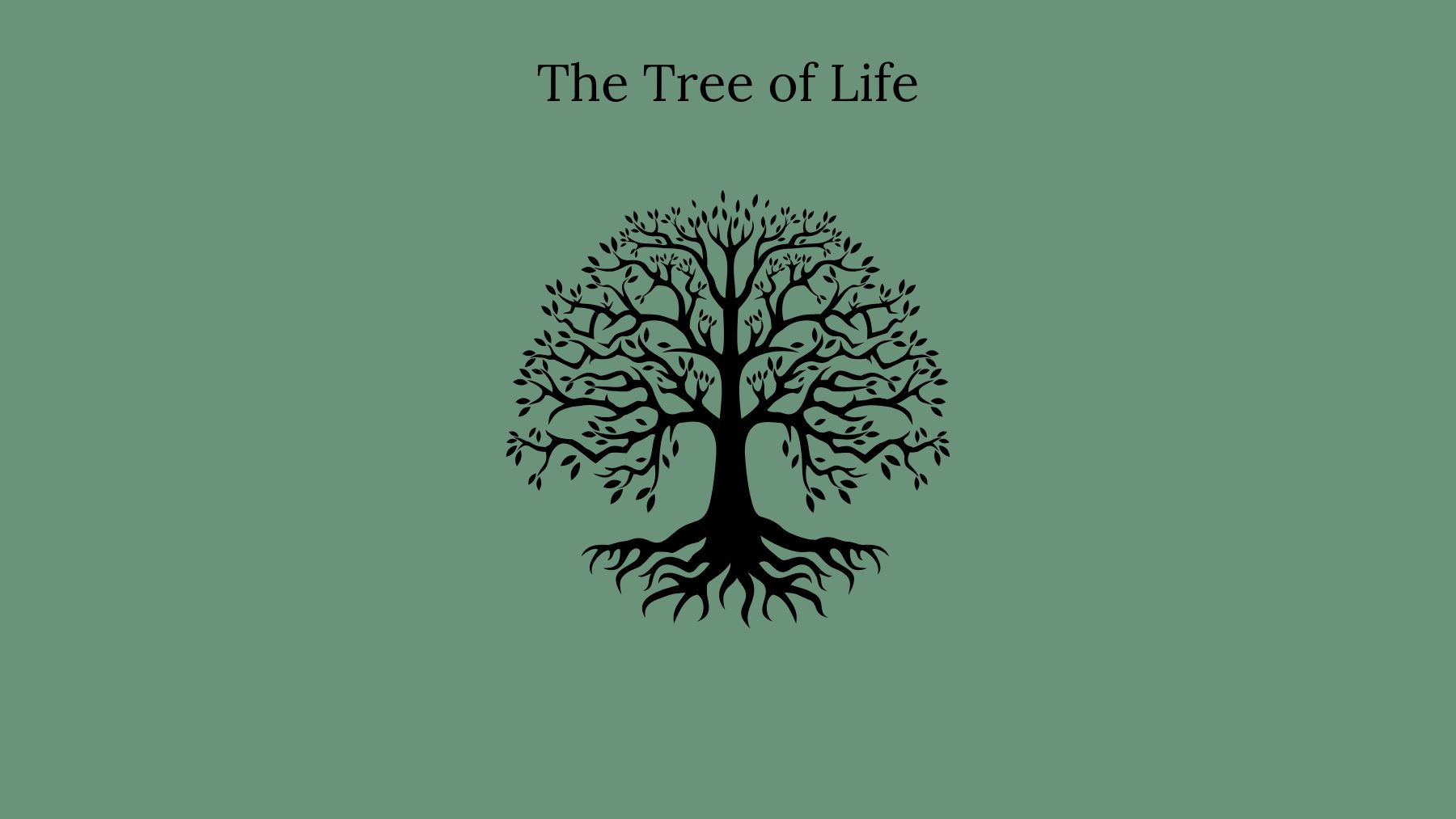
The Tree of Life is a concept that appears in cultures all over the world, but the Celtic version has its own distinct character and meaning.
In Celtic belief, trees were sacred. Entire communities would gather around a central sacred tree, called the bile, for assemblies and ceremonies. To cut down a tribe’s sacred tree was one of the worst acts of war imaginable.
The Celtic Tree of Life is depicted as a tree whose roots and branches form a circle, intertwining at the edges. The roots reach down into the underworld, the trunk exists in the human world, and the branches stretch into the heavens. It’s a map of existence: the connection between ancestors, the living, and whatever lies beyond.
It also represents balance. You can’t have the branches without the roots. It’s a quietly profound idea that doesn’t need much embellishment.
8. The Triskelion

The Triskelion (also called the Triskele) is a three-armed spiral symbol, and it looks exactly how it sounds: three interlocking spirals rotating outward from a single central point.
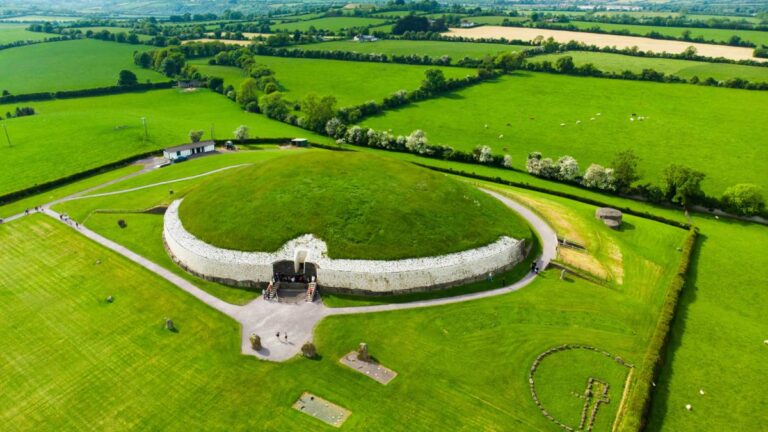
It’s one of the oldest Celtic symbols we know of. A version of it is carved into the entrance stone at Newgrange, the Neolithic passage tomb in County Meath that predates Stonehenge and the Egyptian pyramids by centuries. That particular carving is roughly 5,000 years old.
What does it mean? The honest answer is that no one knows for certain, since those who carved it left no written record. But common interpretations include:
- Past, present, and future.
- Birth, life, and death.
- Land, sea, and sky.
- The movement of the sun through the seasons.
The Triskelion is also associated with motion and progress. There’s something energetic about it. It doesn’t sit still; it spins.
9. The Dara Knot
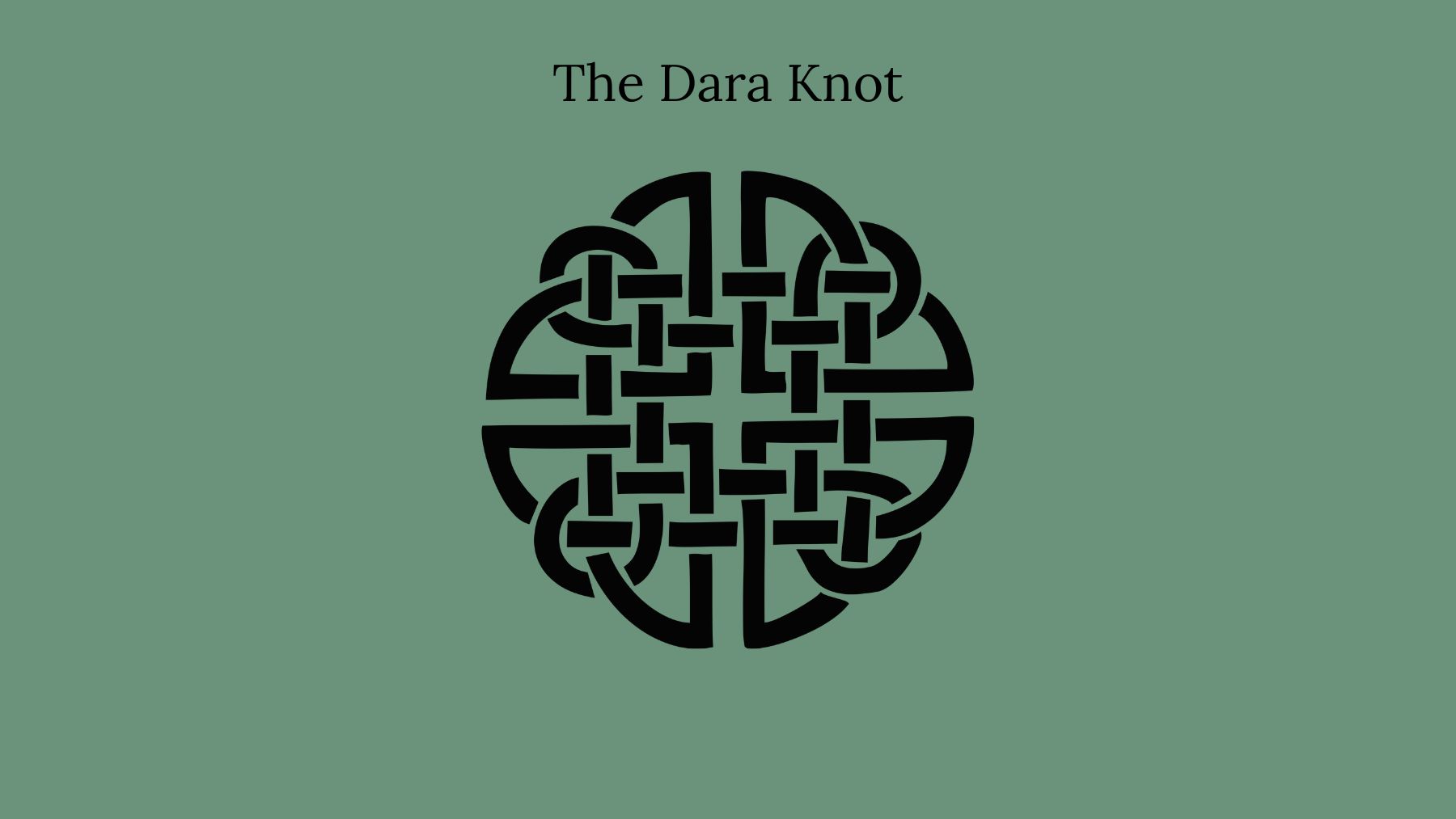
The Dara Knot is one of the Celtic symbols that deserves far more attention than it typically gets. It’s a complex, interwoven knot based on the root system of the oak tree, and it’s rich with meaning.
The word “Dara” comes from the Irish word doire, meaning “oak tree.” And to the Celts, the oak was the king of trees. It was associated with strength, wisdom, longevity, and endurance.
The Dara Knot was used as a symbol of inner strength, particularly the kind that comes from being deeply rooted, knowing who you are, where you come from, and what you stand for. Think of it as a visual reminder that just like an oak tree can withstand a storm because of what lies beneath the ground, so can a person.
It’s become a popular tattoo choice for exactly that reason.
10. The Celtic Motherhood Knot
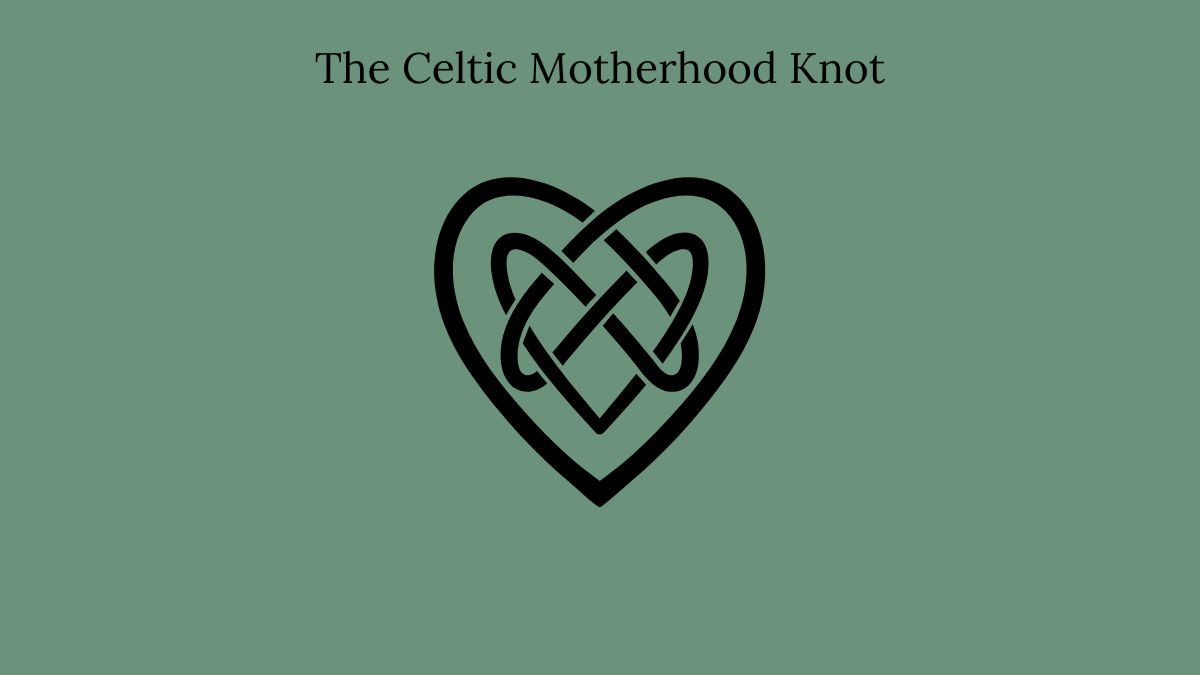
The Celtic Motherhood Knot is one of the more modern Celtic symbols, developed as a contemporary interpretation of Celtic knotwork rather than a symbol recovered directly from ancient artefacts. That doesn’t make it less meaningful; it means it’s evolved.
The symbol typically features two intertwined hearts or figures in a looping knot, representing the bond between a mother and child. Like all true Celtic knots, there’s no visible start or end point, which is the whole point: the love between a mother and child is unbroken and eternal.
Some versions include additional loops to represent more children. It’s a deeply personal symbol, and it’s particularly popular as a gift between mothers and their children, as jewellery or as a tattoo.
Celtic symbols are far more than decorative patterns. They’re a visual language developed over thousands of years by people trying to make sense of the world around them: the cycles of nature, the bonds between people, the mystery of what comes after death.
What I find most compelling about them is how they’ve survived. Empires have risen and fallen, religions have shifted, entire languages have nearly disappeared, but these symbols keep showing up. On church walls and modern tattoos. On ancient standing stones and fashion jewellery sold in airport gift shops.
They’re worth knowing. And the more you learn about them, the more you see them everywhere.
If you’re planning a trip to Ireland, you’ll encounter these Celtic symbols at almost every turn, from the illuminated manuscripts at Trinity College to the carved High Crosses in ancient monastic sites. Knowing the stories behind them makes those encounters feel entirely different.
FAQ: Celtic symbols explained
Are Celtic symbols against Christianity?
Not at all. In fact, many Celtic symbols were actively embraced and adapted by early Christian monks in Ireland. The Celtic cross, the Triquetra, and St. Brigid’s Cross all have both pagan and Christian interpretations. The early Church in Ireland was notably flexible about incorporating pre-existing beliefs and symbols into Christian practice, which is part of why Irish Christianity developed such a distinct character. So rather than being in conflict, pagan Celtic symbols and Christianity often coexist quite naturally in Irish culture.
Are Viking and Celtic symbols the same?
They’re not the same, though there is some overlap, and they’re often confused. The Celts and the Norse (Vikings) were distinct cultures with their own separate symbol systems, mythologies, and beliefs. Some symbols, like spiral motifs and knotwork, appear in both traditions, partly because there was genuine cultural contact between Celtic and Norse peoples, particularly in Ireland during the Viking Age (roughly 800-1100 CE). But symbols like the Valknut or Mjolnir (Thor’s hammer) are specifically Norse, while symbols like the Claddagh or Dara Knot are specifically Celtic.
What is the oldest Celtic symbol?
The oldest surviving examples of Celtic-associated symbols are the spiral carvings at Newgrange in County Meath, Ireland, which date to approximately 3200 BCE. The Triskelion carved into the entrance stone is one of the most famous. However, it’s worth noting that these predate what we typically call “Celtic culture” (which emerged around 800-600 BCE), so they’re more accurately described as Neolithic symbols later adopted and absorbed into Celtic tradition.
Is it okay to get a Celtic tattoo?
Generally speaking, yes. Celtic symbols are part of a cultural and artistic tradition rather than a closed religious or ethnic practice that restricts outside participation. Many people with Irish heritage, or simply an appreciation for the symbolism, choose Celtic tattoos without controversy. That said, it’s worth knowing what your chosen symbol actually means before you commit it to skin, and ideally choosing a design from a skilled artist familiar with traditional Celtic knotwork. Doing your research (which you’re already doing by reading this) is the most respectful approach.
What are the 4 Celtic knots?
There isn’t one definitive list of “the 4 Celtic knots,” but the four most commonly referenced types of Celtic knotwork are:
1. The Trinity Knot (Triquetra): Three interlocking arcs, associated with the number three and its many meanings
2. The Dara Knot: Based on oak tree roots, representing strength and inner resilience
3. The Celtic Love Knot: Two interlocking loops or hearts, representing eternal love and connection
4. The Celtic Motherhood Knot: Intertwined figures representing the bond between mother and child
Celtic knotwork, as a broader category, includes dozens of variations, all sharing the characteristic of continuous, unbroken lines with no clear beginning or end.