
Irish Christmas traditions blend old and new, with plenty of variety from one family to the next. The ones you’re most likely to encounter are the candle in the window on December 24, Midnight Mass, a turkey and ham dinner, the Christmas Day sea swim, Wren Day on December 26, and Nollaig na mBan on January 6.
This list covers 16 of them in the order they happen, with dates, timings and what to check before you go. For the wider picture of the season, see Christmas in Ireland.
Irish Christmas traditions before Christmas Day
1. The Late Late Toy Show
The Late Late Toy Show is a children-focused episode of RTÉ’s Friday night chat show, and it airs on 4 December, 9:35pm Irish time (GMT). Children from across Ireland join the host to show off the year’s toys, and the night doubles as a fundraiser for children’s charities. Families cozy up in pyjamas with hot chocolate to watch it together.
2. December 8 and the start of the Christmas season
December 8 is the Feast of the Immaculate Conception, and for generations it marked the start of the Christmas season. Schools traditionally closed for the day, so families from outside the big cities headed for Dublin and other large towns to start their Christmas shopping.
Two Irish Christmas traditions associated with this day are putting up the Christmas tree and Christmas shopping.
Some households decorate before December 8, but from this day on you’ll see many more trees and decorations going up. The big shopping trip has faded as regional shopping centers and online shopping took over.
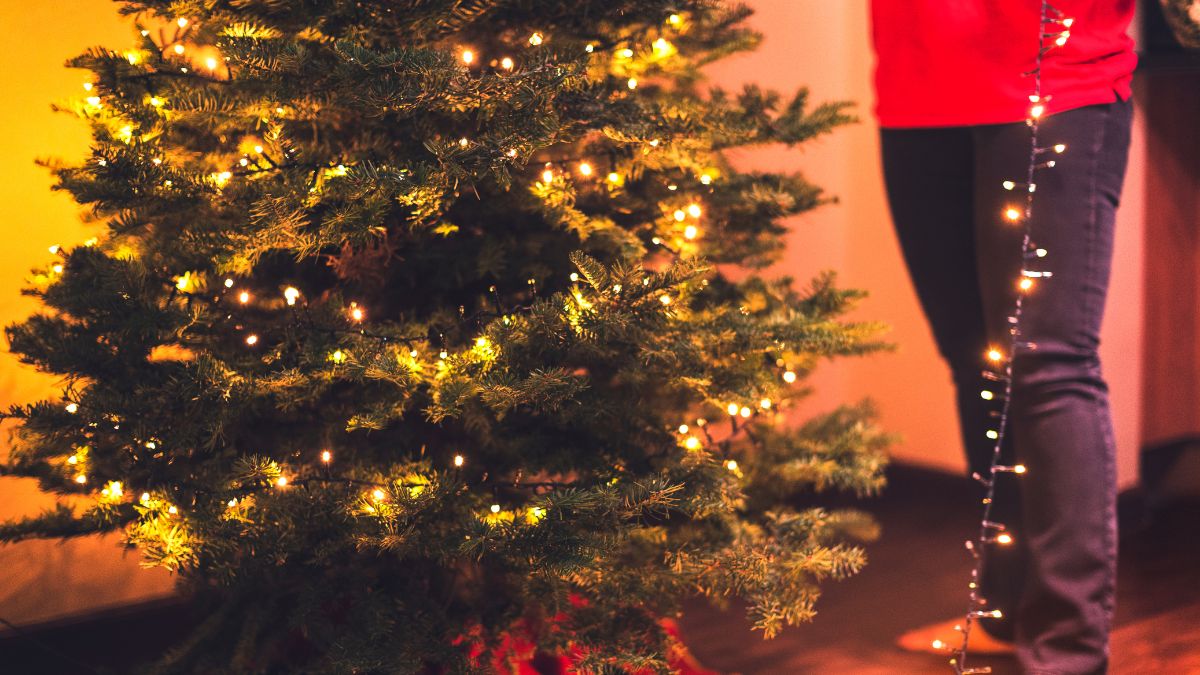
3. Putting up decorations at home
Decorating at home varies a lot from house to house. Some families keep it to a tree in the corner of the sitting room.
Others go bigger, with tinsel, Santas and lights in every room, and a few turn the front of the house into a full display.
Holly and ivy are the traditional greenery, and you’ll still see them on doors and mantels in many homes.
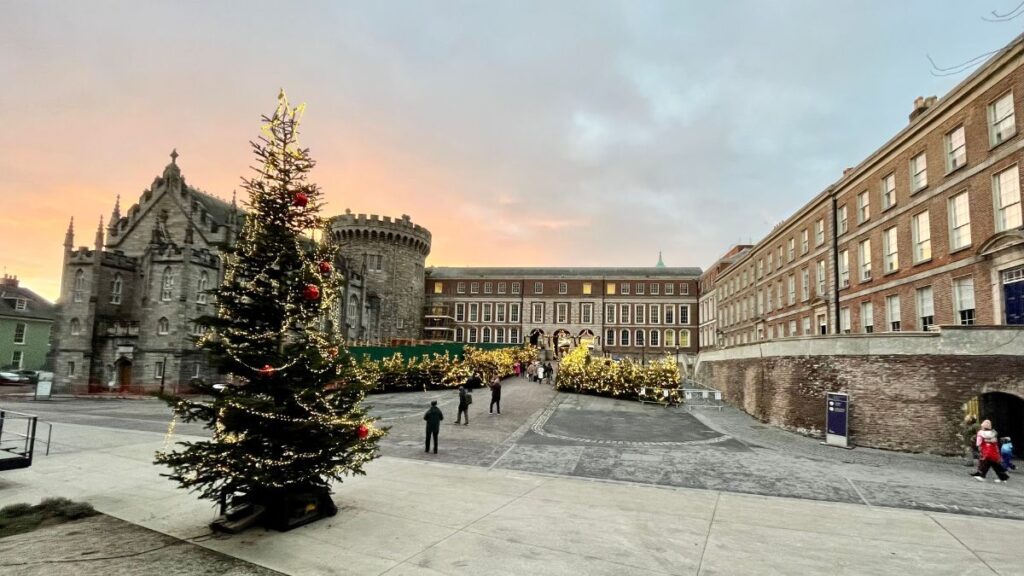
4. Decorating town centres and public places
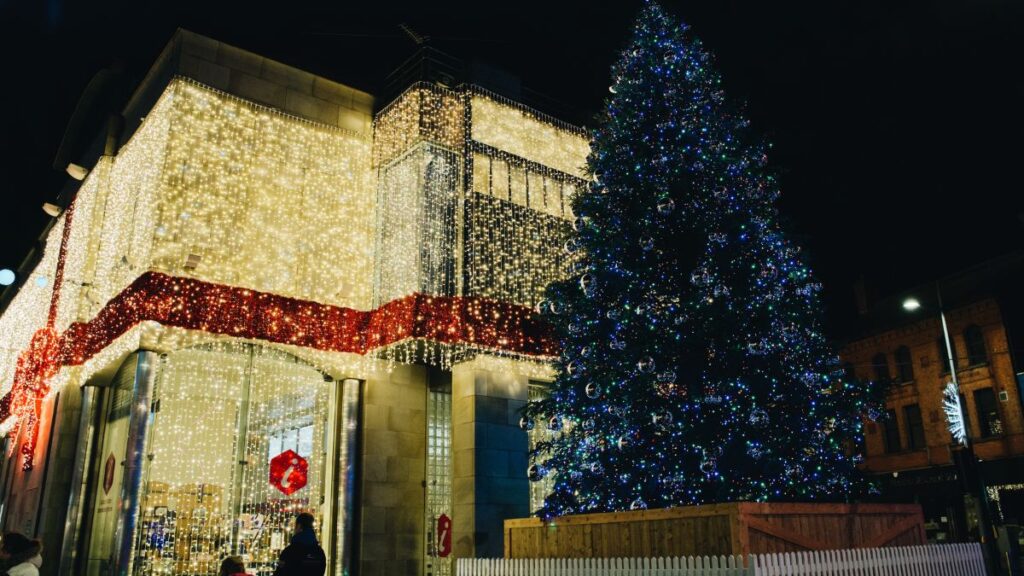
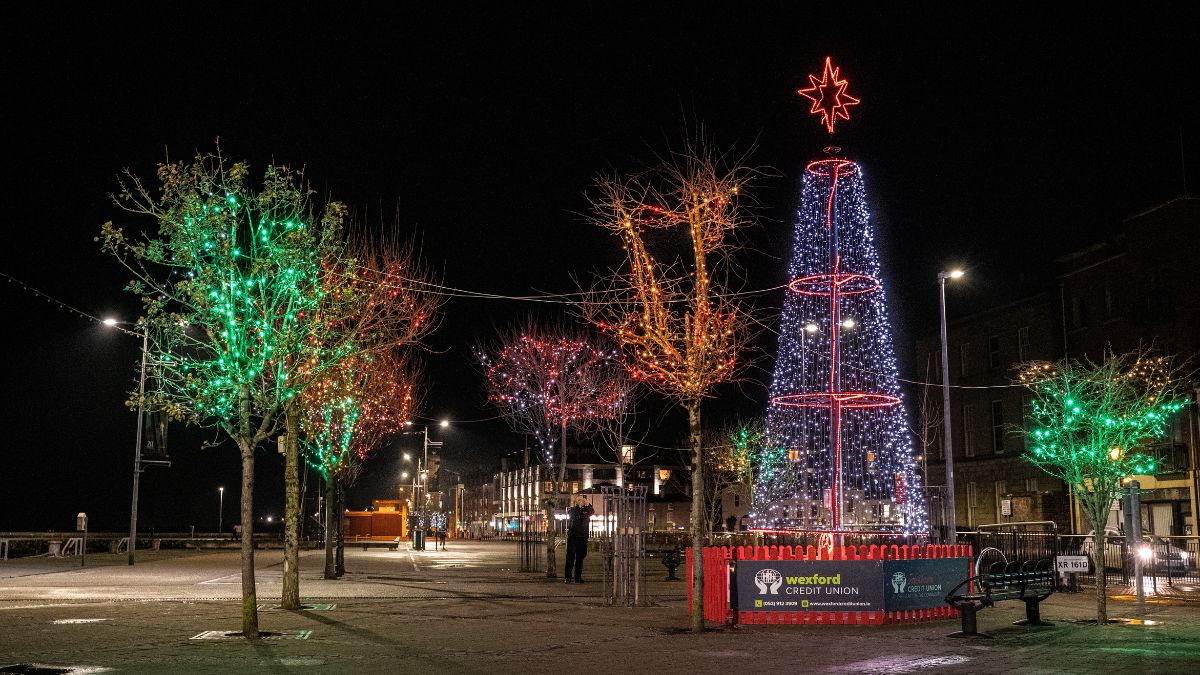
Lights go up in towns and cities across the country from mid-November. Dublin’s Grafton Street lights came on in mid-November this year, with other streets following, and the council’s Winter Lights programme adds projections on landmarks such as the GPO from December.
5. Going to pantos, shows and Christmas carols
A trip to a panto or a carol service is part of Christmas for plenty of Irish families.
Pantos are loud, joke-filled musicals with plenty of audience shouting, and Dublin’s Gaiety Theatre has staged one every Christmas since 1873. This year’s show is Robin Hood, running from November 22 to January 3, with tickets from €23.
Other Dublin venues and theatres around the country put on their own, and weekends tend to fill up, so reserve early.
Carol services in cathedrals and churches, including St Patrick’s Cathedral in Dublin, add a musical side to the season.
6. Attending Christmas markets
Christmas markets are a fairly new arrival on the Irish Christmas calendar, but they’ve caught on fast.
The best known are Galway’s market in Eyre Square, Belfast’s at City Hall, Waterford’s Winterval and the Cork markets, and most open in early or mid-November.
Expect stalls selling festive food and drink, crafts and local produce, and check each market’s dates before you book travel.
Christmas Eve customs in Ireland
7. Christmas Eve busk in Dublin
The Christmas Eve busk on Grafton Street began in 2010 as an impromptu sing-song and has grown into an organized charity concert outside the Gaiety Theatre, raising money for the Dublin Simon Community, which supports people at risk of homelessness.
Glen Hansard, who started it, passed away in July 2026, but it’s been confirmed the busk will continue. This year’s lineup includes Mundy, Danny O’Reilly of The Coronas and Imelda May.
It draws big crowds, so arrive early if you want a view of the stage.
8. Attending Midnight Mass
Mass on Christmas Eve is still part of Christmas for many families, especially outside the big cities. Despite the name, Midnight Mass is often held much earlier, with plenty of parishes starting at 9pm or 10pm and some as early as 6pm. Times vary by parish, so check your local parish website or noticeboard and arrive early if you want a seat.
Many Irish Christmas blessings are passed on at Mass or at home, so keep an ear out for them.
9. The candle in the window
Many Irish homes put a lit candle or light in the front window on Christmas Eve to welcome Mary and Joseph and any traveler passing by. Tradition says the youngest person in the house lights it.
In 1990, President Mary Robinson put a light in a window of Áras an Uachtaráin as a symbol of welcome to Irish people abroad. It gave the custom a second meaning for people living far from home.
10. Daidí na Nollag
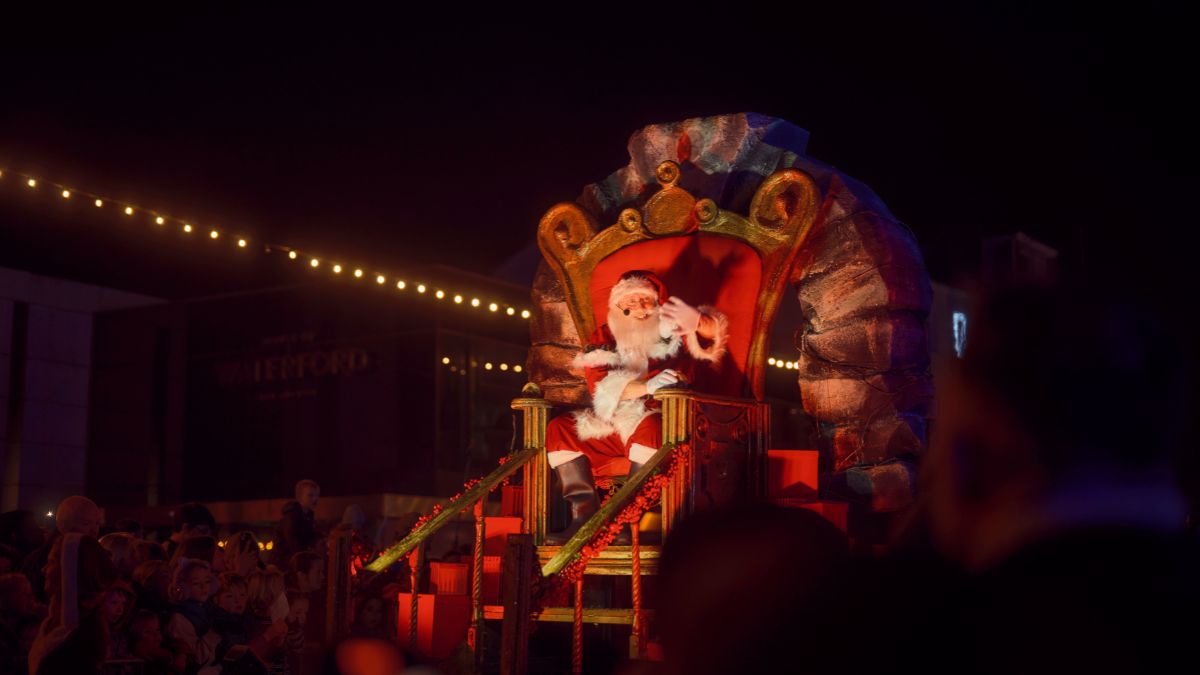
Santa is Santa to most Irish children, and Daidí na Nollag in Irish, which roughly means “Daddy of Christmas”. Some families leave out a mince pie and a drop of milk, and some swap the milk for stout. A carrot for the reindeer is standard.
Irish Christmas traditions on December 25
11. The Christmas Day swim
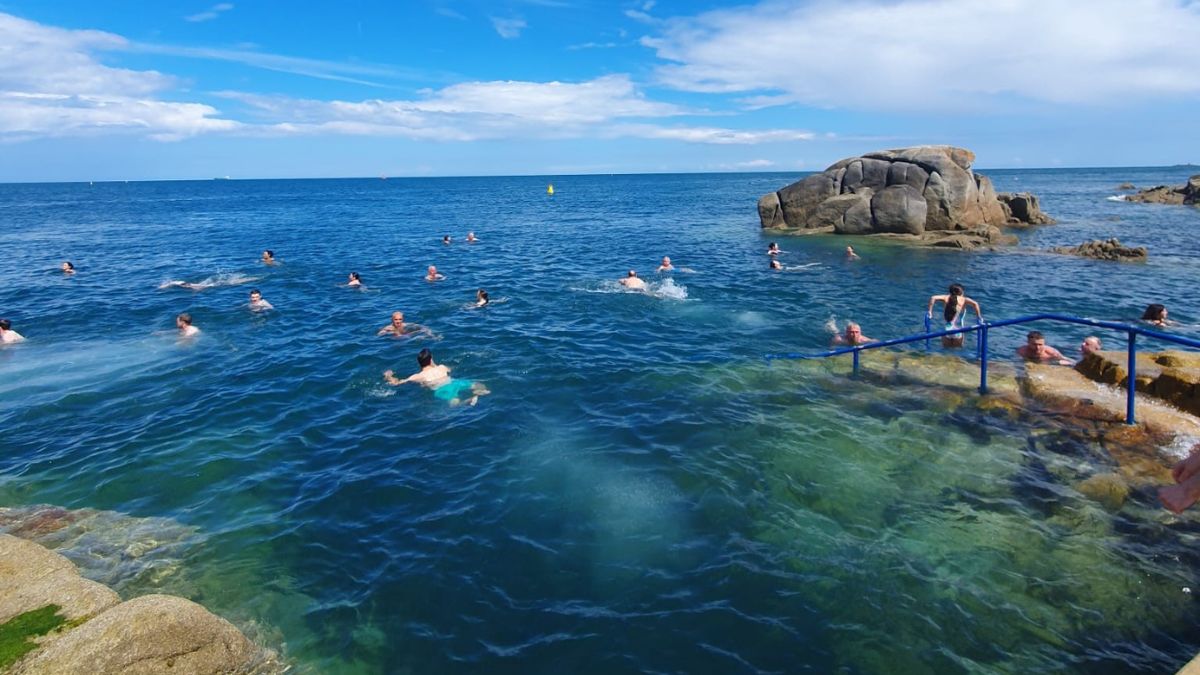
On Christmas morning, plenty of people take a quick, freezing dip in the sea at beaches and bathing spots around the coast. The Forty Foot in Dalkey, south County Dublin, is the best known, and Salthill in Galway is another. Swimmers often raise money for charity, and the dip is short.
The water is cold in December. Bring a towel and a warm robe, or watch from the rocks. Check local notices first, since swims can be cancelled in rough weather.
12. Sitting down to a traditional Irish Christmas dinner
Christmas dinner is the centerpiece of the day in most Irish homes.
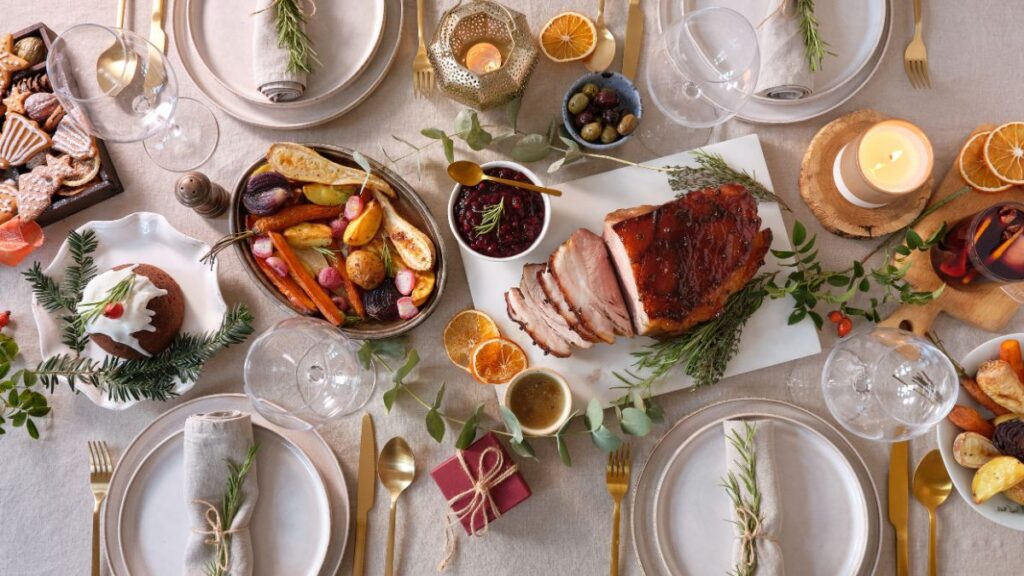
Turkey and ham with roast potatoes, vegetables, stuffing and cranberry sauce is the usual spread, and some homes add spiced beef, particularly around Cork. The full menu is covered in Irish Christmas foods.
The time it’s served and the dishes on the table vary by county and by family.
13. Baking the Christmas cake
Many families bake the Christmas cake weeks before Christmas so it has time to mature.
An Irish Christmas cake is a rich fruit cake packed with dried fruit, nuts and mixed spice.
It’s usually fed with Irish whiskey as it matures and finished with marzipan and icing.
From St Stephen’s Day to Women’s Christmas
14. Wren Day
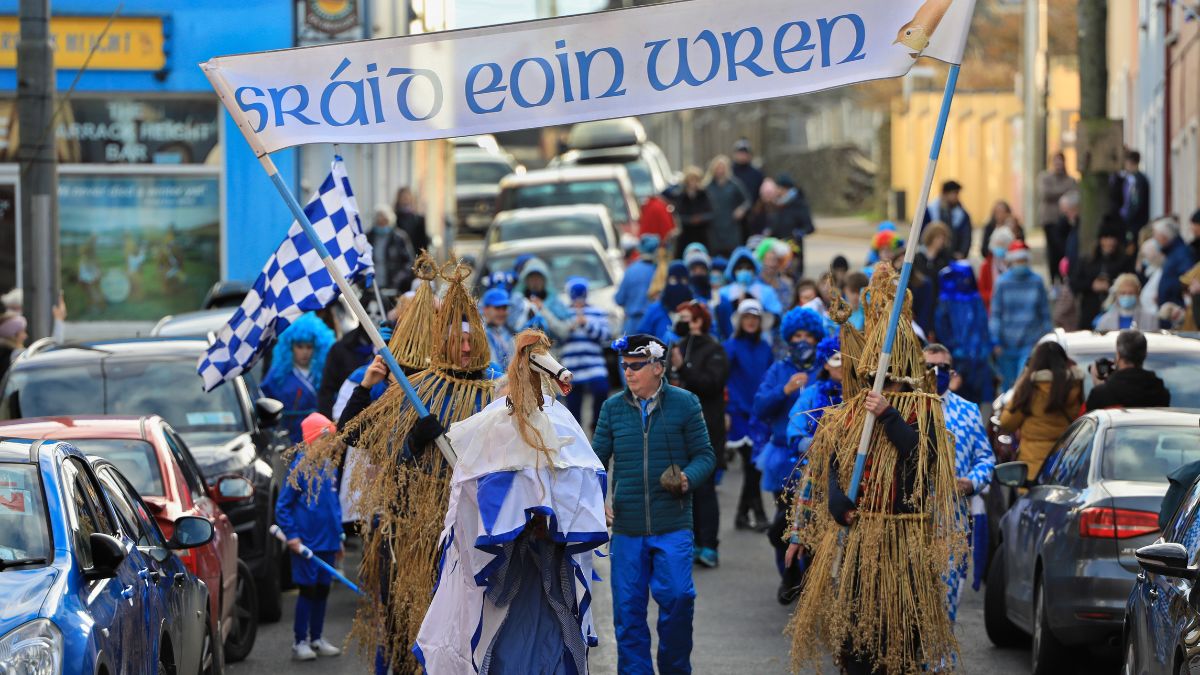
Wren Day, or Lá an Dreoilín, falls on December 26, known as St Stephen’s Day in the Republic and Boxing Day in Northern Ireland. A wren was traditionally hunted and carried on a decorated pole, but today the bird is usually a fake one.
Wrenboys in straw suits and masks parade through towns and villages playing music, and many groups collect money for local charities.
Folklore says the wren betrayed St Stephen, the first Christian martyr, which is why it was hunted on his feast day. Dingle in County Kerry is the best-known place to see the tradition today, and Miltown Malbay in County Clare is another.
15. A day at the races
Racing is a St Stephen’s Day tradition, and December 26 opens the big National Hunt festivals. Three meetings stand out this year:
- Leopardstown Christmas Festival in south Dublin, December 26 to 29.
- Mr Binman Christmas Racing Festival at Limerick Racecourse, December 26 to 29.
- Down Royal Boxing Day Races in Northern Ireland, December 26.
16. Nollaig na mBan on January 6
January 6 is the Feast of the Epiphany, also called Little Christmas or Women’s Christmas. Tradition says women rest while men take over the housework. Today it often means women gathering for lunch, a drink or a night out, and some pubs and restaurants run events. It’s also the traditional date for taking the decorations down.
Irish Christmas traditions FAQ
What is Santa Claus called in Ireland?
Most people say Santa or Santa Claus. In Irish, he’s Daidí na Nollag, which roughly means “Daddy of Christmas.” You’ll hear the Irish name in schools and on Irish-language TV and radio.
What is Irish Christmas called?
Christmas in Irish is Nollaig, pronounced roughly “NUL-ig.” The same word appears in Nollaig na mBan, or Women’s Christmas, on January 6. Many people also use it in greetings on cards.
How do you say Merry Christmas in Irish?
Say “Nollaig Shona duit” to one person, which sounds roughly like “NUL-ig HUN-uh dit.” To a group, say “Nollaig Shona daoibh.” Plain “Nollaig Shona” works in most situations.
What do the Irish eat on Christmas?
Christmas dinner is usually turkey and ham with roast potatoes, vegetables, stuffing and cranberry sauce. Christmas pudding, mince pies and Christmas cake follow. Some homes serve spiced beef, especially around Cork. The full menu is in Irish Christmas foods.
What is a traditional Irish greeting?
The best-known is “Céad míle fáilte,” which means “a hundred thousand welcomes.” The everyday greeting is “Dia duit,” meaning “God be with you,” and the reply is “Dia is Muire duit.” At Christmas, “Nollaig Shona duit” is the one to use.