

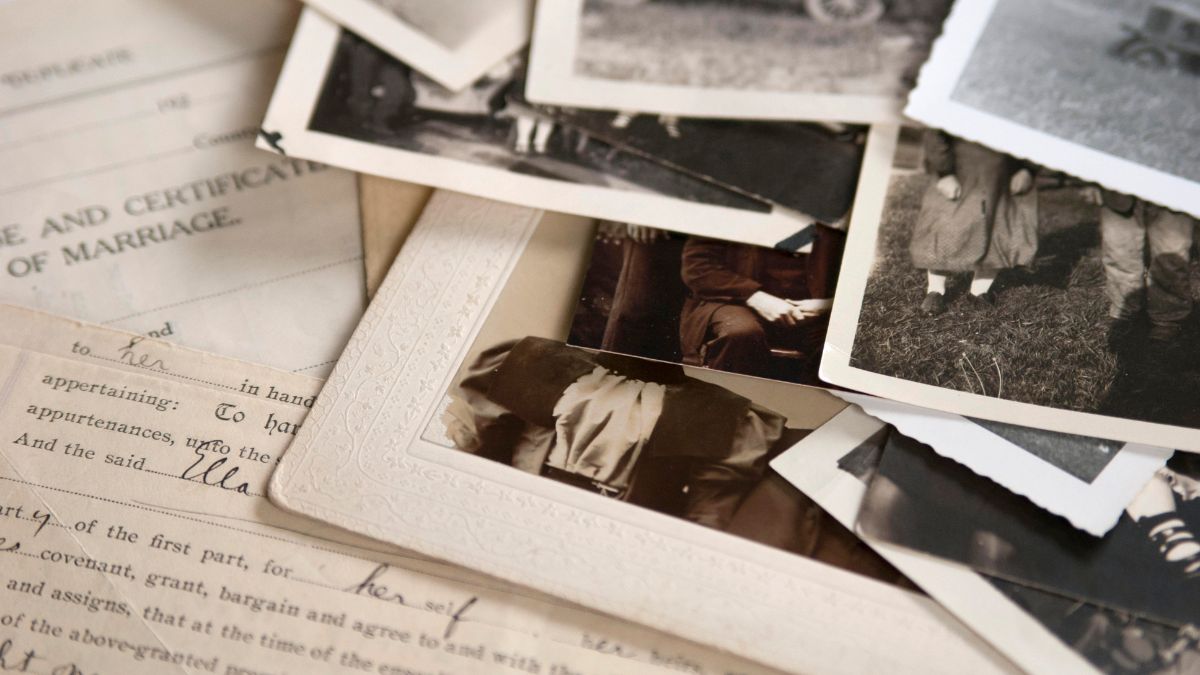
You can trace your Irish ancestry from your kitchen table, and most of the records you need are free. Many of Ireland’s key genealogy records are now searchable online, which makes the search far more affordable than most people expect.
Millions of people around the world carry an Irish surname, a half-remembered family story or a faded photograph of a townland (Ireland’s smallest land division) they have never seen. This guide walks you through 10 steps that turn those clues into a place on the map. Whether you want to find a single parish or follow your family back several generations, the method stays the same: gather what you know, work backwards, and confirm each link before moving on.
How to trace your Irish ancestry at a glance
- Gather what your family already knows.
- Work backwards through records in your own country.
- Pin down the townland and parish.
- Search General Register Office (GRO) records.
- Use the 1901 and 1911 census records.
- Find parish records.
- Use Griffith’s Valuation and property records.
- Check will and probate records.
- Fill the gaps with graveyard and military records.
- Break through brick walls, with DNA as a tool.
What to know before your search
Five realities will save you frustration later.
- Place of origin is everything: Irish records are organized by place, so “Ireland” or even “County Cork” is rarely sufficient. Your real goal is a townland and a parish.
- The records are strongest from 1864: Civil registration of births, marriages and deaths commenced that year, and the 1901 and 1911 censuses are complete and free to search. Earlier records come from church registers and land records, which are patchier.
- There are gaps: In 1922, during the Irish Civil War, an explosion and fire at the Public Record Office of Ireland in Dublin destroyed the 1821 to 1851 census returns, most original wills and many other records. Fragments and substitutes survive, and this guide covers them.
- The island has two jurisdictions: Since the island’s partition, Northern Ireland has held its records separately through the General Register Office for Northern Ireland (GRONI) and the Public Record Office of Northern Ireland (PRONI). Knowing which side of the border your family lived on saves you time.
- It takes patience more than money: You can get far with free websites. Paid subscriptions become useful later, mostly for name-searchable indexes.
Step 1: Gather what your family already knows
Talk to your parents, aunts, uncles, cousins and grandparents, and write down everything they say. Even a vague memory can point you to a record later. Try to collect the following information:
- Name: The full name of each Irish ancestor. Include nicknames and birth names for everyone, and maiden names for married women.
- Date of birth: Approximate dates of birth for your Irish relatives. Even the year helps.
- Place: The place of origin, as exact as you can get it. A townland is ideal, followed by a parish, a county and a country (the Republic of Ireland or Northern Ireland).
- Religion: The denomination, such as Catholic, Anglican or Presbyterian.
- Family names: The full names of spouses, parents, children and other relatives.
- Emigration: Where your relative arrived, which port they left from, the ship’s name, the year they emigrated and their occupation. Also note any military or naval service.
- Other events: The dates and places of marriage and death. Public archives recorded these events at the time.
Next, look through the paper trail you already have. Certificates, funeral cards, prayer cards, old letters and postmarks, studio photographs with a photographer’s name on the back, family Bibles, passports and old address books can all hold clues. Funeral and prayer cards can give exact dates and, occasionally, a hometown or parish.
Step 2: Work backwards through records in your own country
Most people can’t leap from their own home to a parish in Ireland. Records created where your ancestor settled act as the bridge. Look at these sources:
- Census returns: The United States federal census from 1850 records each person’s birthplace, and the 1900 census adds the year of arrival. Canada and the United Kingdom have similar censuses. The birthplace column often says only “Ireland.” Sometimes it is more specific.
- Passenger and arrival records: In New York, Castle Garden covers 1855 to 1890 and Ellis Island opened in 1892. Many Irish emigrants also sailed from Liverpool or settled in Britain first. Other countries keep their own arrival and immigration records, so check your national and state archives.
- Naturalization papers: Declarations of intention can give a birthplace and arrival details.
- Church records: Baptism, marriage and burial entries in your own country sometimes name the parish or county in Ireland.
- Death certificates and obituaries: These can name parents and a birthplace, and local newspaper obituaries often mention an Irish county or parish.
Your aim is a name, an approximate birth year and any Irish place name you can find. If your ancestors left between approximately 1845 and 1852, the Great Famine was part of the story.
Step 3: Pin down the townland and parish to trace your Irish roots
Ireland has its own system of land divisions, and learning it is the biggest skill you can build to trace your Irish roots. Records are filed by these divisions, so linking your family to the wrong parish sends you down the wrong path.
| Divsion | What it is | why it matters |
|---|---|---|
| Townland | The smallest land division, with more than 60,000 across the island | The most precise address, used in the census, Griffith’s Valuation and many certificates |
| Civil parish | An old administrative unit, essentially the same as the Church of Ireland parish, used for land and tax records | Used in Griffith’s Valuation and the Tithe Applotment Books |
| Catholic parish | The Catholic church unit, often larger than a civil parish, with boundaries that don’t always match | Tells you which baptism and marriage registers to search |
| Barony | A subdivision of a county | Appears in land records and helps narrow a search |
| Poor Law Union | An administrative area created in 1838 | Civil registration districts are based on it |
| County | The largest division | Where most researchers commence |
Two free tools make this easier. Logainm.ie, the Irish placenames database, helps you check a townland’s spelling, its Irish name and the parish, barony and county it belongs to. Townlands.ie maps them.
Many townland names repeat across the island. More than 50 townlands are called Kilmore, for example, so always confirm against the civil parish and county.
If you know only the county, you can still narrow the search. Griffith’s Valuation (see Step 7) demonstrates where your surname clustered in that county in the mid-1800s. That gives you possibilities, not proof, and it still tells you which parishes to check first.
Step 4: Search GRO records
The GRO holds the civil records of births, marriages and deaths for the Republic of Ireland. Civil registration commenced in 1864, with non-Catholic marriages recorded from 1845. For earlier events, turn to local church registers.
The free website irishgenealogy.ie offers searchable indexes and images of the original registers. As of October 2026, it covered births from 1864 to 1925, marriages from 1845 to 1950 and deaths from 1871 to 1975, with earlier deaths still being added. Data protection rules limit the website to births more than 100 years old, marriages more than 75 years old, and deaths more than 50 years old, so those end dates move forward over time.
Use the “Advanced Options” page to its fullest. The website also hosts church records for several dioceses (church districts overseen by a bishop), including Dublin, Cork and Ross, Kerry, and Carlow.
Each record type gives you different clues:
- Births: Entries list the date and place, the child’s name, the father’s name and occupation, the mother’s maiden name and the informant (the person who reported the birth).
- Marriages: Entries give the couple’s residences and occupations, both fathers’ names and occupations, and two witnesses, who are often relatives.
- Deaths: Entries give the age at death, the cause and the informant. Ages on death records can be approximate, so treat them with care.
A birth record is especially useful because it names the mother’s maiden name, which opens a second family line. Search by registration district and a range of years, not a single year. Try spelling variants too (see the O’Sullivan example in Step 10).
For Northern Ireland, GRONI holds the civil records and offers an online index and ordering service. Births before 1864 don’t appear in civil records, so earlier ancestors call for church registers.
On June 30, 1922, during the opening engagement of the Irish Civil War, an explosion and fire destroyed the Public Record Office of Ireland at the Four Courts in Dublin. More than 700 years of documents on Irish history and genealogy were lost.
The Virtual Record Treasury of Ireland, created by the Beyond 2022 project, launched in 2022. It brings together copies, transcripts and surviving fragments of many of those records, along with a three-dimensional reconstruction of the building. It can’t restore everything, however it’s well worth searching at virtualtreasury.ie.
Step 5: Use the 1901 and 1911 censuses to trace your Irish family history
The 1901 and 1911 censuses are the best free resource for tracing your Irish family history. They cover the whole island and record every person in a household on a single night. Both are fully searchable on the National Archives of Ireland website.
Both censuses record each person’s name, age, sex, relationship to the head of household, religion, county or country of birth, occupation, marital status, literacy and whether they spoke Irish. The 1911 census adds the number of years a couple had been married, how many children were born alive and how many were still living.
That last detail can help you spot children who died young. Names may appear in Irish, so try those forms too.
Get the most from the census with these tips:
- Read the scan of the original household return, not only the transcription. Transcription errors are common, and the handwriting can reveal a spelling you didn’t try.
- Check the neighboring households. Relatives often lived nearby.
- Compare the two censuses. A name, age or birthplace that changes tells you something.
- If you can’t find a household, keep trying variants. Some pages are missing from the online 1901 and 1911 censuses, so a household can be absent even though it existed.
- Use the townland and household details to move into parish records in Step 6.
The 1926 census, the first taken in the Irish Free State (the state that preceded today’s Republic of Ireland), was released free online by the National Archives of Ireland on April 18, 2026, with more than 700,000 household returns. It covers the 26 counties of the Republic only, so families from Northern Ireland won’t appear.
Earlier censuses have a sadder story. The 1922 fire destroyed almost all of the 1821 to 1851 returns, and a few fragments survive for some counties. The 1861 and 1871 returns were destroyed in 1877 following the compilation of the statistics, and the 1881 and 1891 returns were destroyed in 1918 during a paper shortage in World War I.
Substitutes help fill the gap, including census search forms. Following the start of the old-age pension in 1909, people applied for searches of the lost 1841 and 1851 returns to prove their age, and those forms are searchable online. Steps 7 and 8 cover more substitutes.
Step 6: Find parish records
Before civil registration, the church kept the records. Baptism and marriage registers go back much further than state records, although their dates vary widely. In the National Library of Ireland’s collection, a few city parishes in Dublin, Cork, Galway, Waterford and Limerick commence in the 1740s and 1750s. Parishes in counties such as Kildare, Wexford, Waterford and Kilkenny commence in the 1780s and 1790s, and many others commence much later.
- Catholic registers: The National Library of Ireland has digitized its microfilm copies of Catholic registers from more than 1,000 parishes across the Republic of Ireland and Northern Ireland, covering baptisms and marriages up to 1880. You can browse them for free at registers.nli.ie. They’re scans of the original books, not a name-searchable index, so you need to know the parish first. That’s why Step 3 matters. For records following 1880, contact the parish directly.
- Church of Ireland records: Many registers were lost in 1922, however some survive in local custody or in the Representative Church Body Library.
- Presbyterian and other Protestant records: For Northern Ireland, PRONI holds copies of many church registers.
- Indexed transcriptions: Paid websites such as RootsIreland, Findmypast and Ancestry offer name-searchable indexes for some counties and parishes. The website irishgenealogy.ie hosts free church records for several dioceses.
Baptism entries usually give the child’s name, the parents’ names (often including the mother’s maiden name) and the sponsors, also known as godparents. Sponsors are often relatives, so note their names. In Catholic registers, first names were often written in Latin while surnames and place names stayed in English, such as Timotheus for Timothy and Dionysius for Denis.
The traditional Irish naming pattern can also help you tell people apart. In the 1800s, the first son was typically named after the father’s father, the second son after the mother’s father and the third son after the father.
The first daughter was typically named after the mother’s mother and the second daughter after the father’s mother. Families didn’t follow this strictly, so treat it as a clue, not proof.
Step 7: Use Griffith’s Valuation and property records
Griffith’s Valuation, published between 1847 and 1864, is the most useful census substitute for the period before 1901. It lists the occupiers of land and buildings across the island of Ireland, along with the landlord who leased the property directly, a description of the property, the acreage and its valuation. You can search it for free at askaboutireland.ie, which also has the original pages and maps.
It lists occupiers, not every person in a household, and some people, such as lodgers in city flats, don’t appear. Even so, it helps you place a family in a townland around the Famine years and see who their neighbors were.
Other property records add more:
- Tithe Applotment Books (approximately 1823 to 1837): Compilers created these books to work out the tithes (a church tax) that occupiers of farmland owed to the Church of Ireland. They are a key source for the years before the Famine. The National Archives of Ireland has the books for the 26 counties of the Republic free, and PRONI holds those for Northern Ireland.
- Valuation Office books: The Valuation Office kept revision books recording changes to each property from the time of Griffith’s into the 1960s and 1970s. They show when a name changed and sometimes who took over. Northern Ireland’s books are digitized and online through nidirect.
- Registry of Deeds: Founded in 1708, it recorded deeds such as leases and mortgages, mostly for landowners and tenants with some means. It has indexes by grantor (the person transferring the property) surname and by land. You can view the indexes and many deeds on FamilySearch with a free account.
- Landed estate records: The Landed Estates Database at the University of Galway covers the provinces of Connacht and Munster and the Ulster counties of Cavan, Donegal and Monaghan (approximately 1700 to 1914). It can lead you to estate papers, however these rarely help if your ancestors were poor tenants.
Property records seldom name a person’s parents, however they place a family in a location and demonstrate continuity on the same holding.
Step 8: Check will and probate records
Wills can show how a family was connected. Probate is the legal process of proving a will and settling an estate. The National Archives of Ireland has a free searchable collection of the Calendars of Wills and Administrations (summary indexes of probate records) from 1858 to 1920.
Each entry gives details such as the person’s name, address, date of death and the executors or administrators, who were often relatives. Up to 1917, the calendars cover the whole island. From 1918, PRONI holds Northern Ireland’s.
The 1922 fire destroyed nearly all of the original wills from 1858 to 1900, and earlier ones too. The calendars survived, however, and copy will books from the district registries cover many wills. Original wills from 1900 onward survive (1904 for the Principal Registry in Dublin).
Before 1858, the Church of Ireland courts handled probate, and nearly all of those original wills were lost, although indexes and abstracts survive. Many people never left a will, so don’t be discouraged if you find nothing. Where one exists, it may name children, siblings, in-laws and sometimes relatives who had emigrated.
In Northern Ireland, PRONI holds original wills from 1900 onward and a searchable index from 1858.
Step 9: Fill the gaps with graveyard and military records
These two sources don’t fit neatly into the earlier steps, yet each can answer a question that nothing else does.
Graveyard records
Headstones can name several family members, give dates of death and sometimes the townland. Projects such as Historic Graves and the Ireland Genealogy Projects Archives offer transcriptions and photographs, as do Find a Grave and BillionGraves. Some cemeteries, such as Glasnevin in Dublin, offer searchable burial records, and many local councils hold burial registers.
Not every ancestor has a headstone. Poorer families often had unmarked graves, and old stones can be worn or fallen. Where possible, check the burial register as well, since it may record the grave plot and any family members buried there.
Military records
If an ancestor served, military files can give birthplace, age, physical description and next of kin.
- British Army: The National Archives of the United Kingdom, in Kew, holds the records. Many First World War service files were lost to bombing in 1940, however pension records and medal index cards survive.
- Irish revolutionary period: The Irish Military Archives holds the Military Service Pensions Collection, covering service between 1916 and 1923, and the Bureau of Military History witness statements, more than 1,700 accounts of the years 1913 to 1921. Both are free online at militaryarchives.ie.
- Diaspora service: Many Irish-born men served in the Union Army in the American Civil War, with records at the United States National Archives. Other countries hold their own service files, such as Library and Archives Canada and the National Archives of Australia.
Step 10: Break through brick walls, with DNA as a tool
Every researcher hits a brick wall, a point where the paper trail stops. Often the culprit is a name you haven’t thought to search.
The next section covers the most common culprit, spelling, using the surname O’Sullivan as a case study. After that, you’ll find other ways to break through and a look at where DNA fits.
Why spelling variants matter: the O’Sullivan example
Spelling wasn’t standardized for most of the period you’re researching. Clerks, priests and census enumerators (the people who collected census returns) wrote down what they heard. According to Ireland Reaching Out, surname spelling didn’t settle into a standard until the early 20th century.
In Irish, the surname O’Sullivan is Ó Súilleabháin. According to the genealogist Edward MacLysaght, the name builds on súil, the Irish word for “eye,” though the rest of the name’s meaning is debated. Suggestions include “one-eyed,” “hawk-eyed” and “little dark-eyed one.”
Prefixes add another layer. From the early 1600s, many families dropped the Ó or Mac from their surnames, and many took them back following the Gaelic revival of the 1890s (a movement promoting Irish language and culture) or on emigrating. So the same family can appear as O’Sullivan in one record and Sullivan in the next.
Try these forms in your searches:
| Form | Notes |
|---|---|
| Ó Súilleabháin | The Irish-language form, found in Irish-language sources and used by many families today |
| O’Sullivan | The standard English form |
| Sullivan | The O’ dropped, common in both Irish and emigrant records |
| Sullavan | A less common spelling variant |
| Sullahan | A different Gaelic name (Ó Súileacháin) from the midlands and south Ulster, which MacLysaght says has now almost entirely become Sullivan |
Rarer variants such as Sullivant and Silliphant are also recorded, so search by sound as well as spelling. These are forms to try in your searches, not a list of confirmed records for any one family.
First names shift too. Because Catholic registers often used Latin for first names, a Tadhg can appear as Timothy, Thady or Timotheus. Diarmuid can appear as Dermot, Jeremiah or Demetrius, and Donncha as Denis or Dionysius.
O’Sullivan is also one of the most common surnames in Munster. Genealogist John Grenham notes that it’s the single most common surname in Cork and Kerry, and that four out of five families of the name still live in those two counties. Historic branches include the O’Sullivan Mór (“great”) around Kenmare Bay and the O’Sullivan Beare around Bantry and the Beara Peninsula.
With so many people sharing a name, never assume that two O’Sullivans in the same parish are closely related. Use the townland, spouse, sponsors and neighbors to tell them apart. The same advice applies to other common Irish surnames.
Other ways to break through
- Research siblings and neighbors: A sibling’s baptism, marriage or death may give the detail your direct ancestor’s records lack.
- Check sponsors and witnesses: They’re often relatives.
- Try wildcard searches: Where an index permits, use symbols that stand in for unknown letters, and search by townland rather than by name.
- Consider a move: Your ancestor may have lived in a different parish or county when the baptism took place.
- Ask for help: Ireland Reaching Out offers free help to people of Irish heritage. The National Archives of Ireland and the National Library of Ireland both run free genealogy advisory services, and local heritage centers can help too. Facebook groups and community forums add more voices to ask.
- Hire a professional when needed: Check credentials, such as membership in Accredited Genealogists Ireland.
Where DNA fits
DNA testing through companies such as AncestryDNA, MyHeritage and FamilyTreeDNA can add valuable evidence once you have a documented tree. Matches with other testers can confirm a link or point toward a family line, particularly when shared matches cluster around one ancestral couple.
Ethnicity estimates are less useful. They are statistical estimates that change as companies update their reference data, and “Irish” regions overlap with Scottish and Welsh ones.
A Y-chromosome DNA (Y-DNA) test, for men, follows the direct paternal line and can help demonstrate whether two men with the same surname, such as O’Sullivan, share a common male ancestor. Read each company’s privacy terms before you test. DNA supports your paper research and works best alongside it.
Free tools to trace your Irish ancestry
Here’s the good news:
Nearly every website below is free. Bookmark these first.
| resource | cost | Best for |
|---|---|---|
| irishgenealogy.ie | Free | Civil records of births, marriages and deaths, and church records for some dioceses |
| National Library of Ireland parish registers (registers.nli.ie) | Free | Catholic baptism and marriage register images up to 1880 |
| National Archives of Ireland | Free | 1901, 1911 and 1926 censuses, Tithe Applotment Books, will calendars and census search forms |
| Ask About Ireland | Free | Griffith’s Valuation search, pages and maps |
| Logainm.ie and Townlands.ie | Free | Townland, parish, barony and Poor Law Union lookups |
| Virtual Record Treasury of Ireland | Free | Copies and reconstructions of records lost in the 1922 fire |
| FamilySearch | Free (account required) | Indexes and images, including Registry of Deeds records and family trees |
| Irish Military Archives | Free | Military Service Pensions Collection and witness statements |
| Landed Estates Database | Free | Estate histories for Connacht, Munster and parts of Ulster |
| PRONI | Free | Northern Ireland wills, valuation records and church registers |
| Ireland Reaching Out | Free | Volunteer help connecting with ancestral parishes |
| Genealogy advisory services (National Archives and National Library) | Free | Expert guidance on research strategy (check current hours before visiting) |
| RootsIreland | Paid | Indexed parish records from county genealogy centers |
| Findmypast, Ancestry, MyHeritage | Paid (some library access) | Searchable Irish indexes, newspapers, trees and DNA |
Common mistakes to avoid
- Trusting other people’s online trees: Treat them as leads and verify them against original records.
- Searching only one spelling: Try every variant, including Irish forms, abbreviations and phonetic spellings.
- Stopping at the county: Without a townland and parish, many records stay out of reach.
- Skipping records in your own country: They usually hold the clue that opens the Irish trail.
- Assuming the same name means the same family: Common surnames and repeated first names cause many wrong matches.
- Ignoring siblings, sponsors and witnesses: They often hold the answer you’re missing.
- Assuming the 1922 fire destroyed everything: Substitutes and surviving records exist, so keep looking.
- Not recording your sources: Note where every fact came from so you or someone later can check it.
Trace your Irish ancestry this week
You don’t need a long-lost document or an expensive subscription to trace your Irish ancestry. You need a name, a place and patience.
Start with one conversation with a relative or one certificate this week, record what you find and let each record point you to the next. Over time, you can trace your Irish roots from a kitchen table in another country to a townland you can find on a map.
Frequently asked questions
How can I trace my Irish family history for free?
Talk to relatives and check papers at home first. Then use the free records this guide covers: irishgenealogy.ie for civil records, the National Archives of Ireland for the 1901, 1911 and 1926 censuses, the National Library of Ireland for Catholic parish registers and Ask About Ireland for Griffith’s Valuation.
FamilySearch and Ireland Reaching Out are free too, and the National Archives and the National Library both run free genealogy advisory services. Paid websites are mainly useful later, for name-searchable indexes.
How far back can you trace Irish ancestry?
For many families, the realistic limit is the early 1800s, although some reach into the late 1700s. A few city parishes have Catholic registers from the 1740s and 1750s, however many parishes commence much later, and no complete census survives before 1901.
Going further back usually depends on rarer sources such as estate papers, wills or the Registry of Deeds (which commences in 1708). These mostly cover families who owned or leased land.
How do I find my Irish roots?
Gather what you know about your family, then use records in your own country (immigration, census and church records) to find your ancestor’s townland or parish on the island of Ireland. That place opens Irish civil, church, census and land records.
If you get stuck, search your surname in Griffith’s Valuation, take a DNA test or ask Ireland Reaching Out and the genealogy advisory services for free help.
What DNA do most people in Ireland have?
There’s no single “Irish DNA,” however research reveals clear patterns. The Irish DNA Atlas, led by the Royal College of Surgeons in Ireland and published in Scientific Reports in 2017, found 10 genetic clusters on the island. Seven reflect Gaelic Irish ancestry and three are shared with Britain. It also found signals of ancestry similar to that of northwest France and western Norway.
Ancient DNA tells an older story. A 2016 Trinity College Dublin study found that a Neolithic (New Stone Age) farmer woman from approximately 5,200 years ago had mostly Middle Eastern-derived farming ancestry. Bronze Age men from approximately 4,000 years ago carried steppe ancestry (from the grasslands of Eurasia) and the Y-DNA lineage R1b-M269, which remains common among men in Ireland today. Commercial ethnicity estimates are much less precise.
What are the oldest Irish surnames?
Ó Cléirigh (O’Clery or Cleary) is often cited as the oldest recorded surname in Europe, dating to an entry in the Irish annals (medieval records of events) for the year 916. Irish hereditary surnames took shape in the 10th and 11th centuries, around the time of Brian Boru (941 to 1014), whose descendants took the name Ó Briain (O’Brien).
Byrne (Ó Broin) is linked to Bran mac Máelmórda, a king of Leinster in the 11th century. Claims about the oldest vary, so read “oldest” as “earliest recorded.” Before surnames became fixed, a person’s name usually changed with each generation.